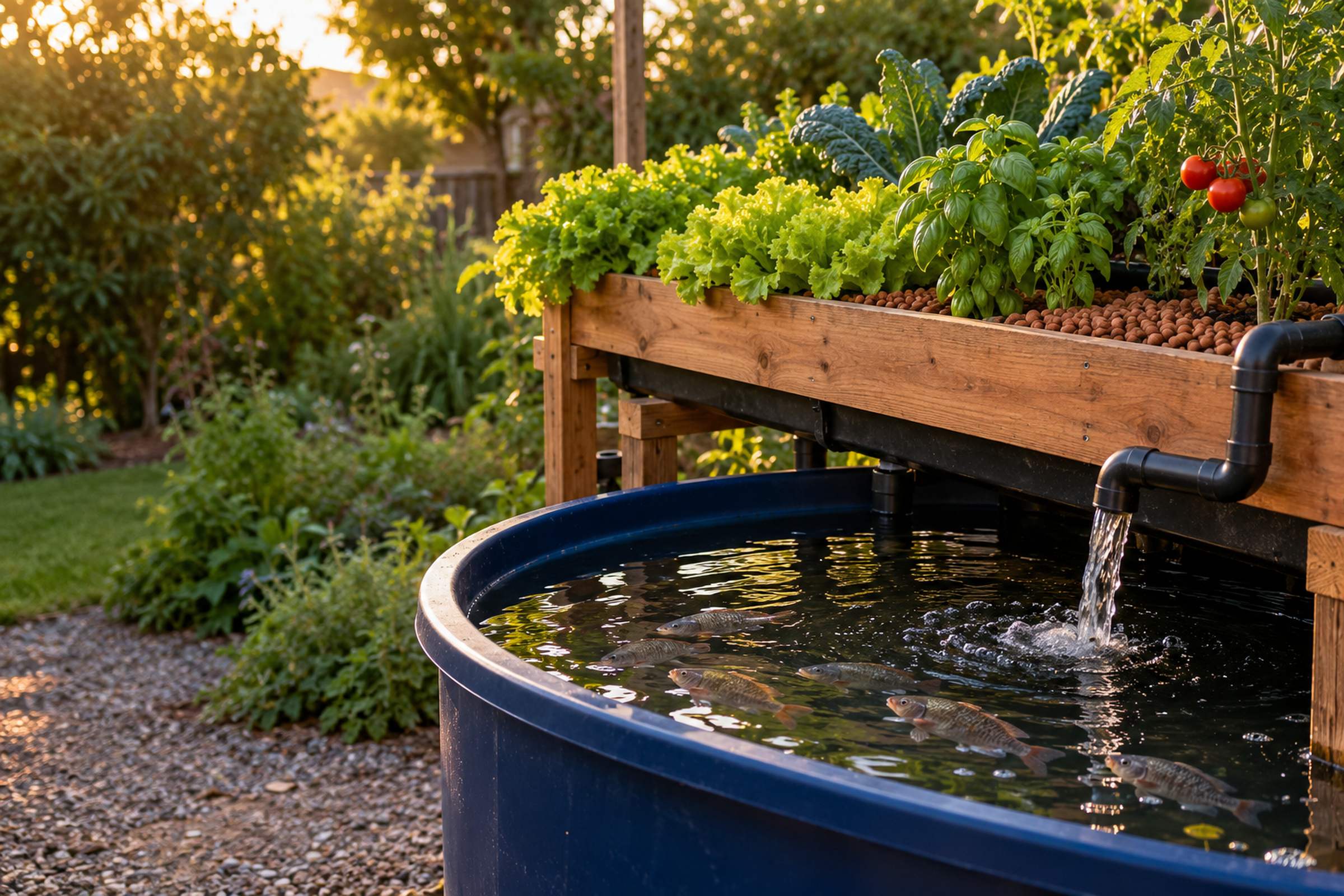
Fish, plants and one loop of water
Grow Fish and Vegetables Together at Home
Plain-English aquaponics guides: how a system works, how to build one from tanks and totes, and what to stock and grow in it.
Start here
-
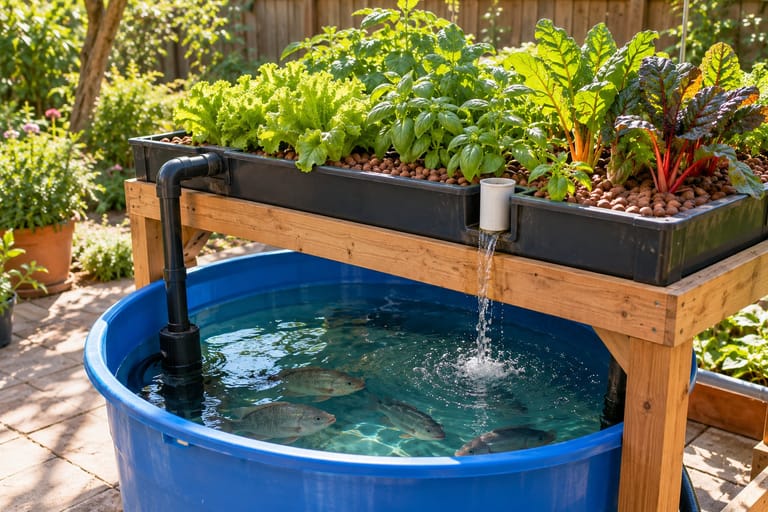 New to it?What Is Aquaponics? How It Works, Step by StepHow fish, bacteria and plants feed each other, in plain English.
 -
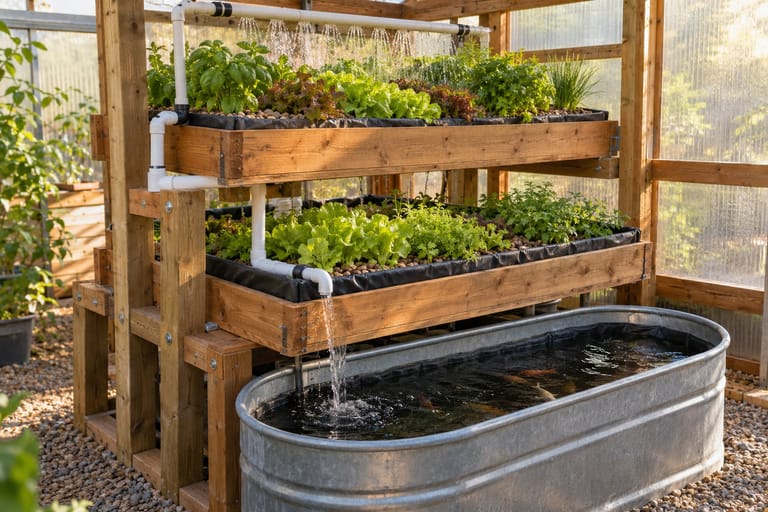 Build oneHow to Build an Aquaponics System (DIY Guide)A first system from a tank, a grow bed, a pump and a siphon.
 -
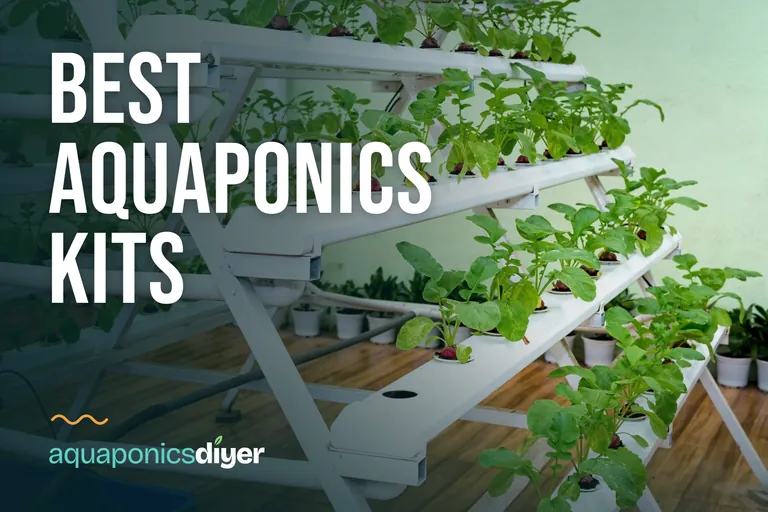 Buy a kitBest Aquaponics Kits for Home and BeginnersCountertop and backyard kits that work out of the box.
 -
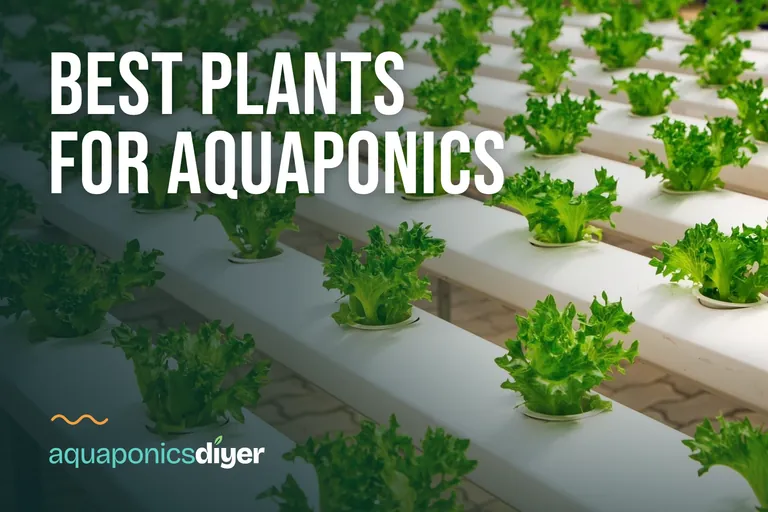 What to growBest Plants for AquaponicsLeafy greens and herbs first, then fruiting plants.
How aquaponics works
One loop of water feeds both
Aquaponics joins fish keeping (aquaculture) with soil-free growing (hydroponics). The fish supply the fertilizer, the plants clean the water, and a pump keeps it moving between the two.
Read how it works- 1Fish Fish eat and release ammonia into the water.
- 2Bacteria Nitrifying bacteria turn ammonia into nitrite, then nitrate.
- 3Plants Plant roots take up the nitrate as fertilizer.
- 4Clean water Filtered water flows back to the fish tank.
Build it yourself
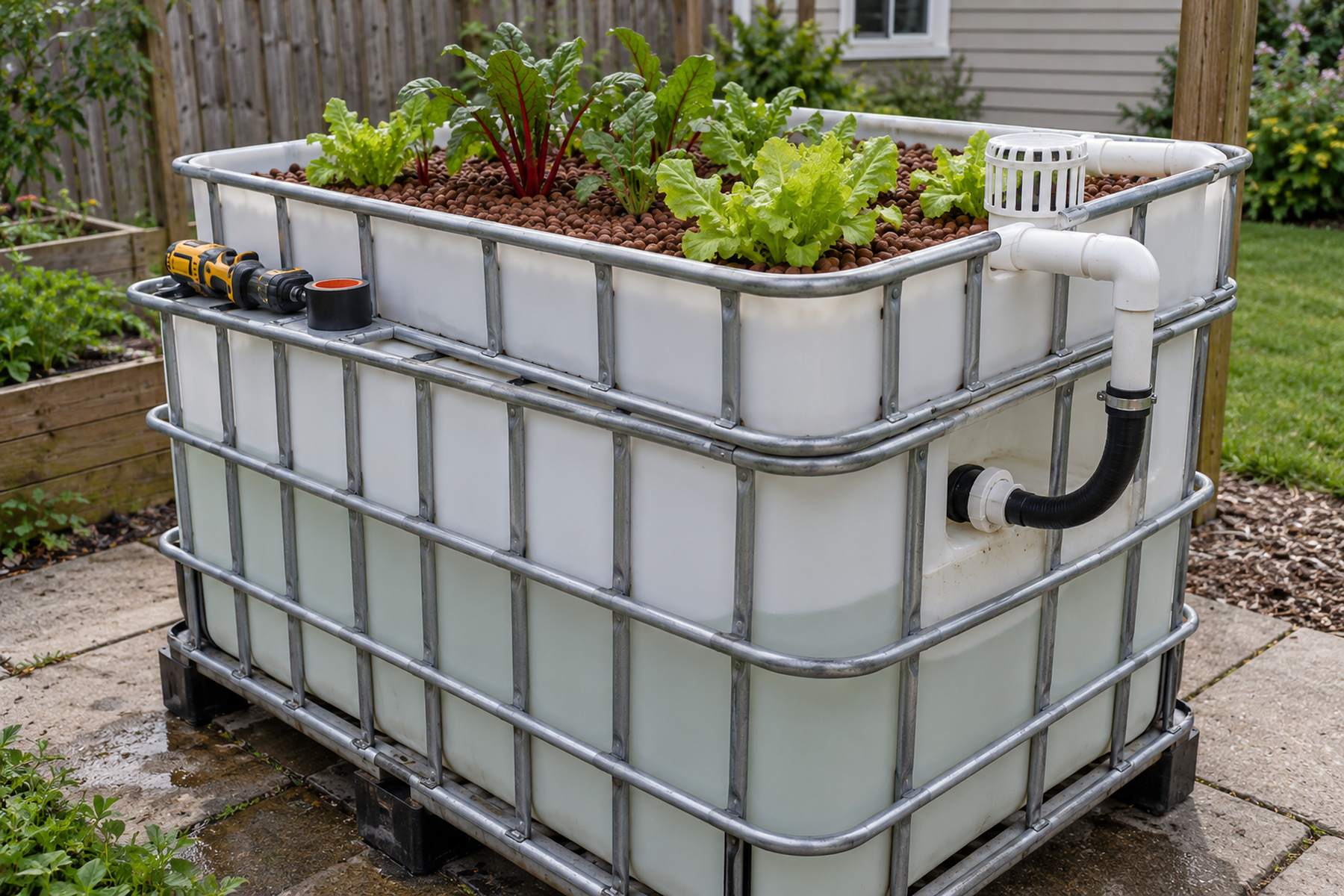
Most home systems are a fish tank, a grow bed above it, a small pump and a siphon. These guides cover each part, from a tote-sized starter to a full IBC build.
Systems & Kits
Systems and kits
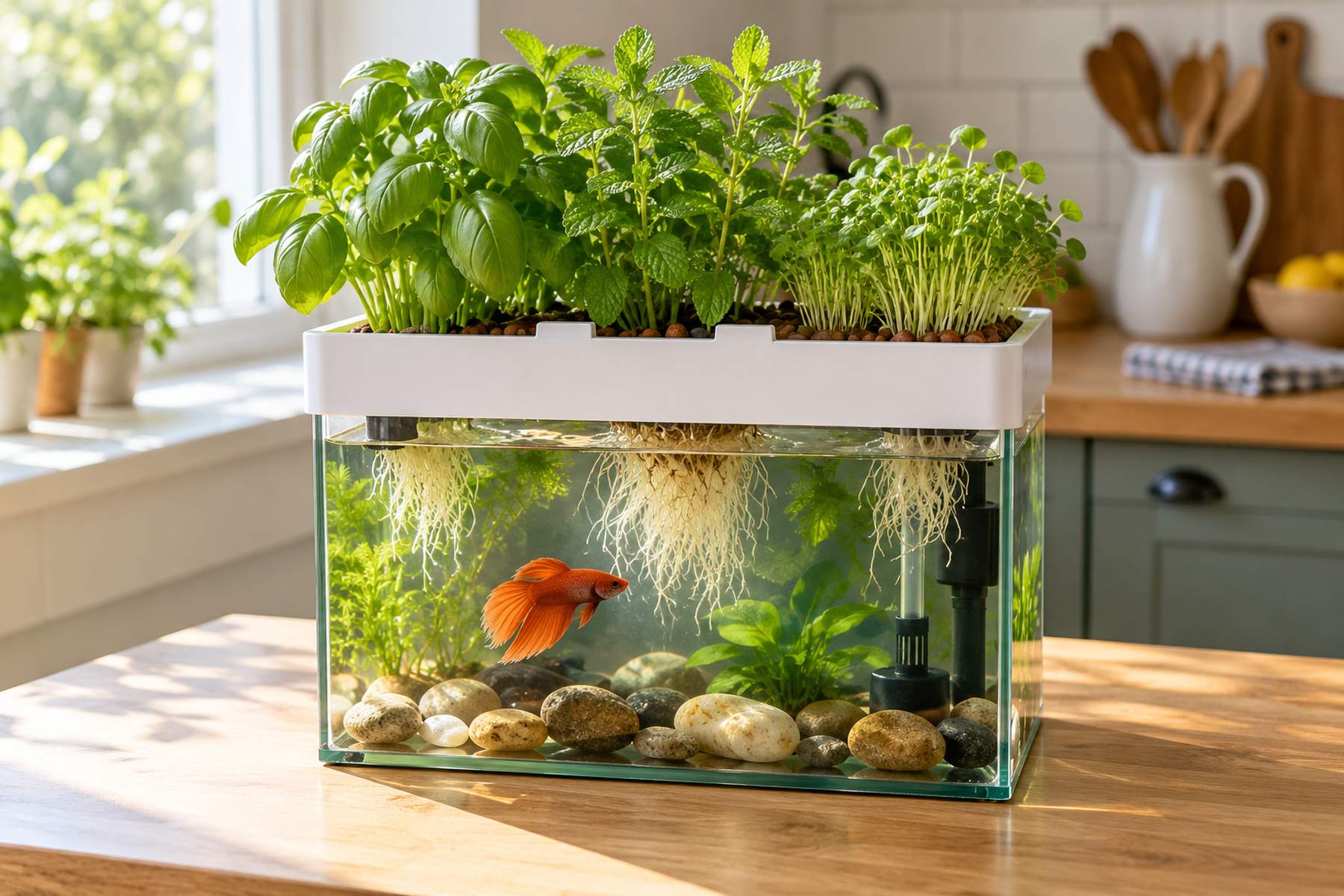
From a fish tank garden on the kitchen counter to a backyard system or a greenhouse: what each setup grows, how much room it takes and which kits are worth buying.
Fish
Fish and water
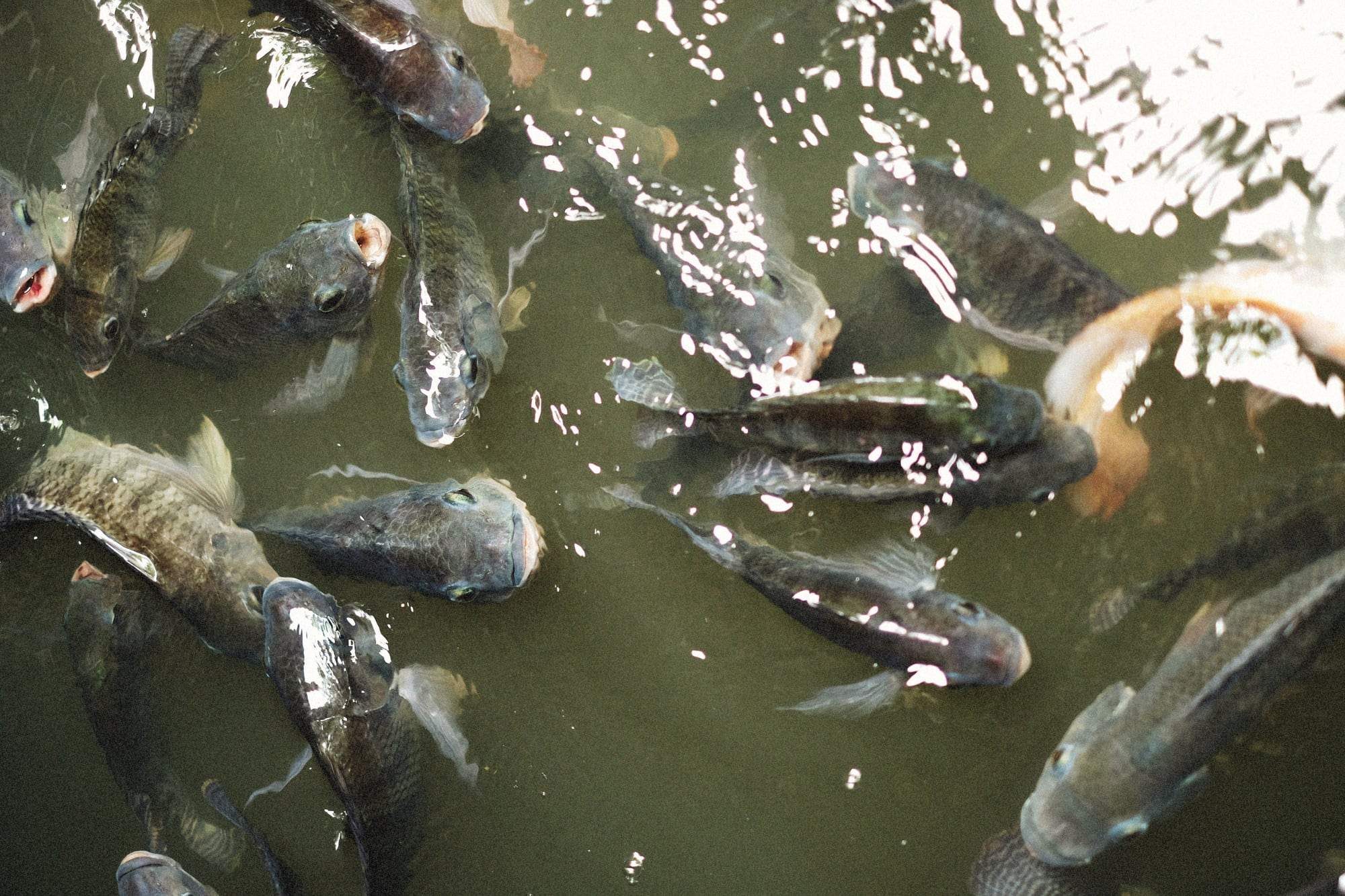
Tilapia, goldfish, trout, catfish and shrimp: which species suit your climate and goals, how many to stock, and how to cycle the water before the first fish goes in.
Plants & Media
Plants and grow media
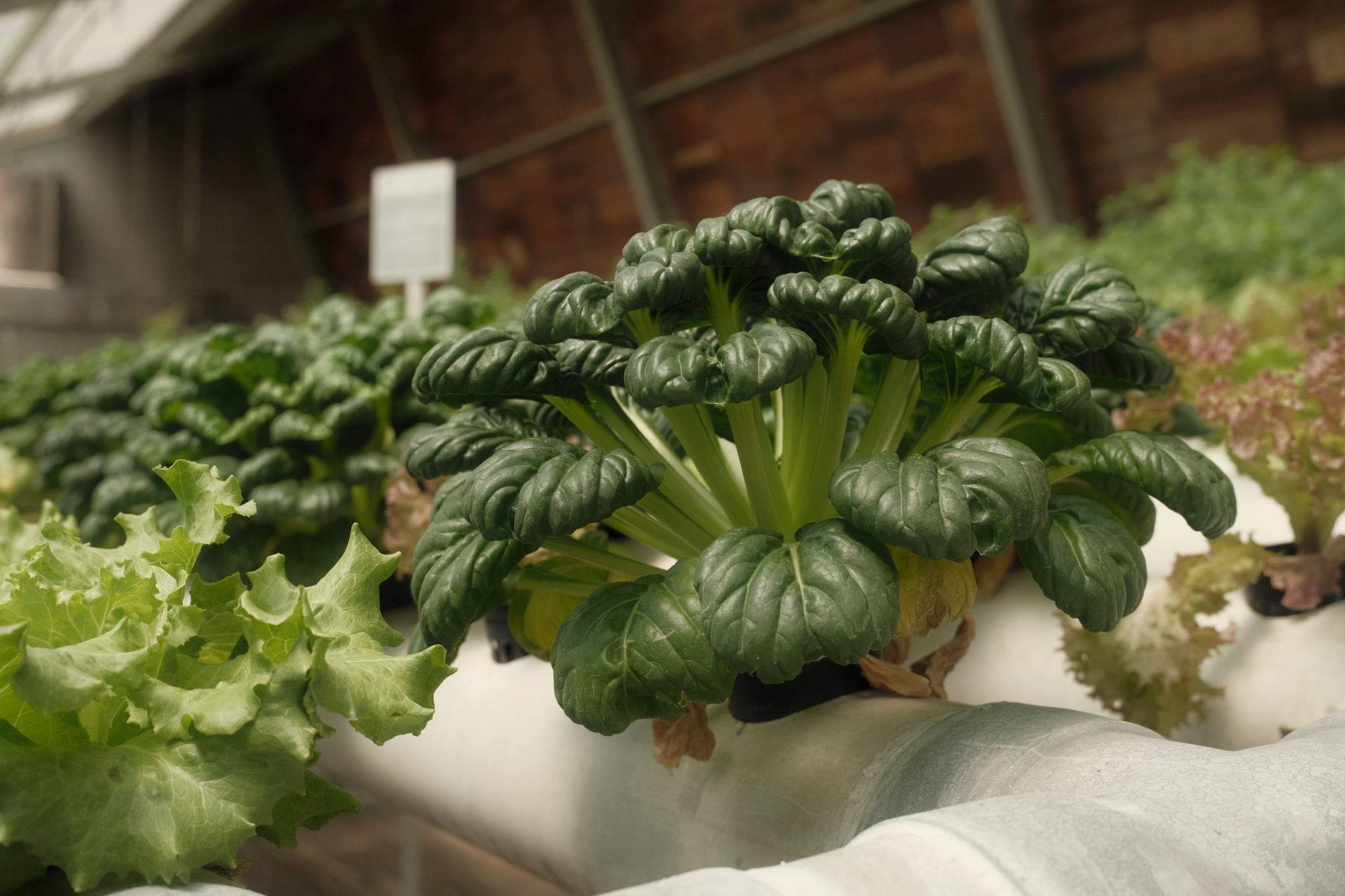
What grows well with fish and what struggles, plus the clay pebbles and other media that hold the roots and the bacteria.
Hydroponics
Hydroponics, the fish-free cousin
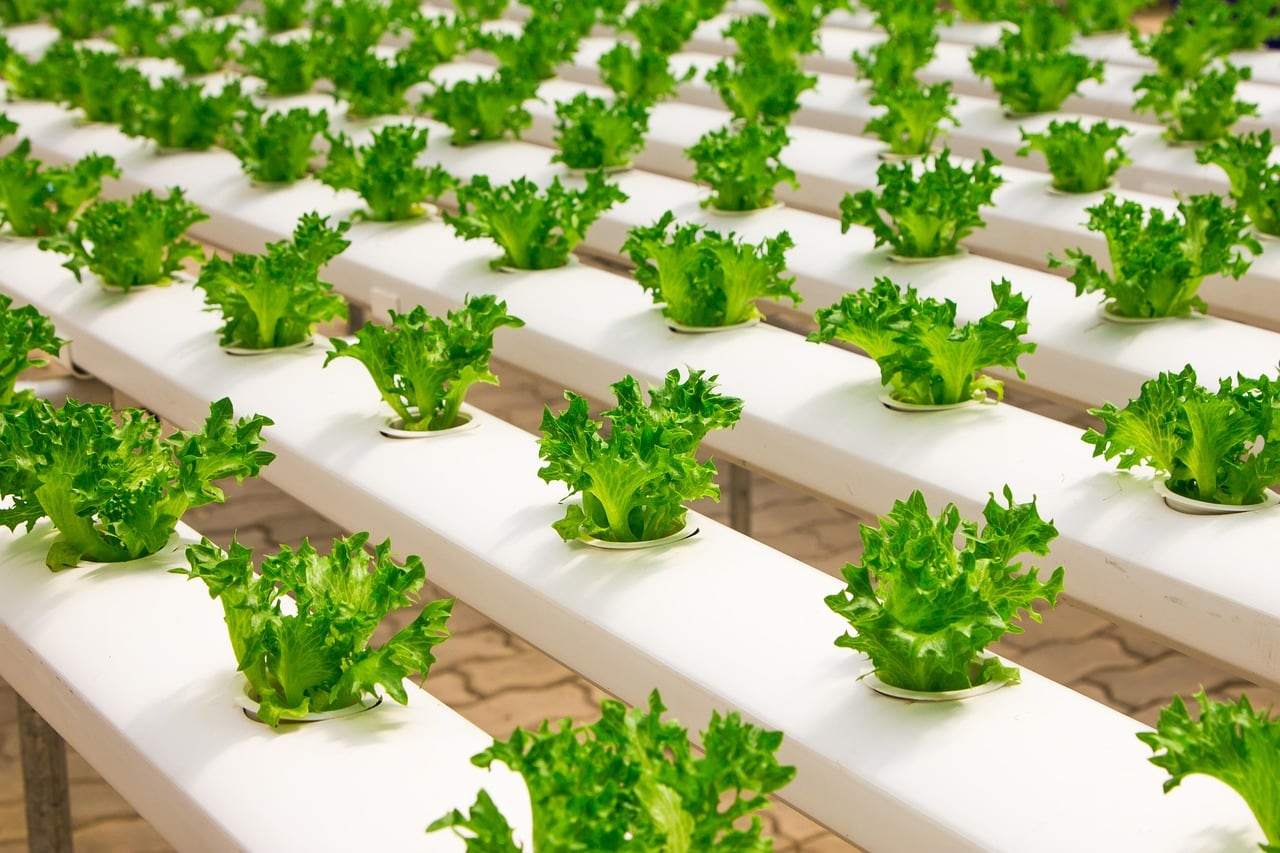
How aquaponics compares with hydroponics, and simple soil-free systems you can set up in a weekend.
Which Kind of Aquaponics Is Right for You?
Aquaponics scales from a three-gallon tank on a kitchen counter to a greenhouse full of grow beds. The right starting point depends on how much space you have, how much food you want, and whether you would rather build or buy.
A Countertop or Fish Tank Garden
If you want herbs and a few salad greens next to a pet fish, start small. A fish tank with a planted tray on top is the easiest way to see the cycle working, and it fits on a desk or kitchen counter. Our guides to aquaponics fish tanks and aquaponics kits compare the setups that work out of the box.
A Backyard or Basement System
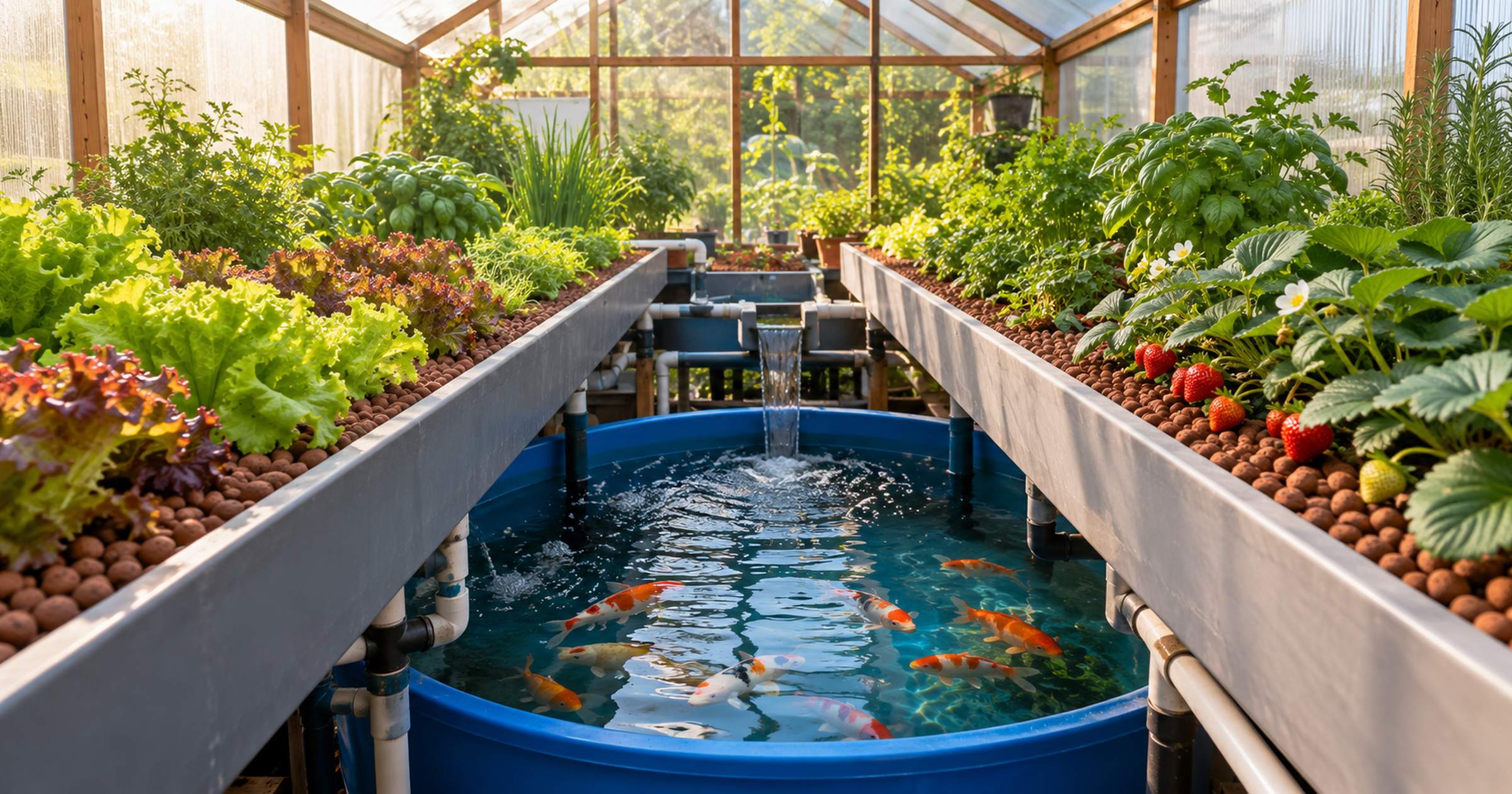
For a real harvest of lettuce, kale, herbs and tomatoes, most home growers build a media-based system: a fish tank of 50 to 300 gallons, one or more gravel or clay-pebble grow beds, a small pump and a bell siphon. Start with how to build an aquaponics system, then the guides to grow beds, bell siphons and pumps. Reused 275-gallon IBC totes are the classic budget build, covered in IBC aquaponics.
A Greenhouse or Year-Round Setup
In colder climates a greenhouse keeps the water warm enough for fish and plants through winter. See aquaponics greenhouses for layouts, and home aquaponics for indoor options.
The Three Decisions That Matter Most
Whatever the size, three choices decide whether a new system thrives or struggles in its first months.
- The fish. Pick a species that suits your water temperature. Tilapia need warm water, trout need cold water, and goldfish and koi tolerate a wide range. See the best fish for aquaponics.
- The plants. Leafy greens and herbs need little and grow fast; fruiting plants such as tomatoes and peppers need a mature, well-stocked system. See the best plants for aquaponics.
- The cycle. Beneficial bacteria have to colonize the system before it can handle fish waste. Most new systems take several weeks to cycle; fishless cycling does it without putting fish at risk.
New to all of this? Read what aquaponics is and how it works first, and aquaponics vs hydroponics if you are still deciding whether you want fish at all.
Keep learning
The books and courses that go deeper on system design, water chemistry and running a system for food.