Fish guide
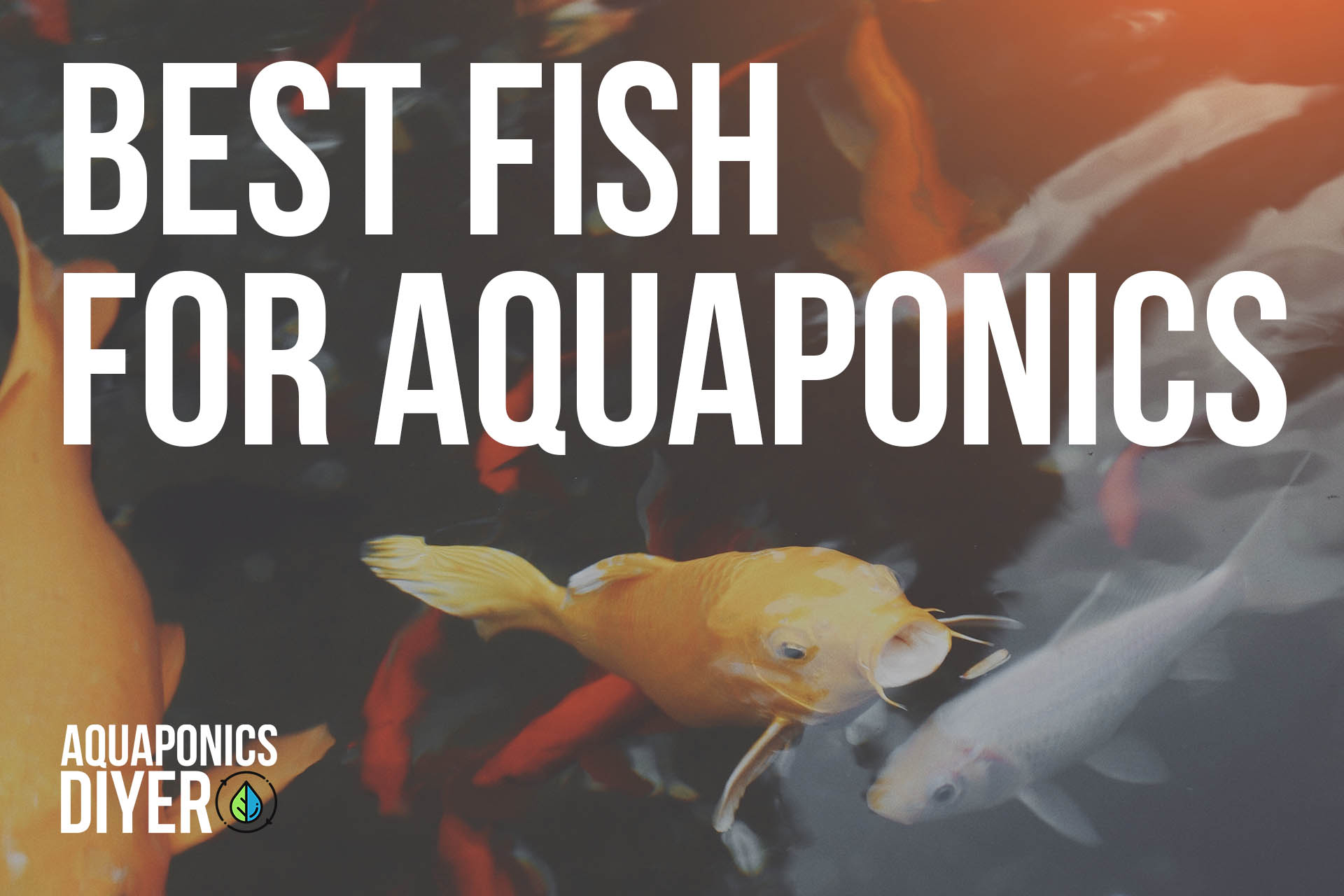
Best Fish for Aquaponics
As an Amazon Associate we earn from qualifying purchases. How we choose products.
On this page
The best fish for aquaponics is the one that thrives at the water temperature you can hold all year. For most beginners that means tilapia if you can keep the water warm (81 to 86°F), channel catfish or yellow perch for moderate temperatures, rainbow trout for cold water (around 57 to 61°F), and goldfish or koi if you want hardy fish you will not eat. Freshwater prawns can share a warm tank as a second crop.
Below we compare the main species on the numbers that decide success: temperature range, time to harvest, how forgiving they are and whether your state restricts them. The figures come from the FAO manual Small-scale aquaponic food production, Texas A&M AgriLife guide EHT-148, Aquaponics: Fish Species Selection, NMSU Circular 680 and other extension sources linked in each section, not from guesswork. If your system is brand new, read our fishless cycling guide before buying any fish.
Best Fish for Aquaponics Compared
Temperatures are optimal growing ranges unless noted. Growth figures are the grow-out rates published by the sources named; your results depend mostly on temperature and feeding.
| Fish | Best water temperature | Growth to harvest | Beginner-friendly? | Eat it? | Legal note |
|---|---|---|---|---|---|
| Tilapia | 81 to 86°F (FAO) | About 600 g in 6 to 8 months (FAO) | Yes, very hardy | Yes | Non-native; permit or application needed in some states, e.g. Texas and New Mexico |
| Channel catfish | 75 to 86°F (FAO) | About 400 g in 9 to 10 months (FAO) | Yes, very tolerant | Yes | Check state rules |
| Rainbow trout | 57 to 61°F; survives 50 to 64°F (FAO) | About 1 kg in 14 to 16 months (FAO) | No, needs very clean, cold water | Yes | Check state rules |
| Yellow perch | 70 to 75°F (Manci, 2000) | Market size 115 to 150 g; slower than tilapia | Moderate | Yes | Check state rules |
| Bluegill and sunfish | Warm water; NMSU puts warmwater fish at 65 to 85°F | 2 to 2.5 years or more to 1 lb (Texas A&M) | Yes, but slow | Yes | Illegal to sell as food fish in some states, including Texas |
| Koi | Carp family; common carp 77 to 86°F (FAO) | Ornamental | Yes, very hardy | Not usually | Check state rules |
| Goldfish | 65 to 85°F (NMSU warmwater range) | Ornamental | Yes, the easiest | No | Check state rules |
| Common carp | 77 to 86°F; survives 39 to 93°F (FAO) | About 600 g in 9 to 11 months (FAO) | Yes, very hardy | Yes, but bony | Check state rules |
| Largemouth bass | 75 to 86°F (FAO) | About 18 months to 1.25 lb (Texas A&M) | No, needs pellet-trained fish and a big tank | Yes | Illegal to sell as food fish in some states, including Texas |
| Freshwater prawns | 79 to 90°F (FAO) | About 30 g in 4 to 5 months (FAO) | Moderate; keep with fish | Yes | Non-native; check state rules |
“Check state rules” is not filler. Every state sets its own rules on importing, keeping, moving and selling live fish, and we would rather tell you to call your state fish and wildlife agency than guess.
How to Choose Fish for Your Aquaponics System
1. Start With Your Water Temperature
FAO groups fish into tropical species that thrive at 22 to 32°C (72 to 90°F) and cold-water species that prefer 10 to 18°C (50 to 64°F), with some temperate species such as common carp and largemouth bass tolerating a very wide range. It recommends growing fish adapted to your local conditions, because heating or cooling water is energy-hungry and expensive. Measure the water where the tank will sit, in winter and in summer, before you choose.
2. Decide Whether You Will Eat Them
All fish produce the ammonia your plants need, so ornamental fish run a system just as well. NMSU’s guide H-170 notes that some growers keep fish purely to fertilize their plants, often goldfish. If you want to harvest, choose a species that reaches eating size in under a year at your temperature.
3. Match the Fish to the Tank Size
FAO’s ceiling for beginners is 20 kg of fish per 1,000 liters, roughly 1 lb per 6 gallons, halved for tanks under about 132 gallons, and it does not recommend raising food fish in tanks that small. Some species need more room than the numbers suggest: Texas A&M recommends at least 1,200 gallons for largemouth bass.
4. Check What Is Legal Where You Live
FAO reminds growers to check local rules on importing new species and never to release non-native fish into local waters. In the US the rules are set state by state; the tilapia section below gives two real examples.
The Best Fish for Aquaponics, Species by Species
Tilapia: The Easiest Food Fish

NMSU calls tilapia the most common species in home and commercial aquaponics, and Texas A&M ranks them “Excellent”. They tolerate crowding, a wide pH range and short spells of poor water, and FAO says they can grow from a 50 g fingerling to 500 g in about six months in ideal conditions. The catch is warmth: they stop feeding below about 63°F and most die in the low 50s. They are also regulated in some states: Texas requires an exotic species permit, and New Mexico requires an approved import application. Full details, including how many tilapia fit in your tank, are in our aquaponics tilapia guide.
Channel Catfish: Tough and Native

FAO describes catfish as extremely hardy, tolerating wide swings in oxygen, temperature and pH, and calls catfish the easiest species for beginners and for anyone with an unreliable power supply. Channel catfish grow best at 75 to 86°F. Two habits shape the setup. They live on the bottom, so FAO suggests a wide tank, or pairing them with a fish that uses the upper water, such as bluegill, perch or tilapia. And Texas A&M warns that males become territorial and start fighting at around a quarter to half a pound, and that catfish grow more slowly in tanks than in ponds, taking up to 18 months to reach market size.
Rainbow Trout: For Cold Water

Trout are the answer for an unheated basement or a northern garage. FAO gives an optimum of 15°C (59°F) within a 10 to 18°C (50 to 64°F) range, and says growth falls sharply above 21°C (70°F). They are demanding: FAO says trout need better water quality than tilapia or carp, especially oxygen (above 6 mg/L) and ammonia (under 0.5 mg/L), plus frequent testing and backup air and water pumps. In return they are an oily fish rich in omega-3, and their high-protein diet puts more nitrogen into the water per pound of feed, which FAO says supports more leafy greens. Trout was also a favorite of Frank Wood, who started AquaponicsDIYer; in the original version of this guide he called it incredibly tasty, if fairly bony.
Yellow Perch: A Good Middle Ground

Yellow perch are native to North America and suit moderate water. In an aquaculture review hosted by Texas A&M, Bill Manci gives an optimal growth range of 21 to 24°C (70 to 75°F), notes that they survive water down to freezing, and describes them as tolerant of ammonia, nitrite and low oxygen compared with trout and salmon. They are not very cannibalistic and accept pellets once past about 2 inches. The trade-off is speed: perch grow more slowly than tilapia, although their market size, 115 to 150 g, is smaller too.
Bluegill and Sunfish: Easy but Slow

Bluegill and other sunfish are cheap, easy to grow and good to eat, and they breed readily. Texas A&M rates them only “Fair” for commercial aquaponics, though, because bluegill can take 2 to 2.5 years or more to reach a pound and convert feed poorly. The same guide notes they are illegal to sell as food fish in some states, including Texas. For a home system where you are not counting dollars, they are a reasonable native choice, and they pair well with catfish.
Koi: The Ornamental Workhorse

Koi are ornamental common carp, and FAO says they share carp’s high tolerance for a variety of water conditions. Texas A&M notes they tolerate a pH between 5 and 9 and dissolved oxygen as low as 2 ppm for short periods, eat a low-protein diet of 28 to 32%, and convert it efficiently. FAO calls them a popular choice for growers who do not want to eat their fish. The weak point is disease: Texas A&M lists many parasites and viral diseases, including koi herpes virus, so buy from a reputable dealer and quarantine new fish.
Goldfish: The Easiest Fish of All

Goldfish are the default for indoor and desktop systems. NMSU lists them among warmwater species preferring 65 to 85°F, which most homes provide without a heater, and they are cheap and widely available. Texas A&M rates comet goldfish “Poor” for commercial aquaponics only because they have almost no market value; for a hobby system that runs on fish waste, they are hard to beat. Small aquarium systems are covered in our aquaponics fish tank guide.
Common Carp: Hardy Through the Seasons

FAO calls carp the most cultured fish in the world and gives them a survival range of 4 to 34°C (39 to 93°F), with best growth at 25 to 30°C (77 to 86°F), when they can reach harvest size of 500 to 600 g in about ten months. Like tilapia, they tolerate low oxygen and poor water. The trade-offs FAO lists are that carp are bonier than other fish and fetch lower prices, which matters only if you plan to sell them.
Largemouth Bass: Only for Experienced Growers

FAO rates largemouth bass an excellent aquaponics fish for growers who cannot switch species between seasons, since they grow from roughly 50°F to 97°F and tolerate low oxygen and high nitrite. Texas A&M is more cautious: bass must be specially trained to eat pellets, they cannibalize smaller fish unless graded by size at least monthly, they need a tank of at least 1,200 gallons and about 18 months to reach 1.25 lb, and they are illegal to sell as food fish in some states, including Texas. A rewarding fish, but not a first fish.
Freshwater Prawns: A Second Crop
The giant river prawn grows best at 79 to 90°F, according to FAO, and makes a good partner for warm-water fish: it lives on the bottom, eats leftover feed and waste, and leaves the upper water to the fish. It cannot run a system alone because floor area limits how many you can keep, and it eats plant roots, so it stays in the fish tank. See our guide to shrimp in aquaponics.
Barramundi, Arctic Char and Other Species

FAO lists barramundi among suitable aquaponics species, with an optimal range of 26 to 29°C (79 to 84°F) and a high-protein diet of 38 to 45%. NMSU’s list of fish suited to recirculating systems also names Arctic char and striped bass. These are less common for home growers, mainly because fingerlings are harder to buy; if you find a supplier, check your state rules before ordering, as with any non-native species.
Small Ornamental Fish
Guppies, mollies, tetras and other aquarium fish work in small display systems. They produce little waste, so they suit a few herbs or lettuce plants rather than a vegetable garden. Our aquaponics kits guide covers the countertop systems built around them.
Water Quality Each Fish Needs
FAO publishes tolerances for the main commercial species. They show why tilapia and carp forgive beginners and trout do not:
| Species | Survival range | Total ammonia | Nitrite | Dissolved oxygen | Feed protein |
|---|---|---|---|---|---|
| Common carp | 39 to 93°F | Below 1 mg/L | Below 1 mg/L | Above 4 mg/L | 30 to 38% |
| Nile tilapia | 57 to 97°F | Below 2 mg/L | Below 1 mg/L | Above 4 mg/L | 28 to 32% |
| Channel catfish | 41 to 93°F | Below 1 mg/L | Below 1 mg/L | Above 3 mg/L | 25 to 36% |
| Rainbow trout | 50 to 64°F | Below 0.5 mg/L | Below 0.3 mg/L | Above 6 mg/L | 42% |
| Giant river prawn | 63 to 93°F | Below 0.5 mg/L | Below 2 mg/L | Above 3 mg/L | 35% |
| Barramundi | 64 to 93°F | Below 1 mg/L | Below 1 mg/L | Above 4 mg/L | 38 to 45% |
Source: FAO, Table 7.1. For a mixed system, FAO’s compromise targets are pH 6 to 7, ammonia and nitrite below 1 mg/L, nitrate 5 to 150 mg/L and dissolved oxygen above 5 mg/L. A liquid test kit is the only way to know where you stand.
How Many Fish and How Much to Feed
FAO recommends 10 to 20 kg of fish per 1,000 liters of tank water, and strongly advises new growers not to exceed 20 kg, because at higher densities a short power cut can kill every fish within an hour. Count the fish at their harvest weight, not at the size you buy them. Our tilapia guide turns that rule into a table for common tank sizes.
Fish eat about 1 to 2% of their body weight a day, according to FAO, and that feed is what fertilizes the plants. Its feed rate ratio is 40 to 50 g of feed per square meter of leafy greens per day, and 50 to 80 g for fruiting crops such as tomatoes. Match the protein to the species: around 28 to 35% for tilapia, carp, catfish and koi, and over 40% for trout and bass. See which crops suit each balance in our list of the best plants for aquaponics.
What you need before the fish arrive
Food matched to your species, a way to hold the temperature, oxygen, and a test kit.
-
1Food for tilapia, carp, catfish and koi
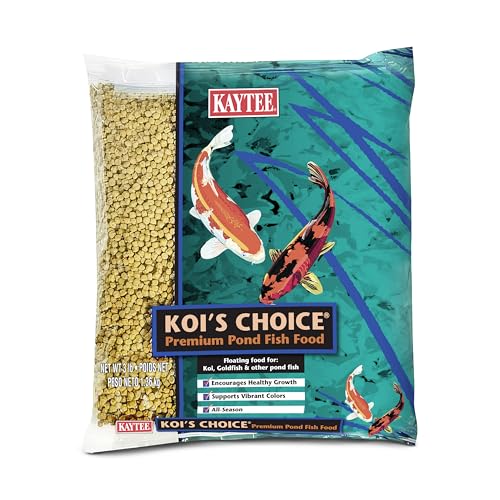
Kaytee Koi's Choice Floating Fish Food
A floating pellet its maker lists at 35% protein with fish meal first, in the range omnivores such as tilapia and koi need.
-
2Food for trout, perch and bass
Blue Ridge Koi Platinum Pro 41% Protein Fish Food
A 41% protein floating pellet per the listing, close to the 42% FAO gives for rainbow trout.
-
3Heater for warm-water fish
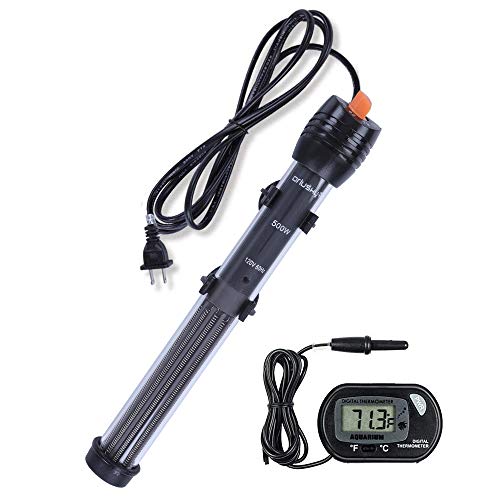
Orlushy 500W Submersible Aquarium Heater
Adjustable from 68 to 89°F per the listing; the maker rates one unit for 40 to 75 gallons, so larger tanks need more than one.
-
4Air pump
Pawfly 254 GPH Aquarium Air Pump
Several outlets for the two or more air stones FAO recommends; the maker rates it for up to 300 gallons.
-
5Water test kit
API Freshwater Master Test Kit
Liquid tests for pH, ammonia, nitrite and nitrate, the readings in the table above.



Next steps: cycle your system before stocking, size the pump, and see how to build an aquaponics system from scratch.
Best Fish for Aquaponics FAQ
Grow along with us
New guides and seasonal tips for fish, plants and DIY builds, about once a month.