Hydroponics
Hydroponic Lettuce: A Complete Guide to Growing It at Home
As an Amazon Associate we earn from qualifying purchases. How we choose products.
On this page
- Best Varieties for Hydroponic Lettuce
- Choosing a Hydroponic System for Lettuce
- How to Grow Lettuce Hydroponically: Seed to Transplant
- Nutrient Solution: EC, ppm and pH for Lettuce
- Light for Lettuce Indoors
- Temperature, Bolting and Tipburn
- Lettuce Calendar: Seed to Harvest
- Harvesting: Leaf by Leaf or Whole Head
- Common Problems and How to Fix Them
- Growing Lettuce in Aquaponics
Hydroponic lettuce is the easiest crop to start with if you want to grow food in water instead of soil. Sow a butterhead or loose-leaf variety in a rockwool cube, move the seedling into a net cup over nutrient solution at about two to three weeks, keep the solution near pH 5.5 to 6.0 and EC 1.2 to 1.5 mS/cm, give it cool air and plenty of light, and you can cut a full head roughly five to eight weeks after sowing.
Every step below follows published extension research from the University of Kentucky, Cornell University's controlled environment agriculture (CEA) group and the University of Florida.
Best Varieties for Hydroponic Lettuce
The University of Kentucky's Hydroponic Lettuce Production in Controlled Environments (Sharma et al., CCD-CP-63, 2025) names butterhead, romaine and leaf types as the lettuces commonly grown hydroponically, and notes that romaine is more challenging indoors than leaf and butterhead.
Butterhead and Bibb
Butterheads form a loose, soft head and are the classic hydroponic lettuce; supermarket living lettuce sold with roots attached is usually one. Buttercrunch, a Bibb type, is the best-known home cultivar and holds longer before bolting than older Bibbs.
Loose-Leaf
Leaf lettuces such as Black Seeded Simpson or Red Sails never form a tight head, so you can pick a few outer leaves at a time. They also cope with imperfect light better than heading types.
Romaine and Crisphead
Romaine grows tall and dense and is more prone to tipburn in its tight heart. Mini romaines and summer crisp types such as Cherokee, which the UF/IFAS bucket guide grows hydroponically, are a better compromise. Iceberg needs a long, cool season to head up and is rarely worth the space.
| Type | Examples | Difficulty | Best for |
|---|---|---|---|
| Butterhead / Bibb | Buttercrunch, Salanova butter, Rex | Easy | Whole heads in Kratky or DWC |
| Loose-leaf | Black Seeded Simpson, Salad Bowl, Red Sails | Easiest | Cut-and-come-again harvests, countertop units |
| Summer crisp (Batavian) | Cherokee, Nevada | Moderate | Warmer rooms, crunchier leaves |
| Romaine | Mini romaines, Parris Island | Harder | Growers with good airflow and cool air |
| Crisphead (iceberg) | Great Lakes, Ithaca | Hardest | Mostly soil gardens |
Choosing a Hydroponic System for Lettuce
Lettuce is short, shallow rooted and finished in weeks, so almost every method works. Our guide to hydroponic systems for beginners compares them in more depth.
Kratky Jars and Buckets
The Kratky method needs no pump: you fill a covered container once, and as the lettuce drinks, an air gap opens for the upper roots. "Set It and Forget It" Hydroponic Lettuce (UF/IFAS HS1488) grows three heads in a 5-gallon bucket, allowing 1 to 1.5 gallons of solution per plant. Never top it up above the roots.
Deep Water Culture and Rafts
In deep water culture (DWC), roots hang in a reservoir aerated by an air pump; commercially, foam rafts float on a pond. UK Extension calls DWC simple, with a low risk of plants drying out, and asks for 6 to 8 ppm dissolved oxygen and more than a gallon of water per plant. Our DWC hydroponic system guide covers the build.
NFT and Countertop Kits
Nutrient film technique (NFT) runs a thin stream along sloped channels. It saves water, but UK Extension warns that a pump failure dries plants out fast. Countertop gardens, with a small reservoir, pump and built-in light, are the simplest way to grow hydroponic lettuce indoors, though pod spacing limits you to baby leaves or small heads.
| System | Power needed | Plants | Effort | Main risk |
|---|---|---|---|---|
| Kratky bucket | None | 1 to 4 per container | Lowest | Refilling over the roots |
| DWC bucket or tote | Air pump | 1 to 8 | Low | Warm water, pump failure |
| Raft bed | Air pump | Dozens | Medium | Root disease in shared water |
| NFT | Water pump | Dozens | Medium | Dry roots if the pump stops |
| Countertop kit | Pump and light | 6 to 12 pods | Lowest | Crowding, small heads |
A hydroponic lettuce shopping list
Everything for a Kratky or DWC bucket of butterheads, from seed to nutrient testing.
-
1Seeds
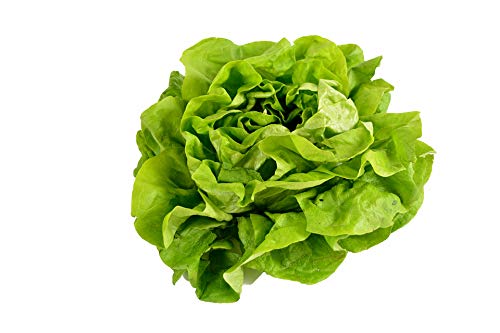
Buttercrunch Lettuce Seeds (500)
A butterhead Bibb type that forms soft, compact heads, the classic first hydroponic lettuce.
-
2Seed starting
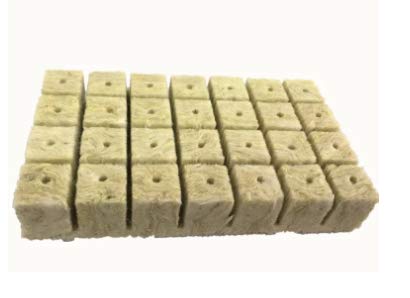
1.5 inch Rockwool Starter Cubes
Bonded stonewool cubes that hold together when submerged, as UK Extension recommends for water-based systems.
-
3Net cups
Cz Garden 3 Inch Net Pots (25)
Wide-rim cups for bucket lids, totes and wide-mouth jars, with room for a full-size head.
-
4Nutrients (dry)
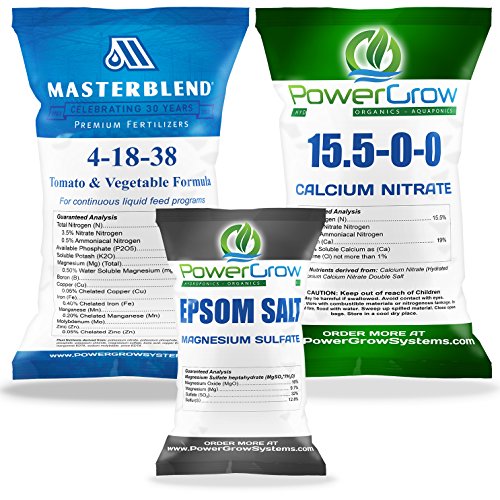
The three-part dry mix of 4-18-38, calcium nitrate and Epsom salt, an economical choice for leafy greens.
-
5Nutrients (liquid)
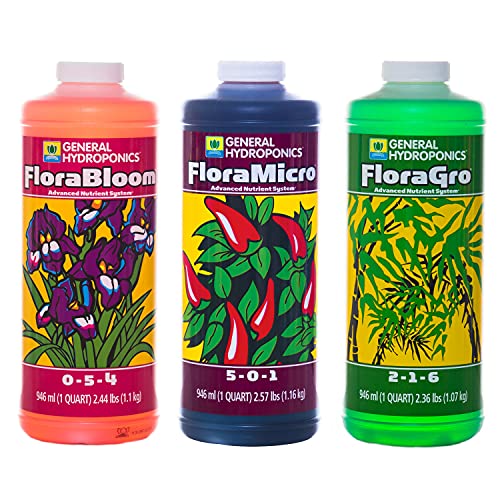
General Hydroponics Flora Series
Three liquid concentrates (Gro, Micro, Bloom) that are quick to measure for small reservoirs.
-
6pH
General Hydroponics pH Control Kit
pH up, pH down and a color indicator test to hold the 5.5 to 6.0 range.
-
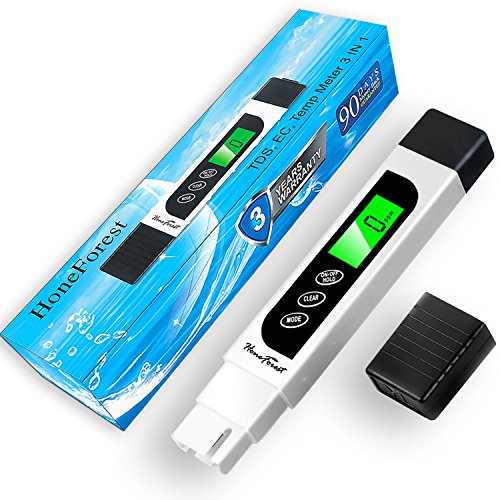
7Nutrient strength
Pen meter that reads EC, TDS and temperature, so you can hit a target instead of guessing.


Shortcuts: ready-made systems and light
-
1Countertop system
LetPot LPH-SE 12 Pod Countertop Garden
A 12-pod indoor unit with its own light and pump, for loose-leaf lettuce on a kitchen counter.
-
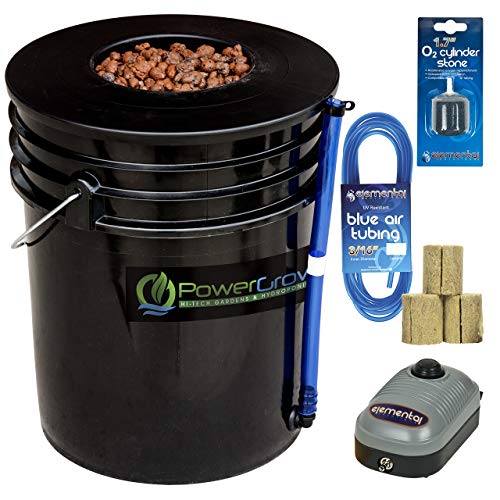
2DWC kit
A single-bucket deep water culture setup, so you do not source the lid and aeration parts one by one. Check the listing for exactly what is included.
-
3Grow light
GLOWRIUM Full Spectrum Grow Light with Stand
A standing full-spectrum LED for growing on a shelf or table away from a bright window.


How to Grow Lettuce Hydroponically: Seed to Transplant
The aim of propagation is a compact seedling with three or four true leaves and roots poking out of the cube.
Germinating in Rockwool
UK Extension recommends bonded plugs such as rockwool for DWC and NFT because they hold together when submerged. It suggests pre-charging cubes with nutrient solution at EC 1.0 mS/cm and pH 5.5 to 6.0, then germinating at about 68°F with humidity above 88 percent. Lettuce seed germinates better with some light, so sow it shallow.
When to Transplant
Seedlings are ready when they have three to four true leaves and roots have emerged from the bottom of the plug, usually 14 to 21 days after seeding (UK Extension). Under ideal light, Cornell reaches that stage in about 11 days; at half the light, it takes twice as long.
From seed to transplant
-
Soak the cubes
Soak rockwool in weak nutrient solution at pH 5.5 to 6.0, then drain until moist, not dripping.
-
Sow one or two seeds per cube
UF/IFAS sows one to two per cube; thin to the strongest seedling later.
-
Cover and keep warm
Use a humidity dome at around 68°F and remove it at emergence, about two days after seeding (UK Extension).
-
Give light and feed lightly
Seedlings stretch in dim light, so move them under a grow light at once. Keep cubes moist with solution near EC 1.0 mS/cm.
-
Transplant into net cups
At three to four true leaves, set each cube in a net cup. Make sure the cube touches the solution: the plug is small and dries out fast.
Nutrient Solution: EC, ppm and pH for Lettuce
Use a complete hydroponic fertilizer that includes calcium and micronutrients; garden plant food alone leaves gaps.
Strength (EC and ppm)
Extension targets cluster tightly. UK Extension's example lettuce recipe runs at around 1.5 mS/cm, Cornell's Neil Mattson gives the CEA group's lettuce solution as about 1.5 in Growing Hydroponic Leafy Greens (Mattson, GPN, 2016), and the UF/IFAS bucket method aims for about 1,250 µS/cm, which it equates to roughly 800 ppm TDS. In practice, 1.2 to 1.5 mS/cm is a sensible window for home growers.
Watch the units on your meter. Most pen meters convert EC to ppm with a 0.5 or 0.64 factor, so 1.5 mS/cm reads as 750 ppm on one meter and about 960 ppm on another. Working in EC avoids the confusion.
pH
All three sources agree on pH 5.5 to 6.0. Most tap water starts higher, so you will usually add pH down. Check pH after mixing nutrients, never before, because the fertilizer itself shifts it.
Topping Up and Changing the Solution
In a DWC bucket or recirculating system, UK Extension advises topping up the reservoir every few days and replacing it fully or partly every 3 to 4 weeks to prevent imbalances and salt build-up. Kratky containers are the exception: you fill once and let the level fall.
Light for Lettuce Indoors
Light most often limits indoor lettuce: Cornell's Mattson writes that lettuce growth is directly proportional to the light received.
Daily Light Integral Targets
Daily light integral (DLI) is the total light a plant receives in a day. UK Extension gives an optimal DLI of 12 to 17 mol/m²/day for lettuce and a minimum of about 6.5 to 9.7. Cornell grows heads at 17, where they are ready 24 days after transplanting; at half that (8.5), the same heads took 48 days.
Turning DLI Into Hours and Intensity
DLI equals light intensity (PPFD, in µmol/m²/s) multiplied by hours, multiplied by 0.0036. For 16 hours a day, a DLI of 12 to 17 needs roughly 200 to 300 µmol/m²/s at the leaves. Longer days let a weaker light do the same job.
Windowsill or Grow Light?
A sunny south window can grow loose-leaf lettuce in spring and fall, but winter windows rarely reach the minimum DLI, so plants stretch. A full-spectrum LED is the reliable answer year-round.
Temperature, Bolting and Tipburn
Lettuce is a cool season crop, and heat causes most home failures.
Temperature Targets
UK Extension says air for hydroponic lettuce should not exceed 75°F (24°C) by day or 65°F (18°C) at night, with relative humidity at 50 to 70 percent. Lettuce tolerates 50°F nights in winter, but grows more slowly. Keep the root zone cool too: warm water holds less oxygen, and Cornell reports crop failure below 3 ppm dissolved oxygen.
Bolting
Bolting is when the plant sends up a flower stalk and the leaves turn bitter. UK Extension links it to prolonged heat and to temperature swings, which can do more harm than steady warmth. Choose slow-bolting cultivars in summer and harvest promptly.
Tipburn
Tipburn shows as brown edges on young inner leaves. It is a calcium shortage at the growing point, not in the tank: fast growth outruns calcium delivery, which depends on transpiration. UK Extension recommends airflow of 0.7 to 2.2 mph, less light or heat, and shorter cycles. Without good airflow, Cornell drops its DLI target to 13 to 14.
Lettuce Calendar: Seed to Harvest
Timings depend on light and temperature. The table combines the UK Extension production timeline with Cornell's results under optimal conditions.
| Stage | Days from sowing | What to do |
|---|---|---|
| Germination | 0 to 3 | Keep cubes at about 68°F and humid; remove the dome at emergence |
| Seedling | 3 to 14 | Full light, weak nutrients (EC 1.0), never let cubes dry |
| Transplant | 11 to 21 | Three to four true leaves, roots out of the cube |
| Growing on | 21 to 45 | EC 1.2 to 1.5, pH 5.5 to 6.0, airflow, check weekly |
| First leaf picking | From about 30 | Take outer leaves from loose-leaf types |
| Full head | About 35 to 56 | Cut at the base; UK Extension expects 21 to 35 days after transplant |
UK Extension reports full heads of 100 to 210 g (3.5 to 7.5 oz), and Cornell grows a 5 to 6 ounce head from seed in 35 days under ideal light. Slower winter growth simply pushes harvest later.
Harvesting: Leaf by Leaf or Whole Head
Cut-and-Come-Again
With loose-leaf types, pick outer leaves once plants have six or more, leaving the center growing. This works for several weeks, until the plant elongates and turns bitter.
Whole Heads
Cut butterheads and romaines at the base of the cup when the head feels full. In summer, harvest earlier: UK Extension notes it helps prevent tipburn.
Common Problems and How to Fix Them
Most problems trace back to heat, light or the solution. Use this table to diagnose before changing everything at once.
| Symptom | Likely cause | Fix |
|---|---|---|
| Tall, pale, floppy seedlings | Too little light | Lower the light or lengthen the day toward a DLI of 12 or more |
| Brown, crispy edges on inner leaves | Tipburn (calcium cannot reach the growing point) | Add a fan, reduce light or heat slightly, harvest sooner |
| Central stalk, bitter leaves | Bolting from heat or temperature swings | Keep air under 75°F, choose slow-bolting varieties, harvest now |
| Brown, slimy roots and wilting | Root rot (Pythium) from warm, low-oxygen water | Cool the water, aerate, clean the system between crops, discard affected plants |
| Yellowing older leaves | Weak solution or nitrogen shortage | Check EC and raise it toward 1.2 to 1.5 |
| Yellowing between veins of new leaves | pH too high, locking out iron | Bring pH back to 5.5 to 6.0 |
| Green film in the reservoir | Light reaching the solution | Use opaque containers and cover unused holes |
| Wilting after a Kratky refill | Air roots submerged | Never raise the level above the roots once the gap forms |
Growing Lettuce in Aquaponics
Lettuce is also the standard plant in aquaponic raft beds, where fish waste replaces the fertilizer. You cannot push pH down to 5.5 without stressing fish and nitrifying bacteria, so aquaponic lettuce grows near pH 7 at a lower EC. Leafy greens cope with that better than fruiting crops, which is why lettuce tops most lists of the best plants for aquaponics. Iron often runs short first. Our aquaponics vs hydroponics comparison covers the trade-offs.
Grow along with us
New guides and seasonal tips for fish, plants and DIY builds, about once a month.