Fish guide
API Freshwater Master Test Kit: Honest Review and How to Use It
As an Amazon Associate we earn from qualifying purchases. How we choose products.
On this page
- What the API Master Test Kit Measures
- API Freshwater Master Test Kit Instructions, Test by Test
- How to Read the API Master Test Kit Chart
- API Freshwater Master Test Kit Review: Pros and Cons
- Common Mistakes That Give Wrong Readings
- Shelf Life, Refills and How Long a Kit Lasts
- API Master Test Kit vs Test Strips and pH Pens
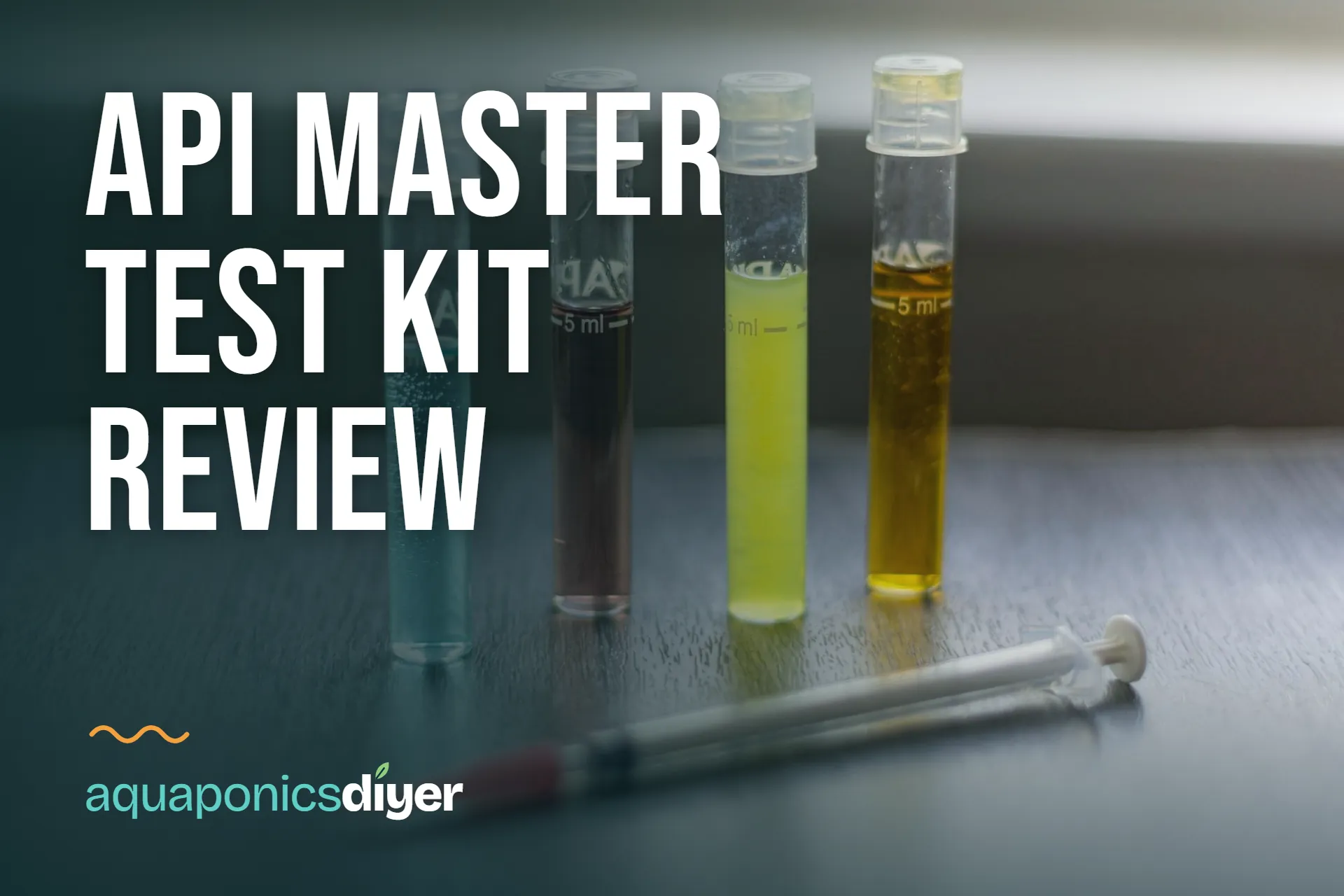
The API Freshwater Master Test Kit is the liquid test kit most home aquarium and aquaponics keepers end up buying, and for good reason: one box measures the five numbers that tell you whether fish and bacteria are healthy (pH, high range pH, ammonia, nitrite and nitrate), with enough reagent for roughly 800 tests according to retailer listings. It is more accurate and cheaper per test than strips, but it is slower, and the nitrate test punishes shortcuts.
This guide covers what the kit measures, how to run each test step by step (drop counts, shaking and wait times as printed in API's directions), how to read the color chart, what to do with each reading in an aquaponics system or aquarium, the mistakes that produce wrong numbers, and when a strip, a single test or a pH pen makes more sense.
What the API Master Test Kit Measures
The kit is sold for freshwater only. Retailer listings such as PetSmart's describe the contents as 7 test solutions, 4 glass test tubes with caps and one color card, plus an instruction booklet. Each test uses a 5 ml water sample and a set number of drops; the color the water turns is matched against the card.
The Five Tests and Why Each One Matters
| Test | What it tells you | Why it matters in aquaponics |
|---|---|---|
| pH | How acidic or alkaline the water is, on the lower part of the scale | Plants take up iron and other nutrients best in slightly acidic water; nitrifying bacteria slow down as pH falls |
| High range pH | The upper part of the scale, for hard or alkaline water | Useful for new systems on hard tap water, where pH starts high |
| Ammonia | Total ammonia from fish waste and rotting feed | The first warning sign of overfeeding, too many fish or a weak biofilter |
| Nitrite | The middle product of the nitrogen cycle | Toxic to fish; should sit at zero once the system is cycled |
| Nitrate | The end product, which plants use as fertilizer | Shows the biofilter works and tells you whether plants are keeping up with the fish |
Low Range vs High Range pH
The two pH tests cover different windows. API gives the high range pH test a minimum reading of 7.4 and a maximum of 8.8, and its standard pH test reads no lower than 6.0. Run the standard test first; if it reads at the top of its scale, run the high range test to find out how high the pH really is. In a mature aquaponics system you will mostly use the standard test, because nitrification slowly pushes pH down.
What the Kit Does Not Measure
There is no test for KH (carbonate hardness), GH, dissolved oxygen or iron. KH is the buffer that stops pH from crashing, so if your pH keeps dropping fast, the 5-in-1 strips covered below fill the gap.
API Freshwater Master Test Kit Instructions, Test by Test
The directions below follow the instruction booklet API packs with the kit. The booklet in your box has the final word, and is also the place to look for the instructions PDF many people search for. Every test starts the same way: rinse a tube with the water you are testing, then fill it to the 5 ml line.
Before You Start
- Take the sample from the fish tank, away from the inlet where fresh water from the grow beds comes in.
- Hold each bottle straight upside down so every drop is the same size, and count out loud if you need to.
- Cap the tube with its own cap. API's directions warn against covering the tube with a finger, which can change the result.
- Set a timer. Reading early is the most common reason for a pale, falsely low result.
pH and High Range pH
For standard pH, add 3 drops of the pH test solution to 5 ml of water, cap, and invert the tube a few times. For high range pH, use 5 drops of the high range solution instead. Both read straight away; no waiting is needed.
Ammonia and Nitrite
For ammonia, add 8 drops from Ammonia Bottle #1 and 8 drops from Ammonia Bottle #2. Cap and shake for about 5 seconds, then wait 5 minutes for the color to develop. Yellow means little or no ammonia; green tones mean ammonia is present.
For nitrite, add 5 drops of the nitrite solution, cap, shake for about 5 seconds and wait 5 minutes. Light blue is zero; purple means nitrite is present.
Nitrate (Read This One Twice)
- Add 10 drops from Nitrate Bottle #1, cap and invert the tube several times.
- Shake Nitrate Bottle #2 vigorously for at least 30 seconds. API's directions call this step extremely important for accuracy.
- Add 10 drops from Bottle #2, cap, and shake the tube vigorously for 1 minute.
- Wait 5 minutes, then read against the nitrate card. Yellow is zero; orange and red mean higher levels.
| Test | Drops in 5 ml | Mix | Wait before reading |
|---|---|---|---|
| pH | 3 | Invert | None |
| High range pH | 5 | Invert | None |
| Ammonia | 8 from #1, 8 from #2 | Shake 5 seconds | 5 minutes |
| Nitrite | 5 | Shake 5 seconds | 5 minutes |
| Nitrate | 10 from #1, 10 from #2 (shake #2 first) | Shake 1 minute | 5 minutes |
Running all five tests takes about 15 minutes if you start the ammonia, nitrite and nitrate tubes back to back, since the waits overlap. Rinse every tube with clean water when you finish and let them dry upside down.
How to Read the API Master Test Kit Chart
The color card is the part most people get wrong, not the chemistry. Light changes everything: the same tube looks greener under a warm kitchen bulb than in daylight.
Reading the Color Card
- Read in daylight or under a bright white light, never a yellow bulb or the glow of the aquarium light.
- Hold the tube against the white area of the card, beside the color blocks, and look across it rather than down through it.
- If the color falls between two blocks, write down both values. The trend over a few days matters more than a single number.
- The nitrate card jumps in large steps, roughly doubling from one block to the next, so treat nitrate as a range, not an exact figure.
When the Reading Is Off the Chart
Ammonia during a fishless cycle and nitrate in a heavily stocked system can both run past the top block. New Mexico State University's Circular 680, Important Water Quality Parameters in Aquaponics Systems (revised 2026) says aquarium test kits are adequate for most backyard systems, and that if readings exceed the higher ranges you need to dilute the sample. Mix one part tank water with one part distilled water, test, and double the result.
What to Do With Each Reading
The aquaponics targets below come from NMSU Circular 680, which gives an ideal compromise pH of 6.8 to 7.0 for fish, plants and bacteria together. A plain aquarium can run a little higher on pH and should keep nitrate lower, since no plants are pulling it out.
| Reading | Aquaponics target (NMSU) | Typical aquarium target | If it is out of range |
|---|---|---|---|
| pH | 6.8 to 7.0 ideal; 6.4 to 7.4 tolerated | Depends on the species; 6.5 to 7.5 suits most community fish | Too high: see our guide on how to lower pH in an aquarium. Too low: add a buffer slowly and check KH |
| Ammonia | Under 1 ppm, ideally 0 | 0 | Stop feeding for a day, check for a dead fish or rotting feed, do a partial water change |
| Nitrite | Under 1 ppm, ideally 0 | 0 | Partial water change, feed lightly, and check that the biofilter is not cold or short of oxygen |
| Nitrate | 5 to 150 ppm | Under 40 ppm, the level API's directions suggest | Low in aquaponics: plants are hungry, so feed more or add fish. High: add plants or change some water |
In a new system, ammonia and nitrite readings tell you where the nitrogen cycle stands. Our fishless cycling guide shows the week-by-week pattern your test results should follow before fish go in.
API Freshwater Master Test Kit Review: Pros and Cons
We judge it against the job it has to do in a home system: give trustworthy numbers for cycling and weekly checks, at a sensible cost per test.

API Freshwater Master Test Kit (Editor's Choice)
This is the kit most aquarium shops and cycling guides have in mind when they say "test your water". Five tests in one box, glass tubes that rinse clean, and a booklet that explains what each result means. Liquid reagents also read the low numbers that matter during cycling more clearly than strips do, which is why the kit is the standard recommendation on aquarium forums and Reddit threads about cycling.
- ✅ Covers pH, high range pH, ammonia, nitrite and nitrate in one box
- ✅ Roughly 800 tests per kit, so the cost per test is low
- ✅ Clearer at low ammonia and nitrite levels than strips
- ✅ Individual refills sold for ammonia, nitrite, nitrate and pH, plus spare tubes
- ❌ Slow: about 15 minutes for a full set of readings
- ❌ The nitrate test is fiddly and reads low if Bottle #2 is not shaken hard
- ❌ The standard pH test bottoms out around 6.0, which is where some aquaponics systems drift
- ❌ Color matching is subjective, and nitrate jumps in wide steps
- ❌ No KH or GH test
Who Should Buy It
Anyone starting a new aquaponics fish tank or aquarium, and anyone cycling a system without fish. If you are setting up a system from scratch, the bundle with API Quick Start bacteria (listed below) gives you the test kit and a starter culture together.
Who Can Skip It
A keeper with a long-established tank who only wants a quick weekly glance may be happier with strips, and keep a liquid kit for when something goes wrong. Systems that run at pH 6 or lower get more from a calibrated pH pen than from the standard pH test.
Common Mistakes That Give Wrong Readings
When a reading makes no sense, the cause is usually the method, not the water. These are the errors that come up again and again.
Not Shaking Nitrate Bottle #2
The reagent in Nitrate Bottle #2 settles and compacts in the bottom of the bottle. If it is not shaken hard for at least 30 seconds, the drops carry too little of it and nitrate reads low or zero. Some keepers tap the bottle on the table first to break up the layer at the bottom. A nitrate of zero in a system with fish that have been fed for weeks is almost always this mistake.
Dirty, Wet or Cracked Tubes
Leftover reagent in a tube colors the next test. Rinse tubes with clean water straight after use and again with tank water before the next test. A cracked or scratched tube makes colors hard to read; spare tubes are cheap.
Expired Reagents
Reagents lose accuracy with age. The expiry date is printed on the packaging, often on the bottom of the box, and old ammonia reagent is a common cause of strange green readings. Write the date on the lid with a marker when you open the kit.
Testing Tap Water Without Knowing What Is in It
Many utilities treat water with chloramine, which contains ammonia. A fresh water change can show ammonia on the test even when the biofilter is fine. Test your tap water once so you know its baseline.
Shelf Life, Refills and How Long a Kit Lasts
How Long One Kit Lasts
Retailers list the kit at up to 800 tests in total, shared across the five tests. During a fishless cycle you might test every two or three days; once a system is stable, NMSU says weekly testing is usually enough, with pH checked more often because nitrification pushes it down. At that pace most home users run out of one reagent, usually ammonia or nitrate, well before the others.
Refills Instead of a New Kit
When one bottle runs low, buy that test alone rather than a whole new kit. API sells the ammonia, nitrite and nitrate tests separately, and replacement tubes come in packs.
Storing the Kit
Keep the kit at room temperature, out of sunlight, with every cap closed tightly. API's directions also say test solutions must not go into the aquarium or pond.
Refills and Spares
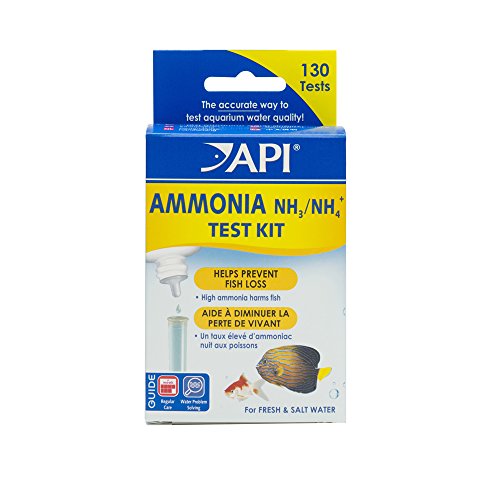
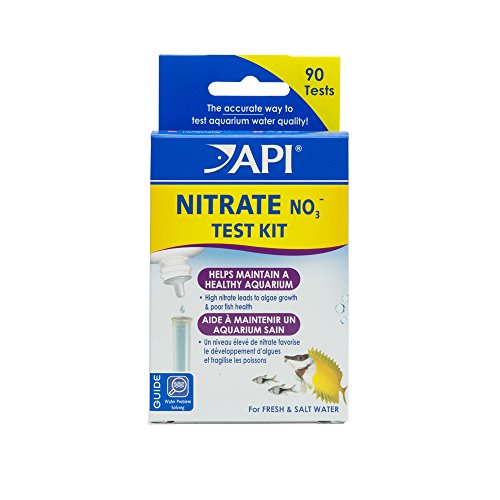
Single tests to top up the bottle that runs out first, and spare tubes.
-
1Ammonia refill
The same two-bottle ammonia test as the Master Kit, sold alone for when ammonia runs out first during cycling.
-
2Nitrite refill
The single-bottle nitrite test, worth having in reserve while a new system's nitrite is peaking.
-
3Nitrate refill
The two-bottle nitrate test on its own; aquaponics growers test nitrate often because it shows whether plants are fed.
-
4Spare tubes
API Replacement Test Tubes (3 Pack)
Glass tubes with caps to replace cracked or stained ones, so you can run tests side by side.


API Master Test Kit vs Test Strips and pH Pens
Liquid kits, strips and electronic pens each do one job better than the others. Most experienced growers end up with a liquid aquarium master test kit plus one of the other two.
| Liquid kit (API Master) | Test strips | pH pen | |
|---|---|---|---|
| Time per reading | About 15 minutes for all five | About a minute | Seconds |
| Accuracy at low levels | Good | Harder to read | Precise for pH only |
| Cost per test | Low | Higher | Low once bought, plus calibration solution |
| Ammonia | Yes | Only on ammonia-specific strips | No |
| Best for | Cycling, troubleshooting, weekly checks | Quick checks in a stable system | Systems where pH runs below 6 or needs tight control |
When Strips Make Sense
Strips are a convenience, not a replacement. API's 5-in-1 strips add KH and GH, which the liquid kit lacks, but they do not test ammonia, so they cannot see the most important number during cycling. Ammonia-only strips such as Tetra EasyStrips fill that hole for quick checks.
When a pH Pen Makes Sense
In aquaponics, pH matters more than in most aquariums because it decides which nutrients plants can take up. A digital pen such as the Apera PH20 reads in decimals and below 6.0, where the standard liquid test stops. It needs regular calibration to stay honest.
| Product | API Master Test Kit Editor's Choice | Master Kit + Quick Start New systems | API 5-in-1 Strips | Tetra EasyStrips Ammonia | Apera PH20 Pen |
|---|---|---|---|---|---|
| Product | |  | 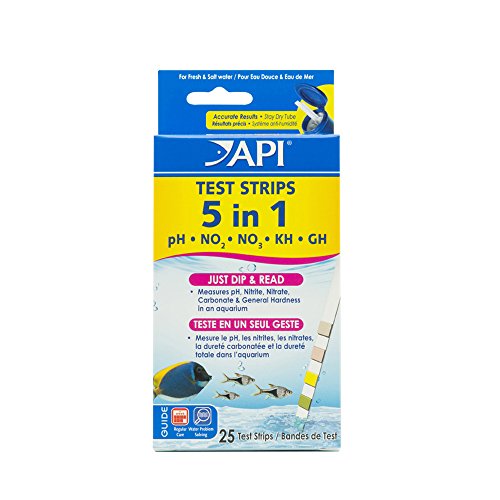 |  |  |
| Type | Liquid reagents | Liquid reagents plus bacteria starter | Dip strips | Dip strips | Digital meter |
| Measures | pH, high range pH, ammonia, nitrite, nitrate | Same five tests | pH, nitrite, nitrate, KH, GH | Ammonia | pH |
| Best for | Cycling and weekly checks | Starting a new system | Quick checks and KH | Quick ammonia checks | Exact pH below 6.0 |
| Price tier | $$ | $$ | $ | $ | $$ |
| Buy | Check price | Check price | Check price | Check price | Check price |
Editor's Choice
API Master Test Kit
- Type
- Liquid reagents
- Measures
- pH, high range pH, ammonia, nitrite, nitrate
- Best for
- Cycling and weekly checks
- Price tier
- $$
New systems
Master Kit + Quick Start
- Type
- Liquid reagents plus bacteria starter
- Measures
- Same five tests
- Best for
- Starting a new system
- Price tier
- $$
API 5-in-1 Strips
- Type
- Dip strips
- Measures
- pH, nitrite, nitrate, KH, GH
- Best for
- Quick checks and KH
- Price tier
- $
Tetra EasyStrips Ammonia
- Type
- Dip strips
- Measures
- Ammonia
- Best for
- Quick ammonia checks
- Price tier
- $
Apera PH20 Pen
- Type
- Digital meter
- Measures
- pH
- Best for
- Exact pH below 6.0
- Price tier
- $$
Grow along with us
New guides and seasonal tips for fish, plants and DIY builds, about once a month.