Plants and media
Pothos in an Aquarium: How to Grow It and When to Upgrade
As an Amazon Associate we earn from qualifying purchases. How we choose products.
On this page
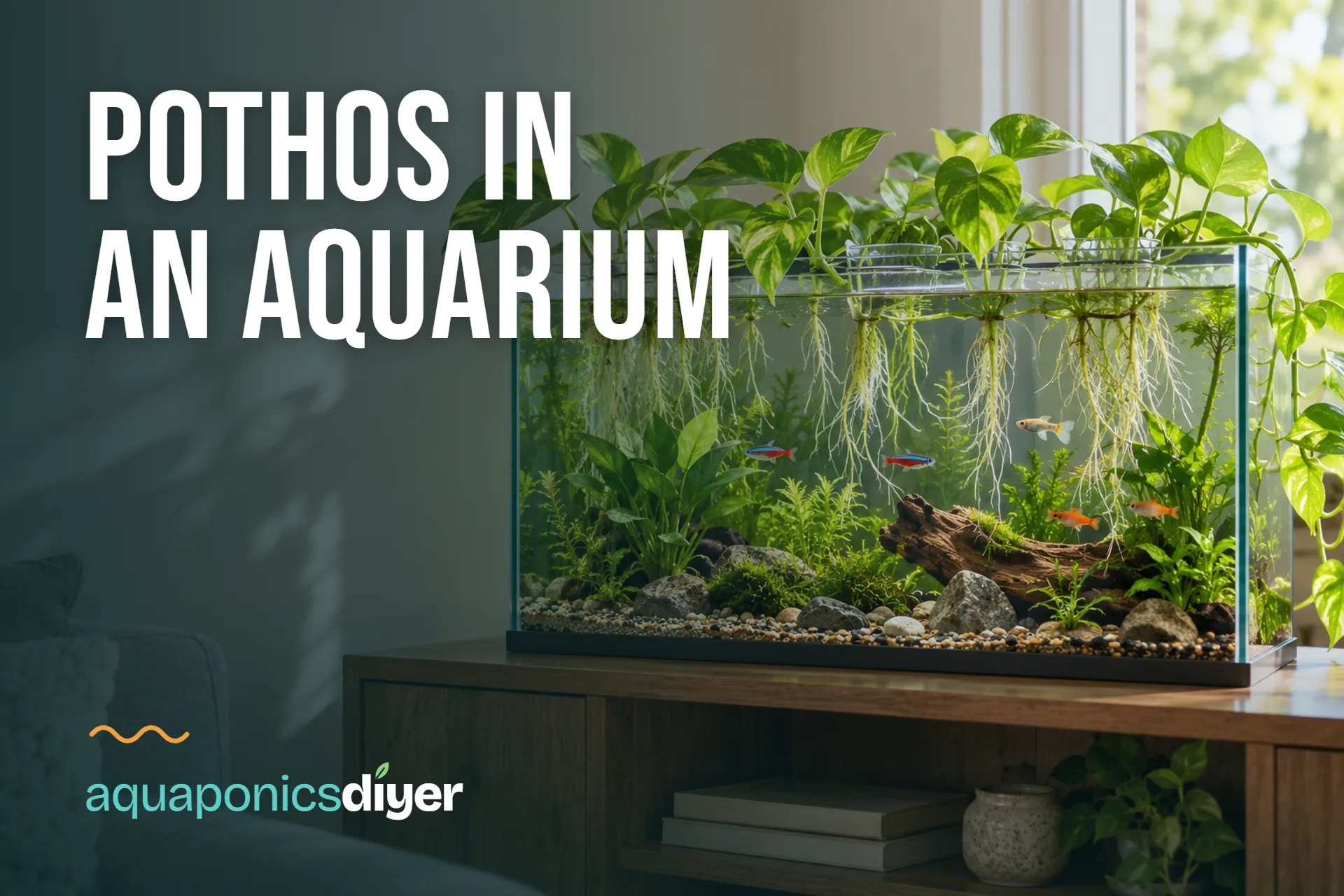
Yes, you can grow pothos in an aquarium, and it is simple: the roots sit in the tank water and the leaves stay out of it. The plant takes up what the fish produce, and you get a trailing green plant on the rim of the tank.
What you are building, whether you call it that or not, is a very small version of aquaponics: fish feed the plant, the plant takes up nutrients from the water. This guide covers how to set up pothos in an aquarium, how to hold it in place, whether it is safe for fish and for the cat or dog that shares your home, what goes wrong, and the point where it makes sense to move from a single vine to a proper kit.
Why Pothos Works in a Fish Tank
Pothos (Epipremnum aureum, also sold as golden pothos or devil’s ivy) is one of the most common houseplants in the world, and it has a trait that suits aquariums: it forms roots along its stems, and those roots keep growing in plain water. The roots need no soil or substrate, and the leaves do fine in ordinary room light.
It Feeds on Fish Waste
A fish tank is a closed loop of waste. Fish eat, they excrete ammonia, and bacteria in the filter turn that ammonia into nitrite and then nitrate. FAO’s manual Small-scale aquaponic food production describes nitrate as the most accessible form of nitrogen for plants, and calls producing it the goal of the biofilter. In a normal aquarium that nitrate builds up until you remove it with a water change. A plant with roots in the water gives it somewhere to go instead.
That is the whole idea behind aquaponics, only here the plant is a decorative vine and not a crop. Hobbyists commonly add a pothos cutting for exactly this reason, and many also like that a root mass hanging in the water gives shy fish and fry a place to hide.
What It Will Not Fix
This is where expectations go wrong. One vine does not turn a neglected tank into a healthy one. Pothos does not do the job of a filter, because the bacteria that convert ammonia and nitrite live on surfaces in your filter and substrate, not on a plant. It also does not mean you can skip partial water changes: it takes up some nutrients, but it does not remove everything that builds up in the water, and no published source puts a number on how much one plant removes. Treat it as a helper to a tank you are already maintaining.
On a new tank, cycle first (see fishless cycling), then add the plant. A cutting will not protect fish from an ammonia spike.
How to Put Pothos in an Aquarium
The method is the same in nearly every hobbyist guide: start clean, keep the leaves dry, and make sure the plant cannot fall in or swing around. It needs no tools beyond scissors and something to hold the vine.
Cuttings, Not Potted Plants
The cleanest start is a cutting. Cut a vine just below a node, the small bump on the stem where a leaf joins and roots emerge, and keep a few leaves on the cutting. Pothos cuttings root in plain water, so you can also root one in a glass for a while before it goes into the tank.
If you would rather use a potted plant, wash it first. Take the plant out of the pot, rinse every trace of soil off the roots under lukewarm tap water, and rinse again. Potting mix can contain fertilizer, and soil in a tank clouds the water and breaks down into more waste. If you do not know how a store plant was fed or treated, a cutting from a plant you know is the safer start.
Roots In, Leaves Out
Lower the cutting so that the roots and the lowest node or two are under the surface and every leaf is above it. Leaves that stay underwater tend to rot, and rotting plant matter feeds the same ammonia problem you are trying to reduce. If a leaf does end up in the water, trim it.
Position matters too. Pothos grows toward light and trails, so the back corner of an open-top tank, close to a window or the tank light, works well.
Holding It in Place
The weak point of the setup is not the plant, it is the mount. A cutting that floats around drifts away from the water, and a heavy vine can tip off the rim. The usual solutions, in order of how clean they look:
- A hang-on holder. A small basket or cup that clips over the rim keeps the stem upright with roots reaching down. Our guide to the aquarium plant holder compares the options.
- The rim of the tank. On an open-top tank you can rest the stem on the rim and let the roots hang inside the glass.
- The filter. Many hobbyists tuck roots into a hang-on-back filter chamber. Check the flow regularly, because roots can eventually clog an intake or slow a filter that was sized tightly.
- Clips and suction cups. Fine for a lightweight cutting; a mature plant needs something sturdier.
Is Pothos Safe for Fish and Pets?
Two separate questions, and the answers are different.
Fish
Aquarists have kept pothos with roots in the water for years, in tanks with a wide range of fish. No primary source, such as a university or veterinary study, has been found that tests pothos roots for safety with aquarium fish, so there is no guarantee. What can be said is that the risks reported by hobbyists come from the way pothos is added, not from the roots themselves: soil, fertilizer or pesticide on a store-bought plant, and rotting leaves left under the surface. Start with a clean cutting, keep an eye on the fish for the first few days, and take the plant out if anything looks wrong.
Cats and Dogs
This one has a clear source. The ASPCA’s toxic and non-toxic plant list names pothos (also listed as devil’s ivy, golden pothos, taro vine and ivy arum) as toxic to dogs and cats. It gives insoluble calcium oxalates as the toxic principle and lists oral irritation, pain and swelling of the mouth, tongue and lips, drooling, vomiting and difficulty swallowing as the clinical signs.
A pothos vine trailing down the side of a tank is exactly what a curious cat wants to chew. If you have a cat or dog, put the tank where the vine cannot be reached, trim the vine back from the edge, or choose a different plant. For anything the animal has already eaten, call your vet or an animal poison control line rather than waiting to see what happens.
Common Problems with Pothos in an Aquarium
People search for “pothos destroyed my aquarium”, and the cases behind it are usually a plant that was allowed to rot or a root mass that was allowed to take over.
Rotting Stems
A stem that sits underwater for long, or leaves that fall in, can turn soft and brown. Rot in the tank water adds waste, makes the water smell and can cloud it. Lift the vine so only the roots and the lowest node are wet, and cut away any soft, brown or slimy section with clean scissors. A healthy stem is firm; a rotting one is mushy.
Yellow Leaves
Yellowing is a general stress signal on pothos and has several possible causes. In an aquarium setup the likeliest are not enough light, a cutting that has not grown a strong root system yet, or a plant that has been moved from soil into water and is adjusting. Remove yellow leaves so they do not fall in the water, move the plant closer to a window if you can, and give it a few weeks.
Roots Taking Over the Tank
Pothos is a fast, vigorous plant, and with a steady supply of nutrients in the water it will put out long, thick roots. In a small tank these can fill the space where fish swim, tangle in a filter intake or block the light. Trim the roots back every so often with scissors; you can remove a large part of the root mass without harming the plant, because it grows more. Root the cuttings you trim in a glass if you want more plants.
Other Plants That Work the Same Way
Pothos is the easy starter, but not the only plant that can live with its roots in tank water.
Houseplants Hobbyists Try
Aquarists also commonly try other houseplants that root easily in water, such as philodendron and spider plants. Check each plant against the ASPCA list before you buy it, because many popular houseplants are toxic to cats and dogs, and the rest are often not safe to assume. As with pothos, wash soil off and keep leaves out of the water.
Edible Plants
If you want a plant you can eat, the same trick works with herbs and greens, with more care. Basil in aquaponics is one of the most reliable herbs to grow from a net cup above a fish tank. Our list of the best plants for aquaponics sorts herbs, greens and fruiting crops by how much nutrient they need, which tells you how many fish you need behind them.
When to Move to an Aquaponics Kit
A pothos vine is a good way to find out whether you like the idea of plants growing on top of fish. Here is when it stops being enough.
When One Vine Is Not Enough
You are ready for more if you want to eat the plant or want more plants. A kit gives you a proper grow bed on top of the aquarium, a pump to bring water up to it and a way to hold many plants at once, so the fish waste feeds a bed of herbs and greens and not one ornamental vine. Our guide to the aquaponics fish tank explains how those setups work and what size of tank they suit.
Which Kit Fits
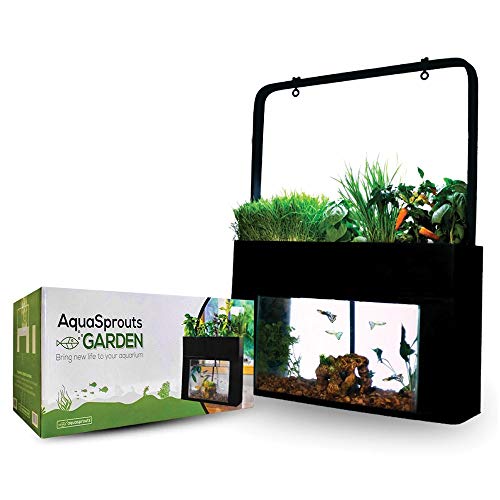
Two kits are worth a look if you are coming from a pothos-in-a-tank setup. The AquaSprouts Garden sits on top of a standard aquarium you already own, so your existing tank becomes the fish half of the system. The Penn-Plax Aqua-Ponic Planter is the smaller, decorative option for a desk, closer to what you do with a pothos cutting. The two are compared head to head in AquaSprouts vs Penn-Plax, and the full field is in our guide to aquaponics kits.
Which kit fits
Two ways to go from one vine to a small working system.
-
1Grow bed for the tank you own
A full-width grow bed with pump and timer that fits any standard 10 gallon tank, so you keep the aquarium and gain a real herb bed.
-
2Small planter, closest to pothos
Penn-Plax Aqua-Ponic Planter (1.4 Gallon)
A houseplant or herb on a small round tank with no pump. It is a decorative planter, not a fish habitat.

Planning more than a vine? See aquaponics kits, read what aquaponics is, or learn how to cycle a system before you add fish.
Pothos in Aquarium FAQ
Grow along with us
New guides and seasonal tips for fish, plants and DIY builds, about once a month.