Systems and kits
Best Aquarium Plant Holders for Growing Plants on Your Tank
As an Amazon Associate we earn from qualifying purchases. How we choose products.
Best Overall Holder: Borlech Large Aquarium Plant Holder (2 Pack) Check price on Amazon
On this page
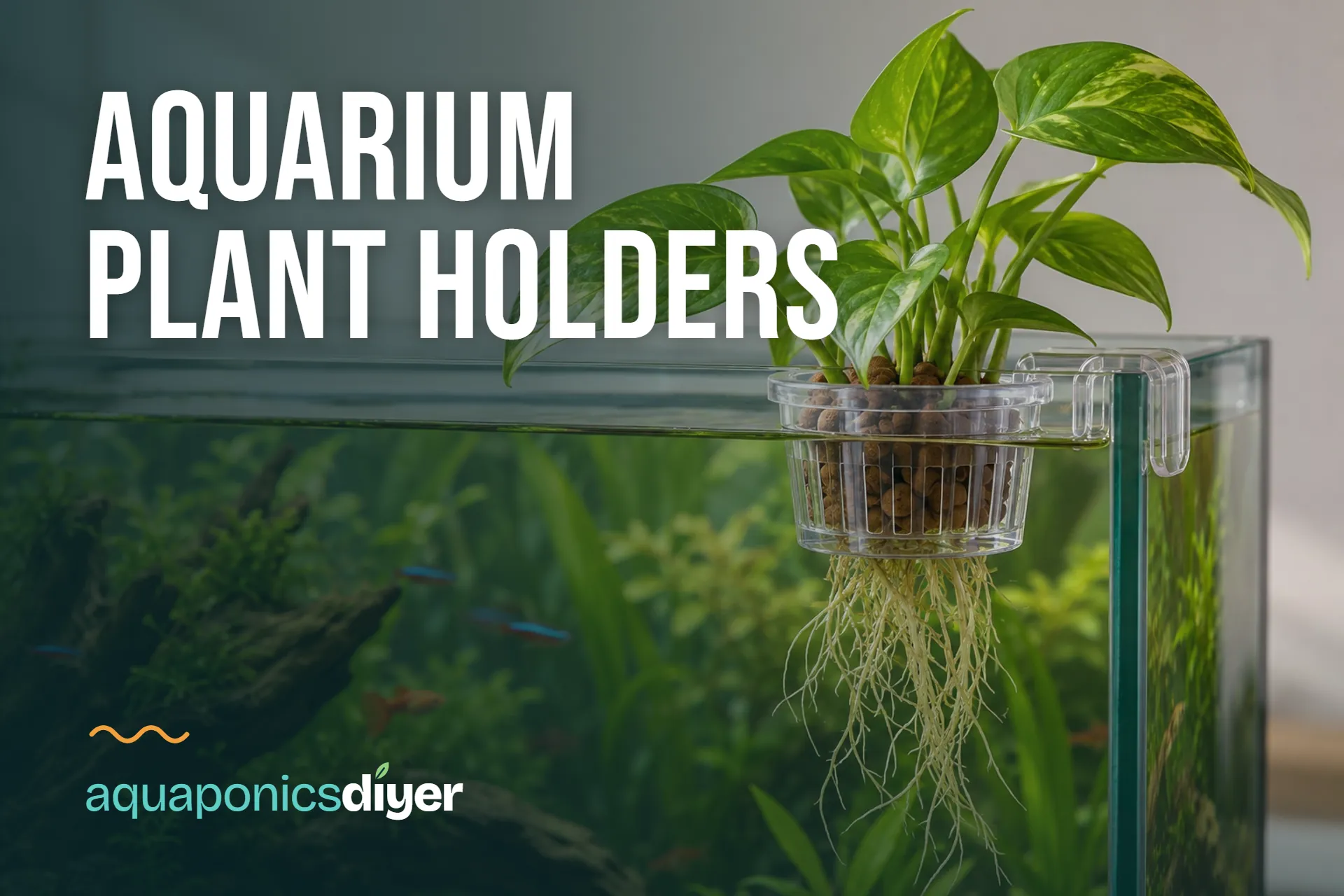
An aquarium plant holder is a small cup, basket or tray that keeps a land plant upright at the top of a fish tank while its roots hang into the water. For most tanks, a slotted hang-on holder that hooks over the rim is the best choice, because it is stable, it keeps the leaves dry and it does not need a clear patch of glass.
This guide covers the four types of aquarium plant holder, how they compare, the specific holders worth buying, a do-it-yourself version, what to grow in one and the point where a holder stops being enough. If you are still deciding how to put plants on a tank at all, start with our guide to the aquaponics fish tank, which compares holders, raft lids and pumped grow beds.
Best Overall Holder
Borlech Large Aquarium Plant Holder (2 Pack)
A slotted cup that hooks over the tank edge or sticks to the glass with suction cups, so one holder suits both rimmed and rimless setups. The slots let water reach the roots and keep fish from nibbling them.
-
Best for aquatic and semi-aquatic plants
A small glass pot on two suction cups, sized for plants that live at the waterline.
-
Best for a custom lid or raft
ORIMERC 12 Pack 3 Inch Net Cups
Twelve net cups that drop into holes you cut in a lid, one cup per plant.
Types of Aquarium Plant Holders
Every holder does the same job: it holds a plant in the air above the water and lets its roots reach down into the tank. They differ in how they attach, and that decides what they suit.
Hang-On Rim Planters
A hang-on planter has a hook or clip that sits over the top edge of the tank, with a cup or basket hanging on the inside. This is the type most people mean by “hanging aquarium planter.” It carries more weight than a suction cup can, it keeps the stem upright and it is easy to lift out for pruning. The limit is the rim: the hook has to fit the thickness of the glass or frame, so check the size the maker lists before you buy. Some designs ship with extension hooks for thicker rims. A hook also needs a rim to grip, which is a problem on some rimless tanks (see the FAQ).
Suction-Cup Cups
A suction-cup holder is a small pot that sticks to the inside of the glass. It works on any smooth glass wall and is the neat choice for a planted look, because the pot can sit anywhere along the glass. It is also the weakest attachment, so keep the plant light, press the cups on to clean wet glass and recheck them from time to time. A pot that falls loose in the tank can crush a plant and scare the fish.
Floating Holders
A floating holder is a ring, raft or tray that sits on the water surface, with a plant or net cup in its center. It needs no attachment at all, which suits an open-top tank, a bowl or a pond. The trade-off is that it drifts. Fish and the filter outflow move it around, and the plant can end up against the glass or in the filter intake. Anchor it with a line or place it where the current is calm.
Lid or Raft Inserts (Net Cups)
Net cups are the hydroponic route. You cut holes in a lid of rigid foam or acrylic that sits on the tank, then drop a net cup in each hole, with the roots hanging below. This holds the most plants and gives the most control, and it is the same idea as a full aquaponic raft system in small form. It also takes the most work, because you cut the lid yourself and the cups need a growing medium. Clay pebbles are the usual choice, because they hold a seedling upright and let water through.
Aquarium Plant Holder Comparison
The table lines up the three holders reviewed below. Rim and glass limits come from each maker’s product listing, so read the current listing for your tank’s exact glass thickness before you order. The tier uses our $ scale: one symbol is an inexpensive accessory.
| Plant Holder | Borlech Large Plant Holder Best Overall | Carpetsma Plant Pot | ORIMERC Net Cups |
|---|---|---|---|
| Product |  |  |  |
| Type | Hang-on hook, or suction cups | Suction cup, inside the glass | Net cup for a lid or raft |
| Rim or glass it fits | Edges up to 1.57 inches with the extension hooks, or any smooth glass with the suction cups | Smooth glass wall, no rim needed | No rim limit, sits in a lid you cut |
| Plants held | One per cup, two cups in the pack | One small plant per pot | One per cup, twelve cups in the pack |
| Best for | Pothos and other houseplant cuttings | Aquatic and semi-aquatic plants | Herbs and seedlings in a raft lid |
| Price tier | $ | $ | $ |
Best Overall
Borlech Large Plant Holder
- Type
- Hang-on hook, or suction cups
- Rim or glass it fits
- Edges up to 1.57 inches with the extension hooks, or any smooth glass with the suction cups
- Plants held
- One per cup, two cups in the pack
Show specifications
- Best for
- Pothos and other houseplant cuttings
- Price tier
- $
Carpetsma Plant Pot
- Type
- Suction cup, inside the glass
- Rim or glass it fits
- Smooth glass wall, no rim needed
- Plants held
- One small plant per pot
Show specifications
- Best for
- Aquatic and semi-aquatic plants
- Price tier
- $
ORIMERC Net Cups
- Type
- Net cup for a lid or raft
- Rim or glass it fits
- No rim limit, sits in a lid you cut
- Plants held
- One per cup, twelve cups in the pack
Show specifications
- Best for
- Herbs and seedlings in a raft lid
- Price tier
- $
Best Aquarium Plant Holders
These are the holders we would start with, one for each way of attaching a plant to a tank. For each one the description follows the maker’s own listing.
Borlech Large Aquarium Plant Holder (2 Pack)
A slotted plastic cup, 3.54 by 3.54 by 3.94 inches, that hooks over the tank edge (three hook sizes for glass or rims up to 1.57 inches) or sticks to the glass with suction cups. The slots let water flow through the roots, and the cup keeps fish from nibbling them. It suits pothos and similar plants that grow out of the top of the tank, and a two-pack lets you try one on the rim and one on the glass.
Carpetsma Glass Aquarium Plant Pot
A small glass pot, 2.4 inches square, that hangs on the inside of the glass with two suction cups and has drainage holes in the base. It is sized for aquatic and semi-aquatic plants that live in or at the waterline rather than houseplants, so it is the better pick for a planted look than for growing anything to eat.
ORIMERC 12 Pack 3 Inch Net Cups
Twelve 3 inch slotted net cups, sold with a length of wick and plant labels. They are not a clip-on holder: they go into holes you cut in a lid or raft, which makes them the choice if you want several herbs or seedlings across the top of a tank. Fill each cup with clay pebbles and set one seedling in it.
DIY Aquarium Plant Holder
You do not need to buy anything to hold one cutting. A homemade holder uses the same two parts as the commercial ones: a cup with openings for the roots and a way to hang it. The method below is a general approach, so adjust it to your tank.
Net Cup and Hook Version
Searches for a DIY holder often turn up the idea of a dollar-store cup, and the idea is sound: any small plastic cup or net cup that is slotted or drilled so water can pass through will do. Make sure the plastic is a food-safe type that has never held cleaners or chemicals, and wash it well. Hang the cup from a bent length of rigid plastic or stiff wire that hooks over the rim, or rest it in a cut-out in a lid. A coated wire or plastic hanger is a safer choice than bare metal, which can corrode in water. Keep the cup tight enough that a cutting stays upright, and set it so that only the bottom of the cup touches the water.
Where DIY Falls Short
A home-built holder is cheap and shaped to your own tank, but it is rarely as stable as a molded one. Watch for sharp cut edges, loose hooks and a cup that sits too deep. A holder that lets leaves rest on the water causes the same rot problem described in our guide to pothos in an aquarium. If you find yourself building a lid with several cups, it is worth buying a pack of net cups instead.
What to Grow in an Aquarium Plant Holder
A holder only sets the position. What you put in it decides how well it works and whether it is safe in your home.
Pothos and Other Houseplants
Pothos is the usual starter because a cutting roots in plain water and tolerates room light. Rinse every bit of soil off the roots, keep the leaves above the surface and hold the stem steady. Our guide to pothos in an aquarium covers the setup, common problems and pruning in detail. Pothos is toxic to cats and dogs: the ASPCA lists insoluble calcium oxalates as the toxic principle, with oral irritation, drooling, vomiting and difficulty swallowing among the signs. A vine hanging from a holder is within reach of a curious cat, so place the tank accordingly.
Herbs and Edible Plants
If you want something to eat, use the net cup or the slotted cup, put in a seedling with clay pebbles and choose a herb. Basil in aquaponics is one of the most reliable. Be realistic about the yield: one or two holders on a small aquarium gives you a few sprigs, not a harvest. The best plants for aquaponics list shows which plants need more fish behind them.
Aquatic and Semi-Aquatic Plants
Suction-cup pots like the Carpetsma suit plants that grow at the waterline, with the base in the water and the top in the air. Choose plants sold for aquariums or ponds, and check each species on the ASPCA list if you have pets.
When a Holder Is Not Enough
A holder gives a plant a place to sit. It does not move water, it does not feed the plant any faster than the tank does and it does not hold more than a few plants.
Signs You Need More
You are ready to move up if you want to grow food in real amounts, if one or two plants no longer use what the fish produce, or if you are tired of trimming the roots in a small space. A holder suits a house plant or a sprig of basil. A grow bed with a pump is what grows a salad. The same goes for tank size: a small tank has little water to feed many plants, and the fish are what limits the plants. The aquaponics fish tank guide shows how a lid, a raft or a pumped bed scales up from a single holder. For tanks that need less cleaning, see self-cleaning fish tanks.
Which Kit Fits
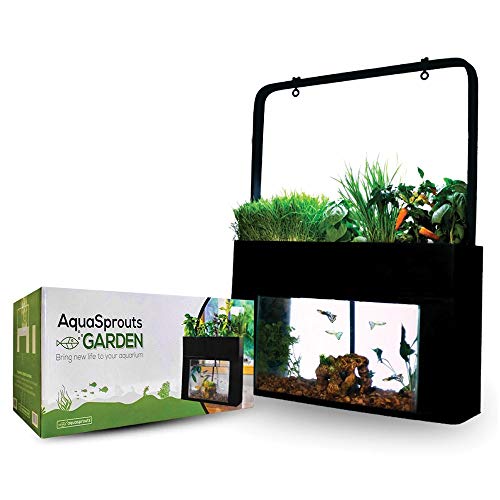
If you already own an aquarium, the AquaSprouts Garden is the direct step up from a holder. It sits on top of a standard tank, uses a pump and timer to bring water to a full grow bed, and keeps your existing aquarium as the fish half of the system. The full comparison, with desk-size and patio options, is in our guide to aquaponics kits.
Which kit fits
The step up from a clip-on holder when you want to grow food.
-
1Grow bed for the tank you own
A full-width grow bed with pump and timer that fits any standard 10 gallon tank, so you keep the aquarium and gain a real herb bed.
Keep reading: pothos in an aquarium, aquaponics fish tanks and the best aquaponics kits.
Aquarium Plant Holder FAQ
Grow along with us
New guides and seasonal tips for fish, plants and DIY builds, about once a month.