Plants and media
Aquaponics Lettuce: How to Grow It With Fish
As an Amazon Associate we earn from qualifying purchases. How we choose products.
On this page
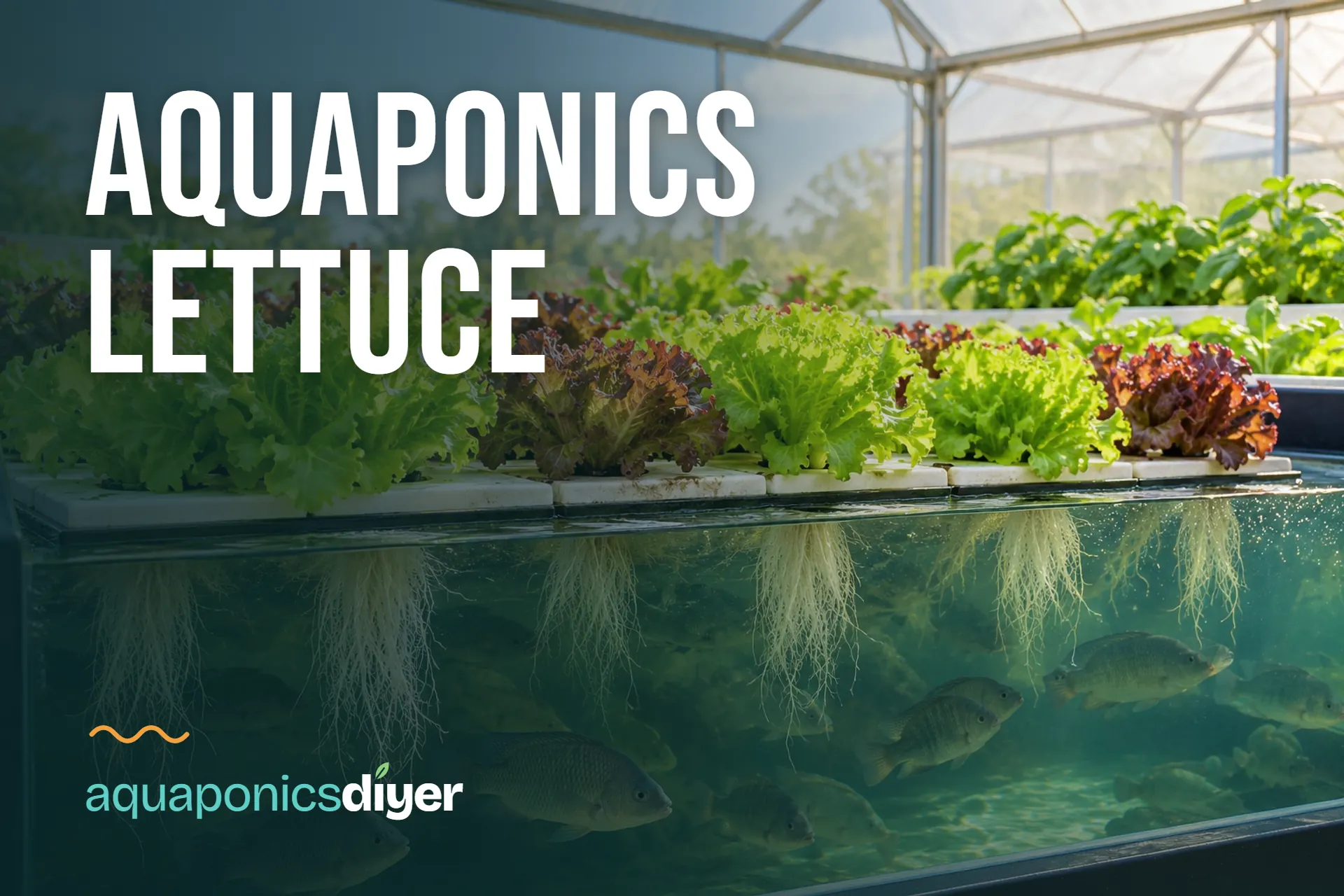
Aquaponics lettuce is the crop almost every grower starts with, and for good reason: lettuce asks for very little, and the nitrate your fish produce is enough to grow it. The FAO manual Small-scale aquaponic food production says lettuce "grows particularly well in aquaponics owing to the optimal nutrient concentrations in the water" and lists it as suited to media beds, NFT and deep water culture alike. A head takes about 24 to 32 days to grow once it is in the system, and FAO's rule of thumb for leafy greens is 40 to 50 grams of fish feed per square metre of growing area per day, which is about 1.8 oz per 10.8 square feet.
This guide is written from the fish side of the tank. It covers which varieties cope with warm, nutrient-rich water, which system to pick, how much fish it takes to feed a patch of lettuce, and what to do when the leaves go yellow, bitter or burnt at the edges. Lettuce in plain nutrient solution has its own page, so for EC, light targets and mineral recipes see hydroponic lettuce. For every other crop that does well with fish, see best plants for aquaponics.
Why Lettuce Is the Easiest Aquaponics Crop
Fruiting plants such as tomatoes and peppers want a lot of potassium, calcium and phosphorus that a young aquaponics system rarely has. Lettuce is the opposite. FAO describes it as a plant with low nutrient demand, and it is also a leafy vegetable, so it is happy with the lowest feed rate FAO gives. That makes lettuce a forgiving first crop while your system matures.
Low Nutrient Demand
Fish waste is converted by bacteria into nitrate, and nitrate is what lettuce eats most of. FAO's guidance is to keep nitrate levels high if you want crisp, sweet heads, because fast growth is what makes lettuce tender. A stocked, cycled system with enough fish usually provides that without extra fertilizer. If you are still cycling, read our fishless cycling guide first.
Fast Turnaround
FAO's crop sheet for mixed salad leaves gives a growth time of 24 to 32 days, longer for some varieties, and seeds germinate in 3 to 7 days. Few crops go from seed to the plate faster, which means you see results within about two months of starting a seed tray.
Fits Every Common System
FAO lists media beds, NFT and deep water culture as suitable methods. You do not need a special lettuce system, only one with a stable water level and an air-stoned fish tank. The next sections explain how to choose between them.
Best Lettuce Varieties for Aquaponics
FAO describes four main types for aquaponics: crisphead, butterhead, romaine and loose leaf. Any of them will grow with fish, so pick by how you will eat it, how warm your water runs and how long you want to wait. In warm weather FAO's advice is to switch to bolt-resistant, summer varieties.
Butterhead
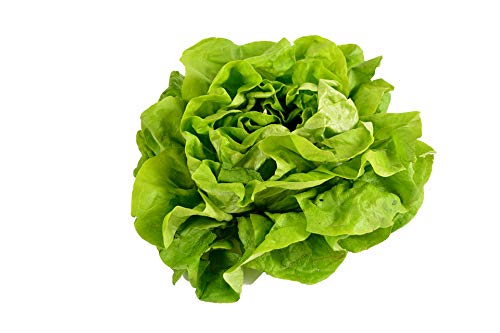
Butterhead (also sold as Boston or Bibb) has loosely piled, soft leaves and, according to FAO, no bitter taste. It is the usual choice for floating rafts because the heads stay compact and the roots hang cleanly in the water. Buttercrunch is the classic variety for beginners, and a packet of Buttercrunch lettuce seeds is enough to fill a raft several times over.
Loose-Leaf
Loose-leaf lettuce forms no head and comes in many colors and leaf shapes. FAO notes it can be sown directly in a media bed and harvested by picking single leaves, with no need to remove the whole plant. If you want a salad bowl that keeps producing from the same plants, this is the type to grow.
Romaine
Romaine has upright, tightly folded leaves that FAO says are slow to bolt and sweet in taste. That bolt resistance helps if your fish tank runs warm. Romaine grows taller than butterhead, so give it the wider end of the spacing range.
Crisphead (iceberg) is on FAO's list too, but it is described as ideal for cooler conditions, so it is the hardest of the four to grow next to a heated tilapia tank.
Which System: Raft, Media Bed or NFT
All three systems work for lettuce, and the right one depends on how much you want to grow and how much you want to build.
- Floating raft (deep water culture): Heads sit in net pots on a foam board that floats on the water. It is the best choice for volume, because every plant has its roots in the water and harvest means lifting a pot. Our aquaponics raft system guide covers the build, including the filtration you need before water reaches the raft.
- Media bed: Lettuce sits in clay pebbles or gravel and the bed floods and drains. It is the simplest setup for a first system and doubles as the biofilter. FAO says that when you pull a whole plant from a media bed you must remove the entire root system. See the aquaponics grow bed guide for sizing and drainage.
- NFT: A thin film of water runs along a sloped channel. It uses little water and little space, but solids from the fish tank clog the channels quickly, so it needs solids filtration ahead of it.
A reasonable rule: media bed if you want to keep it simple, raft if you want a lot of heads. NFT suits people who already have it from hydroponics. Whichever you pick, lettuce prefers light shading in warm weather, which FAO recommends, and a media bed gives you a natural way to do it by planting new heads in the shade of taller crops.
How Many Fish per Lettuce Head
Nobody balances a system by counting heads against fish. FAO uses a feed rate ratio: for leafy greens, 40 to 50 grams of feed per square metre of growing area per day. The fish then have to be big enough, in total weight, to eat that feed, and FAO gives a typical appetite of 1 to 2 percent of body weight per day for fish above 50 g.
FAO works through the numbers for lettuce itself. To harvest 25 heads a week, with each head spending 4 weeks in the system, you need 100 heads growing at once. At 25 heads per square metre that is 4 m2 of growing space, which takes 200 g of feed per day and therefore 10 to 20 kg of fish. In US units, that is about 43 sq ft of lettuce, 7 oz of feed a day and 22 to 44 lb of fish.
Divide that by the number of heads and you get a rough guide: each lettuce head in a full system needs about 2 g (0.07 oz) of fish feed a day and is supported by roughly 100 to 200 g (3.5 to 7 oz) of fish. These are calculations from FAO's example, not a promise for your tank. FAO itself says the ratio is only a guide, because fish size, temperature, feed protein and the plants' demands all shift through the season.
Planting Density
FAO's crop sheet gives a spacing of 18 to 30 cm (7 to 12 in), or 20 to 25 heads per square metre. In US units that is about two heads per square foot at the tighter end. Use the wider end for romaine and for heads you want at full size, and the tighter end for baby leaf harvests. Crowding lettuce raises humidity inside the canopy, which makes tipburn and rot more likely.
If your fish are tilapia, see our aquaponics tilapia guide for stocking by weight, and keep in mind that more fish than the lettuce can use will push nitrate up and eventually the water quality down.
From seed to harvest
-
Germinate the seeds
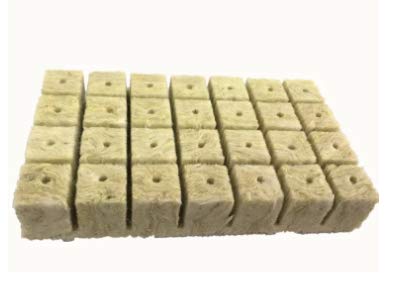
Sow into rockwool cubes or a small seed tray, one or two seeds per cube. FAO gives 3 to 7 days to germinate at 55 to 70°F (13 to 21°C). Keep the cubes damp, not soaked, and give the seedlings light as soon as they sprout. 1.5 inch rockwool cubes fit straight into 3 inch net pots.
-
Grow on and harden off
FAO transplants at about three weeks, once the seedlings have at least 2 to 3 true leaves. For 3 to 5 days beforehand it recommends hardening them off with cooler temperatures and direct sun, which improves survival after transplant.
-
Transplant into the system
Set the cube in a net pot (raft or NFT) or press it into the media bed so the roots reach the water. In warm weather, FAO advises light shade over the new plants for 2 to 3 days to avoid water stress.
-
Keep nitrate up and watch the water
Test pH, ammonia, nitrite and nitrate weekly. Fast, steady growth gives crisp, sweet heads, so do not let the fish go underfed.
-
Harvest
Pick loose-leaf plants leaf by leaf, or cut whole heads once they are compact and firm. FAO's market weight for a whole lettuce is 250 to 400 g (9 to 14 oz), and it recommends cutting early in the morning when the leaves are crisp, then chilling them quickly.
Water Temperature, pH and Bolting
Lettuce is a cool-season crop, and this is where aquaponics gets awkward: the fish most people keep, tilapia, like water in the 80s°F. FAO's crop sheet gives lettuce a temperature of 59 to 72°F (15 to 22°C), with flowering over 75°F (24°C). Elsewhere FAO says lettuce grows better at 64 to 79°F (18 to 26°C) than the warm-water range that suits tilapia and nitrifying bacteria. For head growth it adds that nights of 37 to 54°F (3 to 12°C) and days of 63 to 82°F (17 to 28°C) are ideal.
Bolting is when the plant sends up a flower stalk and the leaves turn bitter. FAO says extended daylight and night temperatures above 18°C (64°F) cause it, and that water above 26°C (79°F) may favor bolting and bitterness. It also lists too much sun as a trigger for light-sensitive plants, lettuce included. The practical fixes:
- Choose bolt-resistant summer varieties in hot months, as FAO recommends.
- Add light shade over the lettuce in warm weather.
- Match fish to climate. If your water has to be cooler for lettuce, a species that tolerates it makes more sense than heating a tank; see best fish for aquaponics.
- Grow lettuce in the cool season and switch to heat-loving crops in summer.
For pH, FAO's table for aquaponics as a whole recommends 6 to 7. Lettuce itself prefers 5.8 to 6.2 but, as FAO puts it, grows well at pH as high as 7.
Iron Deficiency and Yellow Leaves
Iron deficiency shows up in the newest leaves first, because iron does not move around the plant. FAO describes yellowing between the veins, then pale or white foliage if it goes untreated. Fish feed contains little iron, and FAO notes that iron is more difficult for plants to take up as pH rises toward and above neutral, and tends to precipitate above pH 7. New systems often run short in their first two to three months.
The fix FAO gives is chelated iron (Fe-EDTA, sold by agricultural suppliers): 1 to 2 mg per liter in the first three months of a new unit and again whenever deficiency appears. Keeping the pH below 7 in the first place does more than any additive. Check it with a proper kit, such as the API Freshwater Master Test Kit.
Tipburn
Tipburn is brown, crispy leaf edges on the inner leaves of a head. FAO lists it as a calcium deficiency symptom, noting that calcium does not move easily inside the plant and that humid conditions limit the flow that carries it to new growth. FAO also says higher calcium in the water helps prevent tipburn in summer crops. In practice that means good airflow around the canopy, not overcrowding, and adding calcium when you raise the pH, since FAO says calcium hydroxide or carbonate are the usual buffers in aquaponics.
Harvesting and Staggered Planting
FAO's advice is to start harvesting as soon as heads or leaves are big enough to eat. For market-size heads it gives 250 to 400 g. The real art is planting in a rhythm. A bed where everything is planted and harvested on the same day gives you thirty lettuces at once and none the week after, and nitrate drops sharply when you clear the bed. FAO makes the point that staggered planting allows continual harvest and transplant and keeps nutrient uptake and water filtration constant.
FAO's lettuce example uses weekly batches. If a head spends 4 weeks in the system, you need four age groups in the bed or on the raft. Each week you harvest the oldest group and transplant a new tray of seedlings from the nursery. Sow a fresh seed tray every week so seedlings are always ready.
A simple home version: divide your raft or bed into four sections, label them by week, and sow a few cubes each Sunday. In a media bed, replace each harvested head in the same hole to keep spacing even. Cut the old root out first, as FAO instructs, and put the roots in the compost.
Common Problems
- Leaves turn bitter and the center stretches upward. That is bolting. Check water and air temperature, shade the bed and replace with a bolt-resistant variety.
- New leaves are pale yellow with green veins. Iron, usually from a pH above 7. Lower the pH and add chelated iron.
- Brown, papery leaf edges inside the head. Tipburn. Improve airflow, space the plants and check calcium.
- Slow growth and small pale heads. The fish are producing too little nitrate for the number of plants. Use FAO's 40 to 50 g of feed per square metre of lettuce as a check on whether the fish are eating enough, or add fish or reduce the planted area.
- Aphids or chewed leaves. Pesticides can harm fish. Remove pests by hand or rinse the leaves, and never spray anything you would not want in the fish tank.
What you need to start aquaponics lettuce
Seeds, something to start them in, something to hold them, and a way to read the water. The system and fish are covered on the pages linked above.
-
1Seeds
Buttercrunch Lettuce Seeds, 500 count
A butterhead variety, the type FAO says has loosely piled leaves and no bitter taste; the listing names butterhead, Boston and Bibb types.
-
2Seed starter
Cubes you sow into and transplant whole, so the roots are not disturbed when the seedling goes into the system.
-
3Net pots
Cz Garden 3 Inch Net Pots, 25 Pack
Wide-rim slotted pots that hold a rockwool cube on a raft or in an NFT channel.
-
4Water test kit
API Freshwater Master Test Kit
Reads pH, ammonia, nitrite and nitrate, the four numbers that explain most lettuce problems.


Keep going: compare raft systems, size your grow bed, or see the other best plants for aquaponics.
Aquaponics Lettuce FAQ
Grow along with us
New guides and seasonal tips for fish, plants and DIY builds, about once a month.