Plants and media
Basil in Aquaponics: How to Grow It Bushy, Not Leggy
As an Amazon Associate we earn from qualifying purchases. How we choose products.
On this page
Basil is one of the herbs that responds best to aquaponics. The FAO manual Small-scale aquaponic food production calls it “an ideal plant for aquaponics” because it takes up a lot of nitrogen, and says it is one of the most popular herbs to grow in aquaponic units. The usual problem is not getting basil to grow. It is getting it to grow bushy instead of tall, thin and leggy, and the fix is mostly light and regular pinching.
This guide covers basil in aquaponics from start to finish: why it does so well, which varieties to pick, how to plant it from seed or cuttings, the light, temperature and pH it wants, the pruning routine that keeps it compact, and how to grow a pot of it on a fish tank. Growing a mixed herb garden instead? Our guide to the best plants for aquaponics covers the whole list; this page is only about basil.
Why Basil Grows So Well in Aquaponics
Basil gets everything it likes from a fish system: steady moisture around the roots, a constant supply of dissolved nutrients and warm water. Two research findings explain why growers keep coming back to it.
A Low-Demand Herb That Still Eats Nitrogen
FAO sorts aquaponic plants by nutrient demand. Leafy greens and herbs, including lettuce, basil, mint, parsley, coriander and chives, fall in the low-nutrient-demand group, while tomatoes, cucumbers and peppers are the nutrient hungry ones. In practice that means basil does not need a heavily stocked tank to thrive. FAO also warns, though, that because basil takes up so much nitrogen you should “avoid excessive nutrient depletion of the water”. If you fill every hole in a raft with basil and keep only a few small fish, the plants will outrun the supply and the leaves will pale.
What the Research Shows About Yield
A 2023 study in the journal Plants by Modarelli and colleagues at the University of Naples grew Genovese basil in a floating raft system with tilapia and in a conventional hydroponic raft, at 20 plants per square meter (about 2 per square foot). Fresh yield was similar in the two systems, and the aquaponic basil produced more dry biomass. The takeaway for a home grower is simple: fish water is a perfectly good basil fertilizer, with no extra feed bottles to buy.
Basil is also at home in the common bed styles. FAO notes that deep water culture, where plants sit in holes in a floating sheet, is the method most commercial growers use for a single crop such as lettuce, salad leaves or basil. If you plan to build one, see our aquaponics raft system guide.
Best Basil Varieties for Aquaponics
FAO says Italian Genovese basil, lemon basil and purple passion basil have all been tried and tested in aquaponic units. The one you choose should depend on what you cook and on how much mildew pressure you have.
Genovese and Other Sweet Basils
Genovese is the classic pesto basil and the default choice. It makes large, soft, fragrant leaves and responds quickly to cutting. The catch is disease: UF/IFAS lists sweet basil types as highly susceptible to downy mildew, so give it good air movement and keep the leaves dry.
Thai and Lemon Basil
These spicier, smaller-leaved types are less likely to suffer from downy mildew, according to UF/IFAS, which names Thai, lemon, lime and other spicy basils as less susceptible. They also handle warm, humid conditions well, which makes them a sensible pick for a greenhouse or a humid kitchen window. Lemon basil is the one FAO names alongside Genovese.
Purple Basil
Purple varieties such as purple passion add color to a bed and are fine to eat, with a slightly spicier taste than Genovese. UF/IFAS groups red types with the less susceptible basils for downy mildew. If you want one plant that looks good on a countertop planter and still gives you leaves for the kitchen, this is it.
Planting Basil in Aquaponics
You can start basil from seed, from cuttings, or from a small nursery plant with the soil washed off the roots. Seed is the cheapest, and cuttings are the fastest way to copy a plant you already like.
From Seed
Start seed in a small cup of rinsed clay pebbles or a rockwool cube, kept damp but not soaking, and set the tray somewhere warm and bright. A pack of mixed culinary herb seeds that includes basil is an easy way to start, and the listing for the seeds in our kit below confirms basil is in the mix. Once the seedling has a few true leaves and roots poking out of the cup, move it to the grow bed or raft.
From Cuttings
Take a healthy stem tip from a plant you buy at a grocery store or already grow, strip the lower leaves and stand the stem in clean, dechlorinated water. Plant the cutting in the system once it has grown a healthy set of roots. Choose a stem without flower buds.
Spacing
UF/IFAS advises thinning basil seedlings in a garden to about 10 inches apart. In a raft system the plants sit closer, and the Naples study above used 20 plants per square meter. A good rule is to start at the wider spacing and tighten it only once your water tests are steady. A good clay pebble bed is the easiest place to begin, and our guide to clay pebbles for aquaponics explains how to rinse and use them.
How to plant basil in a grow bed
-
Start the seedlings
Sow seed in rinsed clay pebbles or a rockwool cube and keep it moist and warm until the first true leaves appear.
-
Rinse and set the roots
Rinse any soil off nursery plants or rooted cuttings so it does not cloud the water, and set the root ball in the media so the stem stays dry.
-
Space the plants
Leave room for each plant to branch. Thin crowded seedlings rather than letting them compete.
-
Water from the system
Let the flood cycle wet the roots, and keep the leaves dry so mildew has less to work with.
-
Pinch early
Once the plant has a few sets of leaves, start pinching the growing tips so it branches instead of stretching.
Light, Temperature and pH for Basil
Basil wants a sunny spot, warmth and water that suits the bacteria and the fish as much as the plant.
Light
UF/IFAS says basil prefers sun with some afternoon shade to protect it from heat. Indoors, a south-facing window can work, but it often falls short in winter, which is the main reason basil stretches and goes leggy. A full spectrum grow light fixes that. The hydroponic lettuce page covers how to hang one.
Temperature
Basil is frost-sensitive. UF/IFAS says the leaves of many varieties blacken and drop when temperatures fall below 40°F (4°C), and recommends planting outdoors only when night temperatures are above 55°F (13°C). Keep container plants away from cold windows and drafts on winter nights.
pH and Water
FAO says to hold the system pH between 6 and 7 so plants can reach all the nutrients in the water, and to add a little base or buffer whenever pH approaches 6.0. Basil does not need anything different from the rest of your plants. If the pH keeps drifting, our pH guide covers the fix.
Pruning: Why Basil Gets Leggy and How to Stop It
Leggy basil is a plant stretching toward light with a single main stem and few side branches. Two things cause it: too little light, and never being cut back. Fix both.
Pinch the Tips
UF/IFAS says to pinch the growing tips, which keeps the plant compact and extends the harvest, and that regular harvesting encourages branching and new leaf growth. Pinch just above a pair of leaves and the two buds in that spot will grow into two new stems. Do it regularly, and always take from the top rather than stripping the lower leaves.
Remove Flower Buds
For kitchen use, UF/IFAS says to pinch flowers off as they form so the plant puts its energy into leaves. Once basil flowers, the leaves turn bitter and growth slows. If a plant has already gone to seed, cut it back hard and it will usually regrow.
Fix the Light
Pruning cannot fully cure a light problem. If new growth is pale, stretched and widely spaced between leaf pairs even after you pinch, move the plant closer to the window or add a grow light.
Basil in a Fish Tank or Aquarium Planter
Yes, basil does well on top of an aquarium. A small hang-on planter or a floating cup lets the roots reach the tank water while the leaves stay in the air. The fish supply the nutrients and the roots help filter the water, which is why basil is a favorite for desktop kits.
What You Need
You need a way to hold the plant above the water, a bit of rinsed clay media, and light. Our guide to the aquaponics fish tank explains tank size, stocking and filtration. Small tanks swing in temperature and ammonia faster than big ones, so test the water often.
Keep the Stem Out of the Water
Let only the roots touch the water. Leaves or stems sitting in water rot, and rot is the quickest way to lose a potted herb. Trim the roots if they start to clog the planter.
Choose Smaller Types
Compact types such as Thai basil or a dwarf variety suit a desktop planter better than a tall Genovese plant. Pinch them hard and often, as the planter has little room for a big root system.
What you need to grow basil with fish
Seeds, something to hold them, media and light. Pick the planter that matches your tank.
-
1Seeds
A mixed packet of heirloom culinary herbs that the listing says includes basil, cilantro and mint, handy for a first herb bed.
-
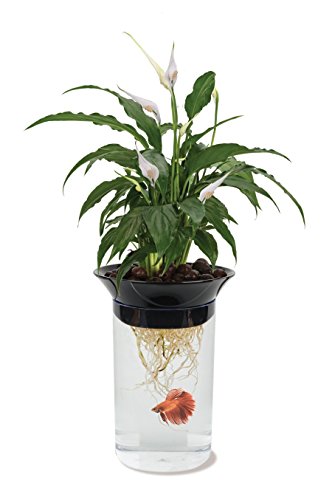
2Desktop aquaponic planter
Penn-Plax Aquaponic Planter and Aquarium for Betta Fish
A planter that sits on a small tank so a basil plant can feed from the fish water.
-
3Plant holder
Borlech Large Aquarium Plant Holder
Holds a potted herb above the water line of an existing aquarium.
-
4Grow media
Rinse well, then use it to support roots in a planter or grow bed.
-
5Grow light
GLOWRIUM Full Spectrum Grow Lights
A full spectrum light for a windowsill that does not get enough sun in winter.



Pests and Problems
FAO is clear on the rule: synthetic pesticides and insecticides must never be used in aquaponics because they will kill the fish, and many biological controls are also deadly to fish. Prevention does most of the work.
Downy Mildew
UF/IFAS says the symptoms can look like a nutrient deficiency, with yellowing leaves, and the clearest sign is spores on the undersides of leaves. It calls the disease nearly impossible to prevent because wind spreads the spores. To lower the risk, give plants good air movement, reduce leaf wetness and choose less susceptible types such as Thai or lemon basil. Remove affected leaves right away.
Insects
FAO lists whiteflies, thrips, aphids, leaf miners and spider mites as the pests that damage plants in aquaponic systems. Start with the mechanical options it recommends: removing pests by hand and netting, with mesh of 0.35 mm to exclude whitefly and aphids. If you need a spray, FAO says to use only aquaponic-safe remedies, and to take care with soaps, since they can damage fish gills.
Pale or Yellow Leaves
Before you suspect a pest, check the pH. FAO notes nitrifying bacteria struggle below pH 6, and plants take up nutrients less well outside the 6 to 7 range. Then check that the plants are not too crowded for the nutrient supply, as FAO warns.
Other Herbs That Grow Like Basil
FAO puts mint, parsley, coriander, chives and watercress in the same low-nutrient-demand group as basil, so they share the same care: moderate light, steady moisture and water in the pH 6 to 7 range. Mint spreads fast, so give it its own pot rather than a share of the grow bed. For a full list with growing notes for each herb, see our guide to the best plants for aquaponics.
Planning the rest? See the best plants for aquaponics, compare clay pebbles, or look at a complete home aquaponics setup.
Basil in Aquaponics FAQ
Grow along with us
New guides and seasonal tips for fish, plants and DIY builds, about once a month.