Plants and media
Aquaponic Tomatoes: How to Grow Them (Plus Strawberries)
As an Amazon Associate we earn from qualifying purchases. How we choose products.
On this page
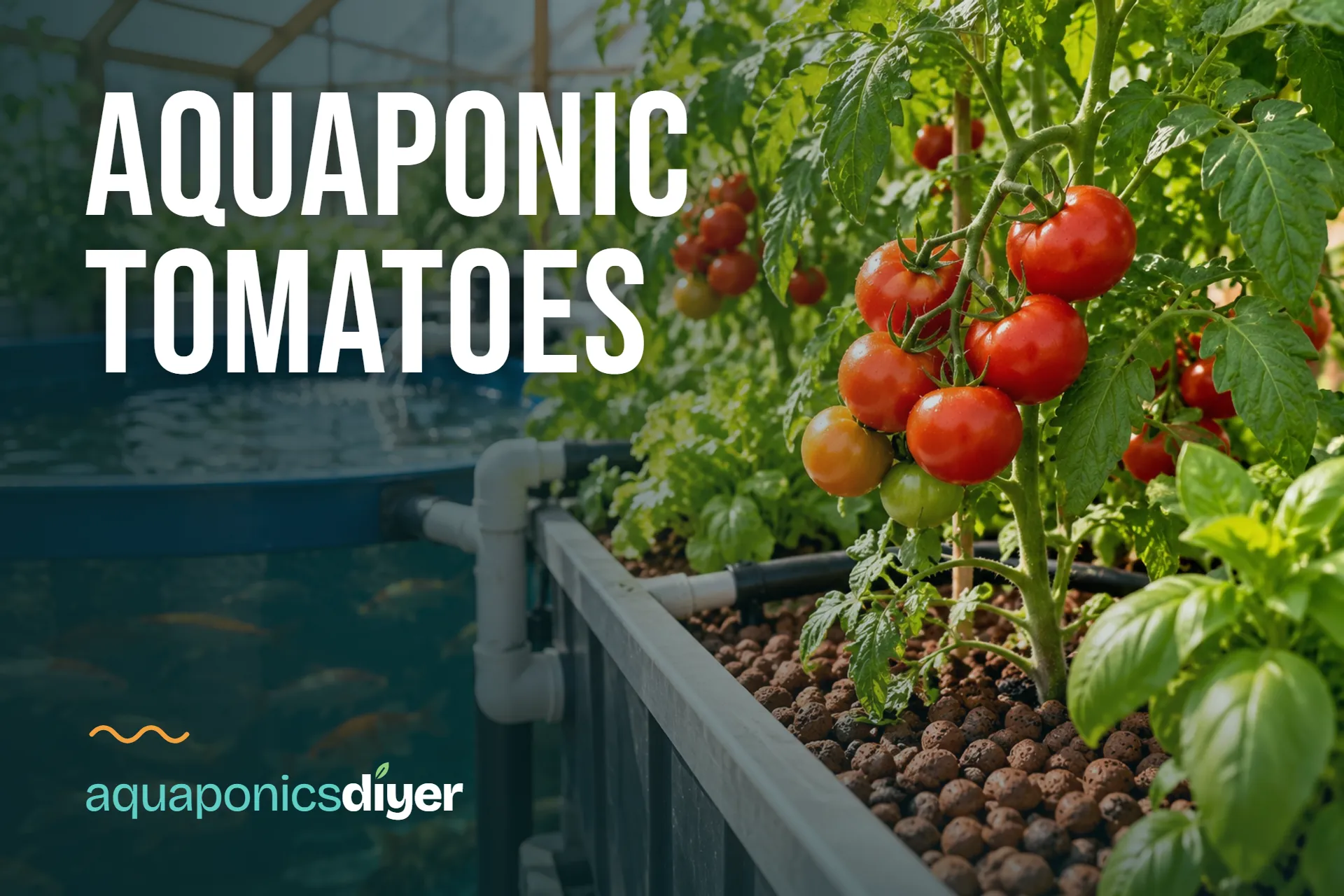
An aquaponic tomato is one of the most rewarding crops you can grow, and yes, tomatoes do well in aquaponics, but only in a mature system with enough fish behind it. Tomatoes are a fruiting crop, and the FAO manual Small-scale aquaponic food production says fruiting vegetables have higher nutrient demands and are more appropriate for established systems with adequate fish stocks. Lettuce will forgive a young tank. Tomatoes will not.
The same manual recommends media beds and deep water culture for tomatoes, a bed depth of 12 inches (30 cm), and a feed rate of 50 to 80 grams of fish feed per square meter per day, compared with 40 to 50 grams for leafy greens. This guide covers what changes when you move from salad to fruit: how much fish you need, which varieties to pick, the three nutrients tomatoes run short of, support and pruning, and then strawberries, the other fruit crop people ask about. If you are still choosing crops, start with our list of the best plants for aquaponics.
Can You Grow Tomatoes in Aquaponics?
You can, and growers have done it at every scale from a backyard IBC bed to commercial greenhouses. FAO lists tomatoes, cucumbers and peppers among the fruiting vegetables that do well in aquaponics alongside leafy greens, and describes tomatoes as “an excellent summer fruiting vegetable to grow using all methods of aquaponics, although physical support is necessary.” The catch is the load tomatoes put on the system.
Why Fruiting Crops Need a Mature System
FAO places tomatoes, eggplants, cucumbers, zucchini, strawberries and peppers in its high nutrient demand group, the “nutrient hungry” plants. In a new system the bacteria have not caught up, nitrate is low and the fish are small. A tomato planted into that tank will stall, drop flowers or yellow. Cycle the system first (our guide to fishless cycling explains how), let the fish reach a steady feeding rate, grow lettuce or herbs for a few weeks, and add tomatoes once the water tests stable.
Feed Rate for Fruiting Crops
FAO balances a system with a feed rate ratio: 40 to 50 g of fish feed per square meter of growing space per day for leafy greens, and 50 to 80 g for fruiting vegetables. A square meter is about 10.8 square feet. That is the practical answer to “how many plants can my tank support”: count the grams of feed going in, not the fish. FAO’s worked example for a small unit assumes 150 g of feed a day over 3 square meters, and its home-grower yield figure is 3 kg (about 6.6 lb) of tomatoes per square meter per month, though that figure is an average for amateur growers, not a promise.
FAO adds that because tomatoes need so much, especially potassium, “the number of plants per unit should be planned according to the fish biomass, in order to avoid nutrient deficiencies.” If you want more tomatoes, the fix is more fish and more feed, or fewer plants, never extra fertilizer from a garden shop. For stocking numbers see our tilapia guide.
Best Tomato Varieties for Aquaponics
FAO divides tomatoes into two types: determinate, which gives a seasonal crop, and indeterminate, which keeps producing new flower branches for months. FAO says indeterminate varieties can keep fruiting for 8 to 10 months in a system, which is the main reason aquaponic growers like them. Plan heights of 2 to 6 feet (60 to 180 cm) and a width of 24 to 32 inches (60 to 80 cm).
Cherry Tomatoes for Small Systems
Cherry and grape types are the usual first choice for a home unit. The plants are productive, the fruit ripens in clusters, and a small bed can carry a couple of plants without overloading the fish. A compact determinate cherry variety also suits a patio or a small greenhouse where headroom is limited.
Determinate or Indeterminate?
- Determinate (bush): picks over a shorter season, needs less height, easier in a small greenhouse. FAO says to cut the tip of the stem once it reaches 7 to 8 flower branches to favor fruit.
- Indeterminate (vining): a longer harvest and a higher total yield per plant, but it needs strings or wires and steady pruning, and it draws nutrients all season.
Whichever you pick, start from a variety you already know grows well in your climate. Germination takes 4 to 6 days at 68 to 86°F (20 to 30°C) according to FAO, and FAO gives 50 to 70 days of growth until the first harvest, with fruiting lasting 90 to 120 days, and up to 8 to 10 months for indeterminate varieties.
Which Aquaponic System Works Best for Tomatoes?
FAO’s tomato sheet recommends media beds and DWC. For a first tomato crop, choose the media bed.
Media Beds
A media bed gives the roots room and holds the plant up. FAO says beds for large fruiting vegetables such as tomatoes should be 12 inches (30 cm) deep; shallower beds risk root matting, nutrient deficiencies and plants toppling over. Our grow bed guide covers sizing, and clay pebbles are the usual medium. A flood and drain cycle keeps the roots wet and oxygenated. FAO notes that polyculture is common in media beds, so you can plant basil or lettuce in the shade of a tomato.
Rafts and NFT
FAO says it may be possible to grow tomatoes in NFT, but they need copious water to avoid stress, and wilting can happen almost immediately if the flow is interrupted, “with devastating effects on the whole crop.” It also says fruiting plants need larger grow pipes, ideally flat-bottomed, spaced further apart than leafy vegetables, because the roots have little room and the plants need light to ripen fruit. A raft works in principle, but you must support the plant above the raft. If you want to compare the three growing methods, see our aquaponic raft system guide.

Nutrients Tomatoes Run Short Of
Fish waste is rich in nitrogen but light on some minerals. A study in the Journal of Food Science by Kralik and colleagues (2023) grew two tomato varieties in an aquaponics system and compared them with soil-grown controls over three years. The abstract reports that aquaponic tomatoes were frequently lighter and yellower in color and lower in brix, that nutrient deficiencies may explain the differences because iron supplementation improved outcomes, and that consumers liked the aquaponic fruit as much as the soil-grown fruit. Careful nutrient monitoring, in short, is what separates average tomatoes from good ones.
A rule that applies to everything below: use only aquaponics-safe additions. Pest sprays, soil fertilizers and many mineral supplements can harm fish and bacteria, so check each product before it touches the system.
Potassium
FAO says potassium is involved in flower and fruit set and in the production and movement of sugars, and that “without potassium, flowers and fruits will not develop correctly.” Its tomato sheet advises more nitrogen early for leaf growth, with potassium available from the flowering stage. Deficiency shows as burned spots on older leaves and weak, limp growth. The fish-safe way to add it is through your pH buffer: FAO says calcium and potassium are added when buffering pH, as calcium or potassium hydroxide or carbonate, and that the choice can follow the crop: leafy vegetables may need more calcium, fruiting plants more potassium. For tomatoes, lean toward the potassium base.
Iron
Iron deficiency appears as yellowing between the veins of the new leaves, since iron does not move within the plant. FAO says iron must be added as chelated iron (Fe-EDTA) because it precipitates above pH 7, and suggests 5 ml per square meter of grow bed whenever deficiency is suspected. It also names compost tea and seaweed tea as iron sources. Add it slowly, then retest.
Calcium and Blossom End Rot
FAO lists blossom end rot of tomatoes as a classic calcium deficiency. Calcium is immobile in the plant and moves only with water drawn by transpiration, so FAO warns that in very humid conditions calcium can be present but locked out, and that more air flow with vents or fans can prevent it. Calcium hydroxide and calcium carbonate are the aquaponics-safe ways to supply it. Keep watering even, since swings in flow make the problem worse.
Support, Pruning and Pollination
FAO is blunt that tomatoes need physical support. Set stakes or strings before transplanting to avoid root damage. Stakes suit bush plants; vining plants are tied to vertical nylon or plastic strings fixed to wires stretched horizontally above the bed.
Transplanting and Pruning
- Transplant seedlings 3 to 6 weeks after germination, at 4 to 6 inches (10 to 15 cm) tall and when nights stay above 50°F (10°C). Avoid waterlogged conditions around the stem to reduce disease risk.
- Prune suckers. FAO says to grow a single stem (two if the plant is vigorous) and remove all side shoots to divert nutrients to fruit.
- Clear the base. Once plants are about 24 inches (60 cm) tall, remove the leaves from the bottom 12 inches (30 cm) of the main stem for better air circulation and fewer fungal problems.
- Uncover the fruit. Remove leaves covering each fruit cluster shortly before ripening so more nutrients reach the fruit.
Temperature and Light
FAO gives optimal temperatures of 55 to 61°F (13 to 16°C) at night and 72 to 79°F (22 to 26°C) by day, in full sun. Plants stop growing below roughly 46 to 50°F (8 to 10°C), night temperatures of 13 to 14°C encourage fruit set, and temperatures above 104°F (40°C) cause flower abortion and poor fruit set. In winter, a grow light can fill the gap indoors; our greenhouse guide covers heat and light for a year-round setup.
Pollination Indoors
Tomato flowers are self-fertile, so outdoors wind and insects do the job. Indoors or in a sealed greenhouse there is neither, and the usual fix is to move the flowers yourself: tap or gently shake the flower truss, or touch each open flower with a small soft brush every day or two while they are open. None of the sources cited here gives a measured protocol, so treat this as common grower practice, not tested guidance.
FAO also says to harvest tomatoes when firm and fully colored for the best flavor, and that fruit picked half ripe will keep ripening indoors.
Aquaponic Strawberries
Can you grow strawberries in aquaponics? Yes. FAO counts strawberries among the high-demand fruiting crops, and its figures of aquaponic units show a satellite media bed growing strawberries and tomatoes beside the main system. As with tomatoes, they belong in an established system, not a new one. No controlled yield trial of aquaponic strawberries is cited here, so the variety figures below come from a hydroponic test; fish water has a different nutrient mix, so expect to adjust.
Varieties: Choose Day-Neutral
Day-neutral strawberries flower and fruit across a long season instead of one flush, which suits a system running all year. The University of Illinois Extension grew three day-neutral varieties in a hydroponic high tunnel and reported the results: Monterey gave the most marketable fruit at 0.76 lb per plant and the best flavor, San Andreas gave 0.54 lb per plant with the largest fruit (about 28.7 fruit per lb), and Albion gave 0.48 lb per plant and tasted somewhat sour. Harvests ran from May 5 to October 18. If you cannot find Monterey, Albion is widely sold: our hydroponic strawberry guide covers varieties, plants and lighting in detail.
Systems: Towers and NFT
Strawberries are shallow-rooted and compact, which makes them good for vertical growing. A tower or stacked planters lets you feed many plants from one stream, and a short NFT run suits them better than it suits tomatoes. In either case, the fish tank must stay separate from the planter so that roots and media never clog the pump; see our aquaponics tower guide for layouts.
Feeding Strawberries From Fish Water
Strawberries sit in FAO’s high-demand category, so give them the same 50 to 80 g of feed per square meter per day you would give a tomato bed, and watch potassium and iron the same way. In the Illinois trial the hydroponic target was an EC of about 1.8 mS/cm and a pH of about 6.6, a useful hydroponic reference, but in an aquaponic system keep the pH where your fish and bacteria are comfortable and let nitrate and potassium come from the fish.
Common Tomato Problems in Aquaponics
- Flowers drop and no fruit sets: check temperature against FAO’s ranges (nights of 13 to 14°C help fruit set, heat above 40°C causes abortion), then pollination if you are indoors.
- Blossom end rot (dark sunken base): calcium is not reaching the fruit. Improve air flow and keep flow steady; add calcium hydroxide or calcium carbonate if the water is short.
- New leaves yellow between the veins: iron. Add chelated iron and retest.
- Old leaves with burned spots and weak growth: potassium, which FAO says shows up as burned spots on older leaves.
- Plant leans or topples: the bed is too shallow or the support came late. FAO calls for 12 inches (30 cm) of media and stakes in place before transplanting.
- Wilting when the flow stops: tomatoes show water stress almost at once. Add a timer alarm or backup power.
What you need for aquaponic tomatoes and strawberries
A deep bed, a way to read the water, light for the off-season, and the strawberry plants and towers.
-
1Grow media
Hydroton Original Clay Pebbles, 10 Liter
Fills a media bed to the 12 inch depth FAO recommends for tomatoes; pH-neutral and reusable.
-
2Water test kit
API Freshwater Master Test Kit
Tests pH, ammonia, nitrite and nitrate, the readings to check before adding iron or calcium.
-
3Grow light
48W Full Spectrum LED Grow Light
Full spectrum light for winter tomatoes and strawberries when sun is short.
-
4Strawberry plants
Albion Day Neutral Strawberry Plants
Albion is one of the day-neutral varieties in the Illinois Extension trial.
-
5Strawberry plants
Seascape Everbearing Strawberry Bare Roots, 25 Plants
An everbearing type that fruits through the season, suited to a longer harvest.
-
6Tiered planter
5-Tier Strawberry and Herb Garden Planters
A stacked planter for a small vertical strawberry setup; see the tower guide for how to feed it.
-
7Stackable planter
Mr. Stacky 18 inch Large Stackable Planters
Stackable pots for building a strawberry tower beside the fish tank.




Keep planning? See the best plants for aquaponics, size your grow bed, or compare hydroponic strawberries and the aquaponics tower.
Aquaponic Tomatoes FAQ
Grow along with us
New guides and seasonal tips for fish, plants and DIY builds, about once a month.