Fish guide
Aquaponic Trout: How to Raise Trout in a Cold-Water System
As an Amazon Associate we earn from qualifying purchases. How we choose products.
On this page
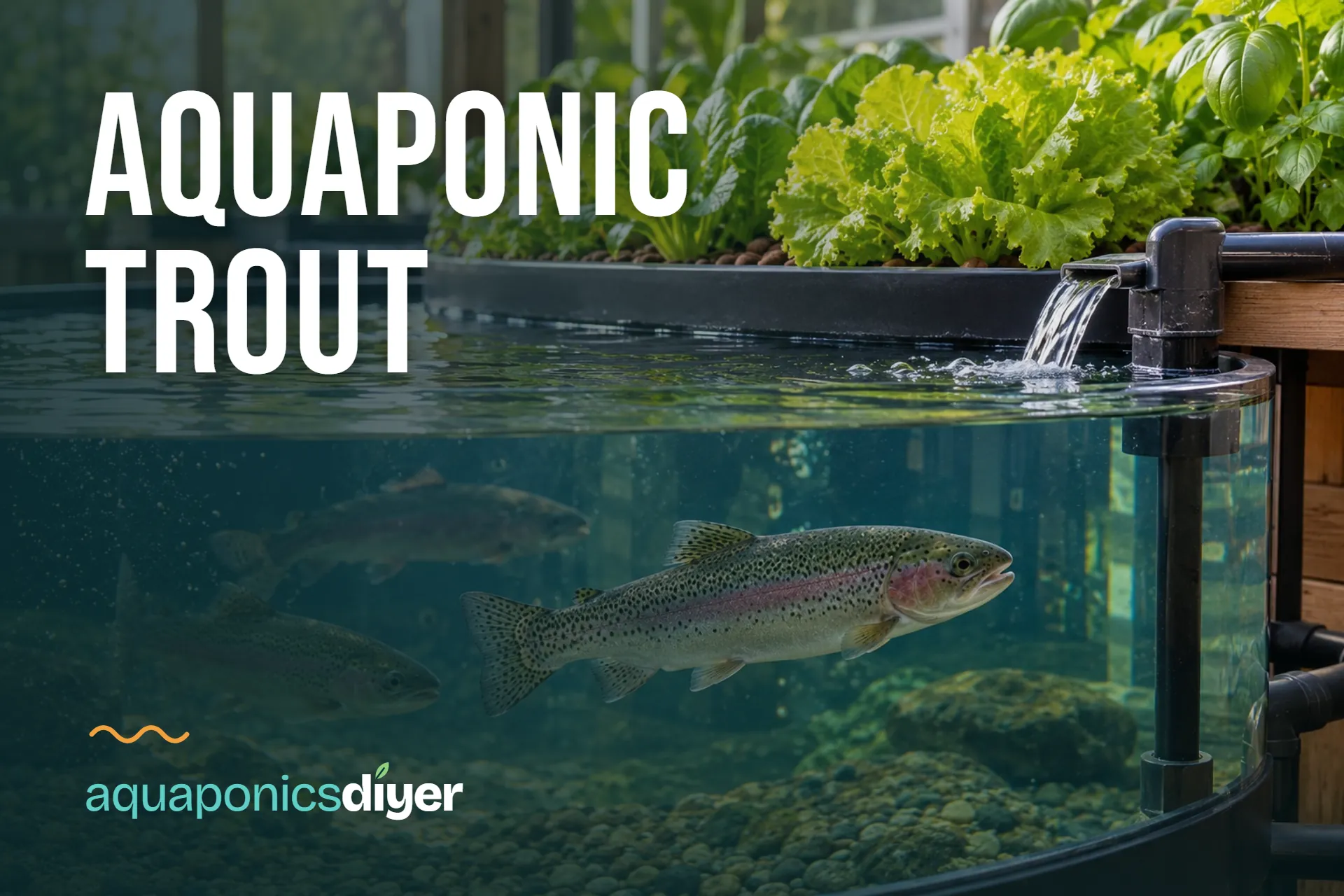
Aquaponic trout are the fish for cold water. Rainbow trout live in water between 50 and 64°F (10 to 18°C) and grow best at 57 to 61°F (14 to 16°C), which is exactly the range where tilapia stop eating. They also ask more of you than tilapia: more dissolved oxygen, lower ammonia and nitrite, a high-protein feed and a system that never lets the water drift warm. Summer is the risk. Above about 64°F the water is outside what trout tolerate, so a trout tank needs shade, insulation or a cool location from the day it is built.
The figures in this guide come from the FAO manual Small-scale aquaponic food production, which has a species table for rainbow trout, plus the FDA’s advice about eating fish. Where a number is our own arithmetic from a published rule, we say so. If you are still choosing a species, start with the best fish for aquaponics; if you live somewhere warm, tilapia will be an easier first fish.
Why Raise Trout in Aquaponics
Most aquaponics advice is written for warm water. Tilapia, catfish and carp suit tropical and arid climates, as FAO puts it, while trout “grow well in cold water, but require better water quality.” If your garage, basement, cellar or greenhouse stays cool for much of the year, trout turn that into an advantage instead of a heating bill.
Cold-Climate Fish
FAO calls trout ideal for aquaponics in Nordic or temperate regions, especially in winter. It also describes a seasonal strategy for places where the average winter temperature stays below 59°F (15°C) for more than three months: grow cold-adapted fish and plants through winter, then switch to warm-water fish as spring arrives. That is the same plan FAO suggests for tilapia growers in cool regions, who can raise tilapia in the warm months and move to carp or trout for winter.
Growth on a High-Protein Diet
Trout are slower than tilapia. FAO’s species table gives 1,000 grams (about 2.2 lb) in 14 to 16 months for rainbow trout at the grow-out stage, against 600 grams in 6 to 8 months for Nile tilapia. The payoff is on the plant side: FAO notes that trout need more protein than carp and tilapia, which puts more nitrogen into the system per unit of feed and allows more area of leafy vegetables while the unit stays balanced. FAO also calls trout an “oily fish,” high in vitamin A, vitamin D and omega-3 fatty acids, which makes them an excellent choice to grow for your own table.
What They Demand
The cost of that appetite for cold water is attention. FAO says successful trout culture needs frequent water quality monitoring and backup systems for air and water pumps, and that trout need better water quality than tilapia or carp, particularly for dissolved oxygen and ammonia. Trout are carnivores and need a diet rich in fish oil. They also do not forgive a heat wave. Treat trout as a second or third fish, after you have run a system through a full season.
Water Temperature for Trout
Temperature decides whether trout work for you at all. FAO’s rainbow trout row and its general guidance give these markers:
| Water temperature | What it means for trout | Source |
|---|---|---|
| 57 to 61°F (14 to 16°C) | Optimal range | FAO Table 7.1 |
| 50 to 64°F (10 to 18°C) | Survivable range; the cold-water fish range | FAO Table 7.1 and Table 3.1 |
| Above 64°F (18°C) | Trout will not tolerate it | FAO, section 3.2.3 |
| Above 70°F (21°C) | Growth drops significantly and trout may not use oxygen properly even when it is available | FAO, section 7.4.4 |
Cold water does hold more oxygen than warm water, which is part of why the two go together. But the margin is narrow, so aim for the middle of the optimal range and treat 64°F as a hard ceiling. Check the water daily during warm weather. FAO also says systems are more productive when day to night swings are small, so a steady 59°F is better than 55°F at night and 65°F by afternoon.
Surviving Summer
FAO’s general advice for fighting heat applies to trout with more urgency. It recommends shielding the water surface of the fish tank, the grow beds and the biofilter from the sun with shade structures, and insulating the unit against temperature swings. Beyond that, your options are about location and equipment:
- Shade and insulate. Cover the tank, wrap it in foam board and keep it out of direct sun. A lid also keeps the fish calm and the water from warming at the surface.
- Put the tank somewhere naturally cool. A cellar, a basement or an insulated garage holds cool temperatures with no equipment. A greenhouse works in cold seasons for heat but can overheat in summer, so plan ventilation and shade before you stock trout.
- Chill the water. Aquarium and pond chillers exist for this job. Size one to your tank volume using the maker’s chart, and weigh the electricity cost against simply moving the tank somewhere cooler.
- Have an exit plan. If the water is heading for 64°F and you cannot cool it, harvest or move the fish before they are stressed. FAO’s seasonal approach, harvesting at the end of a season and shutting down or switching species, is a legitimate option.
Put a thermometer where you can see it, and check the tank at the end of a hot afternoon, not just in the morning.
Oxygen and Water Quality
FAO’s species table for rainbow trout sets the targets below. Tilapia need only above 4 mg/L of oxygen and tolerate ammonia up to 2 mg/L in the same table, so a tank run to tilapia standards is too loose for trout.
| Parameter | Rainbow trout (FAO Table 7.1) | Whole aquaponics system (FAO Table 3.2) |
|---|---|---|
| Temperature | 10 to 18°C vital, 14 to 16°C optimal | 18 to 30°C |
| Total ammonia nitrogen | Below 0.5 mg/L | Below 1 mg/L |
| Nitrite | Below 0.3 mg/L | Below 1 mg/L |
| Dissolved oxygen | Above 6 mg/L | Above 5 mg/L |
| pH | 6 to 8.5 for cold-water fish (Table 3.1) | 6 to 7 |
One milligram per liter equals one ppm, the unit on hobby test kits. Where the trout column is stricter than the whole-system column, the fish set the limit, so run the system to the trout numbers.
Dissolved Oxygen
FAO says to add as much dissolved oxygen as possible, to run air pumps wherever feasible, and to use at least two air stones in different places in the tank. Its rule of thumb is 5 to 8 liters of air per minute for each cubic meter of water, and densely stocked units may need considerably more. The warning sign is fish gasping at the surface, which FAO calls piping and treats as an emergency. FAO adds that simple battery backups for air pumps have saved countless fish. For trout, treat a backup as part of the build, not an upgrade. Our aquaponics pump guide covers sizing the water pump, and the kit below lists an air pump and stones.
Ammonia and Nitrite
With trout, ammonia is the number to watch. At below 0.5 mg/L total ammonia nitrogen the limit is a quarter of the tilapia figure, which means a small feeding mistake or a dying biofilter shows up in the fish first. FAO says to remove uneaten food after 30 minutes to reduce the risk of ammonia or hydrogen sulphide toxicity. Cycle the system fully before the fish arrive; our fishless cycling guide walks through it. Then test ammonia and nitrite every week with a liquid kit such as the API Freshwater Master Test Kit, and daily if the system is new or the weather is warm.
pH Compromise
FAO gives cold-water fish a pH tolerance of 6 to 8.5 and recommends a compromise of 6 to 7 for the whole aquaponics system, slightly acidic, to keep fish, plants and nitrifying bacteria working together. Trout can live in that range, so you can follow the standard recommendation and keep the plants happy. FAO also notes that bacteria prefer warm water, and that during colder periods nitrite should be monitored more carefully, which is worth knowing in a trout tank. If your pH drifts, see how to bring it down in how to lower pH in an aquarium.
Stocking Density and Tank Size
FAO’s general stocking limit is no more than 20 kg of fish per 1,000 liters of total water, about 1 lb per 6 gallons, and for tanks under 500 liters (132 gallons) it recommends against raising food fish at all. That rule is not specific to trout. Because FAO expects trout to need more oxygen than tilapia, we would not stock them above that line, and a beginner should stay well under it.
Counting fish at FAO’s 1 kg (2.2 lb) harvest weight for rainbow trout, here is the most we would put in common tanks. This is our arithmetic from FAO’s rule, not a trout-specific table:
| Fish tank | Liters | FAO maximum fish weight | Harvest-size trout (about) |
|---|---|---|---|
| 150 gallons | 568 | 11.4 kg (25 lb) | 11 |
| 275 gallon IBC tote | 1,041 | 20.8 kg (46 lb) | 20 |
| 500 gallons | 1,893 | 37.9 kg (83 lb) | 37 |
| 1,000 gallons | 3,785 | 75.7 kg (167 lb) | 75 |
Count at harvest weight, not at stocking weight. Fingerlings weigh a fraction of an ounce, so a new tank looks empty, but a tank that is full of 2 lb trout in a year will be crowded if you started with too many. Because trout take 14 to 16 months to reach 1 kg, staggering your stocking is awkward, so buy a number you can harvest down as they grow. Dense tanks drop in oxygen fast when a pump fails; FAO lists overcrowding and poor or changing water quality among the causes of stress that can lead to disease outbreaks. If you are building the tank yourself, how to build an aquaponics system covers fish tank and grow bed ratios.
Feeding and Growth
FAO lists a crude protein requirement of 42% for rainbow trout, against 28 to 32% for Nile tilapia. It describes a high-protein diet with a substantial amount of fat, rich in fish oil. A koi or trout pellet with a protein label near that figure is the closest ordinary retail match. The kit below includes a 41% protein pellet; it is sold as koi food, so check the label against your fish size, because fingerlings need a smaller crumble than the 3/16 inch pellet.
- Feed in small portions. FAO says never to overfeed and to remove uneaten food after 30 minutes.
- Weigh a sample. FAO suggests weighing a sample of the fish from time to time to check growth. Scoop five average fish into a bucket of system water, subtract the weight of the bucket, and divide by five. Do it in dim light to keep stress down.
- Expect a slow harvest. The FAO benchmark is 1,000 g in 14 to 16 months. A tank kept at 57 to 61°F should stay near it; a tank that runs warm or low on oxygen will not.
- Purge before eating. FAO describes an off-flavor risk in cultured freshwater fish and suggests moving the fish to a separate aerated tank of clean water for 3 to 5 days without feed before harvest.
Plants That Grow in a Cold Trout System
A cold tank limits what you grow. FAO says lettuce, Swiss chard and cucumbers do better at 64 to 79°F (18 to 26°C), and that warm-season crops such as okra and basil like it warmer still. A trout tank at 57 to 61°F is below the comfortable range for most of them, so plan on cool-season leaves and herbs and give up on tomatoes and peppers. FAO groups the following as low-nutrient-demand crops that suit new units: lettuce, chard, salad rocket, mint, parsley, coriander, chives, pak choi and watercress. Cabbage is a good example of a winter leafy vegetable: FAO says it tolerates temperatures as low as 41°F (5°C), although it warns that low temperature may not suit culturing fish, and that cabbage is a demanding crop that is not suited to new units.
The compromise is real, because the plants prefer water a few degrees warmer than the trout do. The simplest fix is to put the grow bed in a cooler air space than the tank, or to choose plants by the water temperature you can hold. Our guide to the best plants for aquaponics sorts them by temperature and nutrient demand. FAO says leafy greens bolt once water reaches 79°F, so in a trout tank bolting is rarely the problem. Slow growth is.
Buying Fingerlings and Permits
FAO notes that catfish, carp and trout need more careful breeding management than tilapia, and says it may be better to source these fish from a reputable supplier. For a home system, that means buying fingerlings from a licensed hatchery rather than trying to breed trout yourself.
- Check the rules first. Contact your state fish and wildlife agency, or your county extension office, about permits or licenses for aquaculture and for the species you want. Do this before you pay for shipping.
- Ask where the fish come from. A good hatchery can tell you the strain, the age, the shipping method and which states it is licensed to ship to.
- Time delivery to cool weather. Order fingerlings for a season when you can hold the water in the 50s, and have the tank cycled and at temperature before they arrive.
- Acclimate slowly. Float the bag, then add small amounts of tank water over time so the temperature and chemistry change gradually.
Do not release trout or other farmed fish into the wild. If the project does not work out, harvest and eat them, or give them to someone who is permitted to keep them.
Trout vs Tilapia
The two fish are opposites, and the choice usually comes down to the water you have.
| Rainbow trout | Nile tilapia | |
|---|---|---|
| Optimal temperature (FAO) | 57 to 61°F | 81 to 86°F |
| Dissolved oxygen (FAO) | Above 6 mg/L | Above 4 mg/L |
| Total ammonia nitrogen (FAO) | Below 0.5 mg/L | Below 2 mg/L |
| Feed protein (FAO) | 42% | 28 to 32% |
| Growth in the FAO table | 1,000 g in 14 to 16 months | 600 g in 6 to 8 months |
Choose trout if your water stays cool, you can run backup aeration and you want a protein-rich fish for the table. Choose tilapia if you can hold warm water cheaply and want a forgiving beginner fish. Read the aquaponics tilapia guide for stocking, breeding and permits for that species.
What you need for a trout tank
Feed, oxygen, backup air and a way to read the water and the room. Everything else is the tank and grow beds you already planned.
-
1High-protein pellets
Blue Ridge Koi Platinum Pro 41% Protein Fish Food
Listed at 41% protein, close to the 42% FAO gives for rainbow trout. It is sold as koi food, so match the pellet size to your fish.
-
2Air pump
Pawfly 254 GPH Aquarium Air Pump
A multi-outlet pump, so you can run two or more air stones as FAO recommends. Keep a second pump on a separate outlet as backup.
-
3Air stones
VIVOSUN 2PCS 4 x 2 in Large Air Stone
A pair of large stones, enough to place aeration in two different spots of the tank.
-
4Water test kit
API Freshwater Master Test Kit
Tests pH, ammonia, nitrite and nitrate, the readings that matter most in a trout tank where ammonia and nitrite limits are tight.
-
5Room thermometer
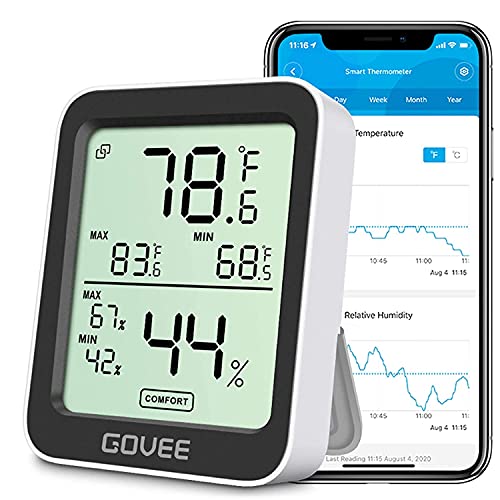
Govee Indoor Hygrometer Thermometer H5075
Reads air temperature and logs it to an app, so you can see how hot the cellar, garage or greenhouse gets. It does not measure water, so pair it with a water thermometer.


Planning the rest of the system? See aquaponics greenhouse for temperature control, size your aquaponics pump, or compare fish in best fish for aquaponics.
Aquaponic Trout FAQ
Grow along with us
New guides and seasonal tips for fish, plants and DIY builds, about once a month.