Fish guide
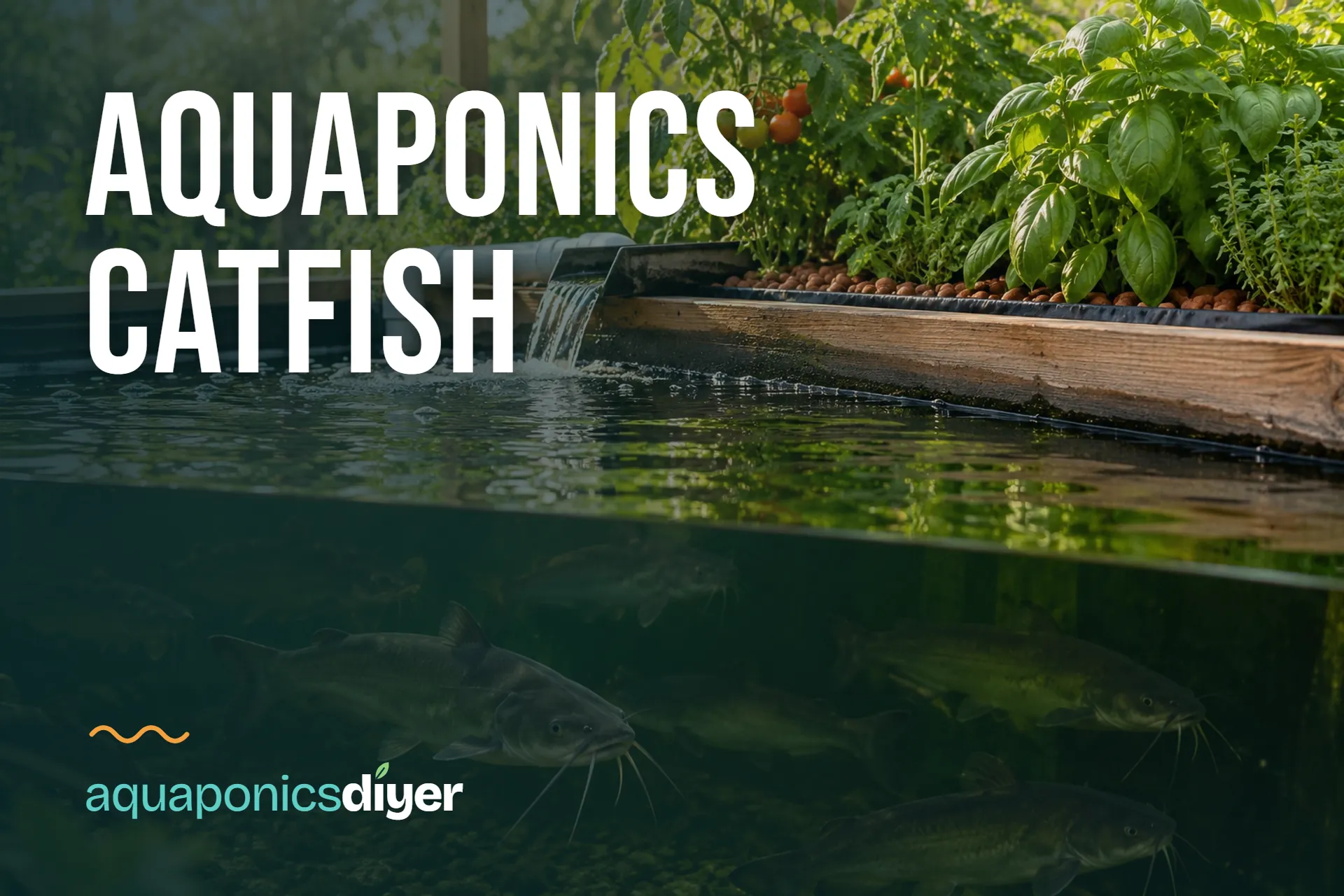
Aquaponics Catfish: How to Raise Channel Catfish
As an Amazon Associate we earn from qualifying purchases. How we choose products.
On this page
Aquaponics catfish are a good fit for a home system if you accept one trade: they are tough and native, but slow. Channel catfish (Ictalurus punctatus) grow best at about 85°F (29°C), and Texas A&M says that in tanks they can take up to 18 months to reach market size, against six to eight months for tilapia. In exchange you get a fish that is not an exotic import in much of the US, a good fillet, and a bottom dweller that shares a tank well with a fish that swims higher.
The channel catfish is native to the Gulf States and the Mississippi Valley, and the Southern Regional Aquaculture Center fact sheet SRAC 180 says it has since been widely introduced throughout the United States. That makes it the usual fallback when a state restricts tilapia. Below we cover why catfish work, how they compare with tilapia, how many fit in a tank, water, feed, growth, breeding and mixing them with bluegill. If you are still choosing a species, start with the best fish for aquaponics.
Why Catfish Work in Aquaponics
New Mexico State University guide H-170 lists channel catfish with tilapia, rainbow trout, perch and common carp as species well adapted to recirculating systems. The FAO manual Small-scale aquaponic food production (Technical Paper 589) is warmer still on catfish as a group: it calls them an extremely hardy group of fish that tolerate wide swings in oxygen, temperature and pH, and the easiest species for beginners. Two cautions belong beside that praise. FAO’s air-breathing point applies to the Clariidae, such as African catfish, not to the channel catfish this page covers. And Texas A&M AgriLife guide EHT-148 places catfish in its “Poor” group for commercial aquaponics because of slow tank growth and low selling prices, while noting that some poor-ranked species are acceptable for a home hobby system. For a backyard grower who wants to eat the fish, that ranking is no obstacle. It is a warning not to plan on the fish paying for the system.
Native and Legal
SRAC 180 puts the original range of channel catfish in the Gulf States and the Mississippi Valley north to the prairie provinces of Canada and Mexico, with later introductions throughout the US. Because the species is already established across much of the country, it is not treated like tilapia, which Texas A&M calls a non-native species needing an exotic species culture permit in Texas. That does not remove every rule. Rules on possession, transport, sourcing and sale differ by state, so call your state fish and wildlife agency or county extension office before you order, and buy from a hatchery licensed to ship to you. Never release aquaponics fish into ponds, lakes or streams, which FAO also advises.
Temperature Range
SRAC 180 says channel catfish grow best at about 85°F (29.4°C), and that with each 18°F (10°C) change in temperature their metabolic rate doubles or halves, so appetite rises and falls with the water. FAO gives 26°C (79°F) as the preferred temperature for catfish and adds that growth of African catfish stops below 20 to 22°C (68 to 72°F). The extension sources we reviewed give no published lower limit for channel catfish in tanks, so we will not quote one. Treat the 70s as the floor for steady growth, expect slower feeding and growth in cool water, and feed less when the water drops. If winter is the problem, a heated room or a greenhouse does more than a bigger heater.
Bottom Feeders and Solids
FAO describes catfish as benthic: they occupy only the bottom of the tank, so crowded fish do not spread through the water column and can hurt each other with their spines. Its suggested fix is a tank with more horizontal space than depth. Catfish also produce solid waste that FAO says is less voluminous and more dissolved than tilapia waste, which helps mineralization, though FAO adds that high densities need mechanical filtration beyond a basic setup. Handle them with care: SRAC notes the sharp spines in the dorsal and pectoral fins can inflict a nasty, painful wound.
Channel Catfish vs Tilapia
The honest comparison is speed and heat against forgiveness and legal simplicity. Figures below are from FAO, SRAC 180 and Texas A&M EHT-148.
| Factor | Channel catfish | Tilapia |
|---|---|---|
| Best growth temperature | About 85°F (29°C), SRAC | 81 to 86°F (27 to 30°C), FAO |
| Cold limits | No lower limit published in the sources we checked | Stop feeding below 17°C (63°F), die below 12°C (54°F), FAO |
| Time to market size in tanks | Up to 18 months, Texas A&M | 6 to 8 months, Texas A&M |
| Legal status | Native to the Gulf States and Mississippi Valley, widely introduced | Non-native, regulated by some states |
| Where it lives in the tank | Bottom, FAO | Open water |
| Behavior | Males territorial from 0.25 to 0.5 lb, Texas A&M | Males territorial, FAO |
| Digestible protein need | 27%, FAO (NRC 1993) | 30%, FAO (NRC 1993) |
| Texas A&M rating | Poor for commercial aquaponics | Excellent |
If your state allows tilapia and you can keep the water warm, our aquaponics tilapia guide covers the faster option. Choose catfish when tilapia are restricted, when you want a native species, or when you plan to run a mixed tank. FAO notes that farmers raise catfish with a fish that uses the upper tank, such as bluegill, perch or tilapia.
Tank Size and Stocking Density
Stocking density is a weight, not a head count. FAO recommends 10 to 20 kg of fish per 1,000 liters of tank water and strongly advises beginners not to exceed 20 kg, about 1 lb per 6 gallons, especially where power is not guaranteed, because at high densities a short outage can kill every fish within an hour. For tanks under 500 liters (132 gallons) FAO halves the rate and does not recommend raising food fish at all. The table applies those rules to common tanks, counting a harvest-size catfish at 1.25 lb (0.57 kg), the market weight SRAC 180 gives for farm-raised catfish.
| Fish tank | Liters | FAO maximum fish weight | Harvest-size catfish (about) |
|---|---|---|---|
| 100 gallons | 379 | 3.8 kg (8 lb), half rate | 6, but FAO advises against food fish below 132 gal |
| 150 gallons | 568 | 11.4 kg (25 lb) | 20 |
| 200 gallons | 757 | 15.1 kg (33 lb) | 26 |
| 275 gallon IBC tote | 1,041 | 20.8 kg (46 lb) | 36 |
| 300 gallons | 1,136 | 22.7 kg (50 lb) | 40 |
| 500 gallons | 1,893 | 37.9 kg (83 lb) | 66 |
| 1,000 gallons | 3,785 | 75.7 kg (167 lb) | 133 |
FAO says catfish can be stocked far higher, up to 150 kg per cubic meter, but only with comprehensive mechanical filtration and solids removal beyond a home system. Texas A&M adds that high densities can discourage fighting but also bring poor water quality and more intensive management. For a backyard tank, stay at the beginner ceiling and give the fish room.
Catfish Farming in Tanks
Commercial catfish farming happens mostly in ponds, and Texas A&M is blunt that catfish do not perform as well in tanks, with slower growth than in outdoor ponds. A tank that is wide and shallow suits the bottom-dwelling habit better than a tall one, which is worth knowing before you turn a tote into a fish tank (see our IBC aquaponics guide and the aquaponics fish tank guide for layouts). Texas A&M also lists catfish disease problems that matter at home, including enteric septicemia of catfish, columnaris, Aeromonas and proliferative gill disease, and notes that most aquaponics systems cannot use medications. Prevention is the plan: clean water, no overcrowding, and fish from a reputable supplier.
Water Quality for Catfish
Run the water for the whole system, not only the fish. FAO’s compromise targets for aquaponics are a pH of 6 to 7, ammonia and nitrite below 1 mg/L, nitrate 5 to 150 mg/L, dissolved oxygen above 5 mg/L and water between 18 and 30°C (64 to 86°F). One milligram per liter is one ppm, the unit on hobby test kits. SRAC 180 says the lethal oxygen level for channel catfish is about 1.0 ppm and that growth is reduced below 4 ppm, so do not rely on their toughness to forgive an air pump failure.
- Ammonia and nitrite: SRAC 180 says channel catfish are no more tolerant of high ammonia and nitrite than farm-raised fish, so cycle a new system first with our fishless cycling guide.
- Nitrate: FAO says nitrate above 100 mg/L may reduce catfish appetite, so keep plants and water changes ahead of the build-up.
- Aeration: FAO suggests 5 to 8 liters of air per minute for each cubic meter of water from at least two air stones in different parts of the tank.
- Testing: a liquid kit such as the API Freshwater Master Test Kit covers pH, ammonia, nitrite and nitrate.
Feeding Catfish
FAO lists 27% digestible protein for channel catfish, drawn from NRC 1993 data. SRAC 180 says that in natural waters they feed mostly near the bottom but will take some food from the surface, and that most feeding movement happens just after sunset and just before sunrise. FAO adds that catfish can be trained to eat floating pellets.
Sinking vs Floating Pellets
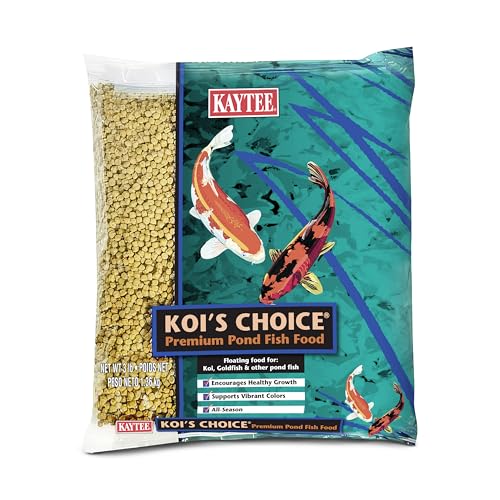
Sinking feed matches their habit, but you cannot see what is eaten, and uneaten pellets settle into the waste that your biofilter then has to handle. A floating pellet lets you watch every feeding and scoop out what is left. Train fingerlings to the surface by feeding at the same spot and time, starting with a little feed at dusk. A floating pellet such as Kaytee Koi’s Choice, which its maker lists at 35% protein, is a convenient choice; check the label and the fish size, because fingerlings need a smaller crumble.
How Much to Feed
Texas A&M puts the feed conversion ratio for catfish in tanks at 1.5 to 1.8 when carefully fed, meaning about 1.5 to 1.8 lb of feed per pound of weight gain. Feed what the fish finish quickly, remove leftovers, and cut back as the water cools, since SRAC ties appetite to temperature. Feed also fuels your plants, so match the amount to your grow beds; our grow bed guide covers sizing.
Growth and Harvest
Patience is the price of catfish. SRAC 180 says most farm-raised catfish are harvested at about 1.25 lb at around 18 months, and that wild fish often take 2 to 4 years to reach 1 lb. Texas A&M says tank culture can take up to 18 months for one production cycle, which means less than one crop a year. By comparison it gives 6 to 8 months for tilapia.
Texas A&M also reports an excellent fillet yield and dress-out percentage for catfish. Plan the harvest around the fish, not the calendar: pull the largest first so total weight stays under the tank ceiling. Males start to fight at 0.25 to 0.5 lb, which is the signal to thin the tank or add hiding places. Wear gloves, because the spines are sharp.
Breeding Channel Catfish
Short answer: do not plan on it. SRAC 180 says channel catfish are cavity spawners that spawn only in secluded, semi-dark areas, which is why commercial ponds need spawning containers. They spawn between 75 and 85°F with about 80°F ideal, usually mature at around 3 years, and farm-raised catfish typically weigh more than 2 lb when they spawn. A female produces about 3,000 to 4,000 eggs per pound of body weight, the male guards the nest, and eggs hatch in roughly 8 days at 78°F. FAO says catfish, carp and trout need more careful management than tilapia and that it may be better to source fish from a reputable supplier, which is the practical route for a home system. FAO also warns that adult tilapia, catfish and trout will eat smaller siblings, so any fry need their own tank or a floating cage.
Catfish and Bluegill Together
A mixed tank solves the floor-space problem on paper: catfish use the bottom while bluegill take the upper water. FAO names bluegill, perch and tilapia as the usual partners. Match sizes, because FAO warns larger fish will eat smaller ones, and understand the tradeoff: Texas A&M says bluegill can take 2 to 2.5 years to reach 1 lb and are illegal to sell as food fish in some states, including Texas. Our aquaponics bluegill guide covers that species in detail.
What you need for a catfish tank
Feed, oxygen and a way to read the water. Add a heater only if your winter requires it.
-
1Floating pellets
Kaytee Koi's Choice Floating Fish Food
Its maker lists 35% protein, and the floating pellet lets you check feeding and train catfish to the surface.
-
2Air pump
Pawfly 254 GPH Aquarium Air Pump
Multi-outlet pump rated for ponds up to 300 gallons, so you can run the two air stones FAO recommends.
-
3Water test kit
API Freshwater Master Test Kit
Tests pH, ammonia, nitrite and nitrate, the readings that keep a tank stable.
-
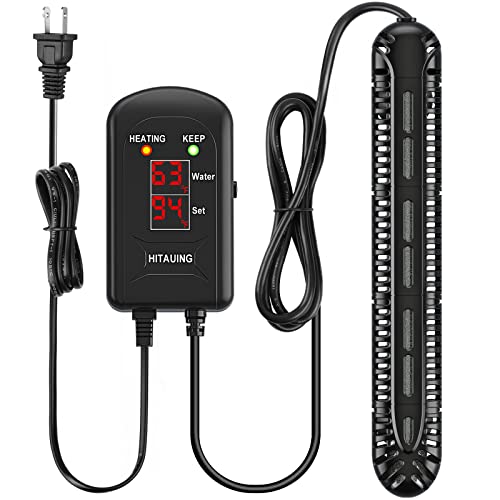
4Heater
HiTauing 300W Submersible Aquarium Heater
Rated by its maker for 40 to 75 gallon tanks, so it suits small indoor tanks and needs several units on larger ones.


Planning the rest? See aquaponics tilapia, the best fish for aquaponics or the IBC aquaponics build.
Aquaponics Catfish FAQ
Grow along with us
New guides and seasonal tips for fish, plants and DIY builds, about once a month.