Fish guide
Aquaponics Bluegill: Stocking, Feeding and Harvest
As an Amazon Associate we earn from qualifying purchases. How we choose products.
On this page
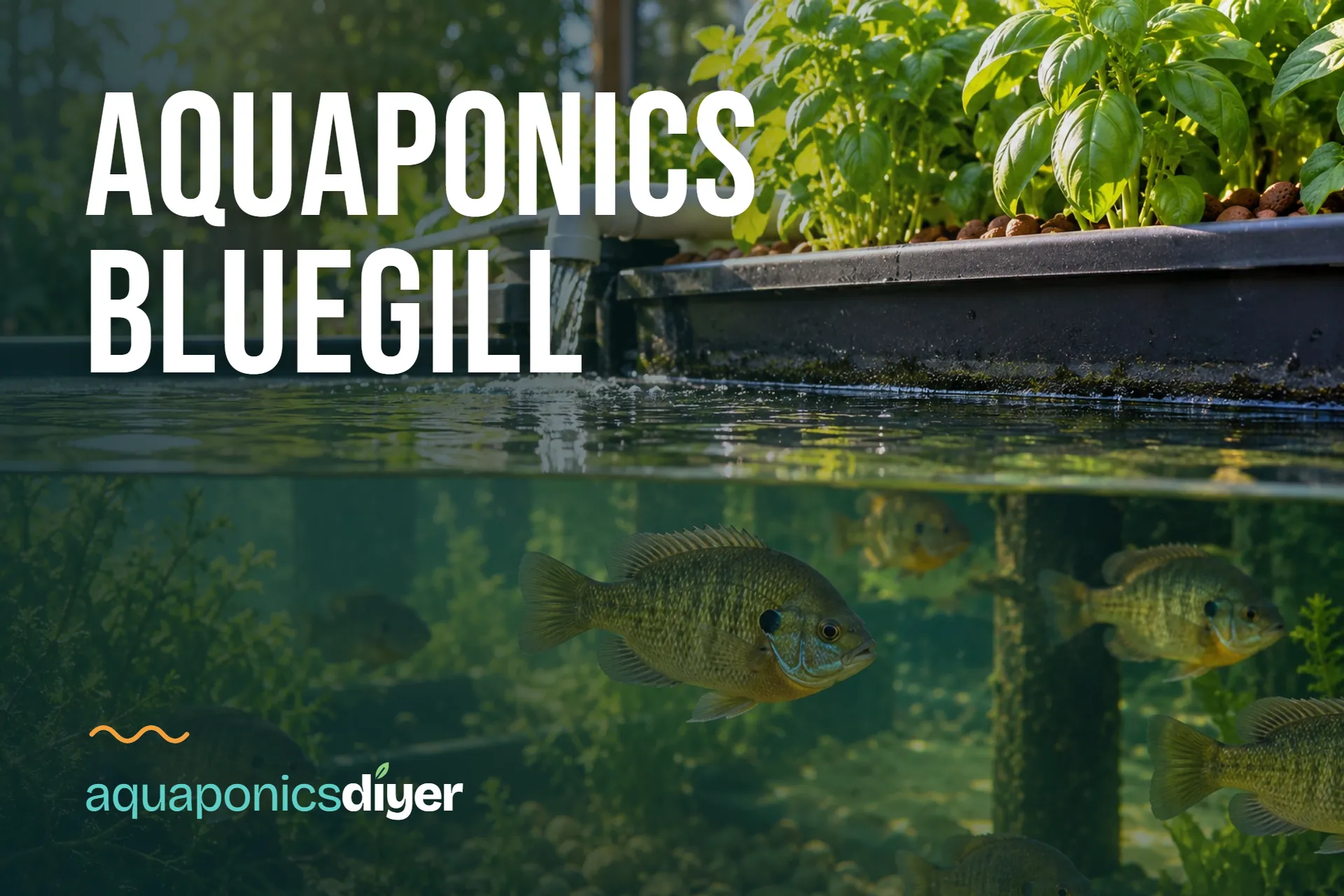
Bluegill can live in an aquaponics system, and for a backyard grower in the eastern US they are a cheap, native, good-eating option. The catch is time. Texas A&M AgriLife guide EHT-148, Aquaponics: Fish Species Selection, says bluegill can take 2 to 2.5 years or more to reach a pound, ranks them in its “Fair” group and calls them a poor choice for commercial aquaponics. The Southern Regional Aquaculture Center profile of hybrid sunfish adds that a sunfish needs at least two years to reach the accepted food size of 8 to 12 ounces (227 to 340 g).
That does not make bluegill a bad fish for a hobby tank. It makes them a slow one, and one that breeds so freely that a single pair can fill a tank with stunted fish. This guide covers what the extension sources say about stocking, temperature, feeding, overbreeding, hybrids and harvest, so you can decide whether the wait suits you. If you are still choosing a species, compare them in our guide to the best fish for aquaponics.
Why Bluegill for Aquaponics
People look at bluegill for the same reason they look at any native fish: it removes the paperwork and the heating bill that come with tropical species. The advantages are real, but so is the main drawback, so both are laid out below.
Native and Easy to Source
SRAC notes that the sunfish family is strictly North American and that the native range of the bluegill (Lepomis macrochirus) is the eastern US. Widespread introductions have since spread sunfish across the country, which is why most farm and pond supply stores in the US can point you to a source. Texas A&M puts the starting cost of fingerlings at about 25 to 35 cents for a 1 to 3 inch fish, which is low compared with most species it reviews. Sunfish also accept commercial diets readily, per the same guide, so you do not need live food to get them going.
A native fish also makes escape less alarming than a tropical one. You should still never release tank fish into a pond, lake or stream, and FAO tells growers to check local regulations on any species they import in its small-scale aquaponics manual.
Cold Tolerance
SRAC gives 68 to 86°F (20 to 30°C) as the optimal range for sunfish growth, with growth rising as water warms up to about 86°F and falling beyond that. The same profile says hybrid sunfish show greater tolerance of cooler water than pure bluegill and handle poor environmental conditions better. In practical terms, a bluegill tank in a mild or temperate climate may need little or no heating during the warm months, while tilapia, which need much warmer water, usually do. We have not found an extension source that publishes a safe winter temperature for bluegill in a recirculating tank, so treat any exact low-end number you read elsewhere with caution and keep a heater on hand for cold snaps.
The Catch: Slow Growth
Texas A&M states that ideal aquaponics fish reach market size in less than a year and before they begin reproductive development. Bluegill do neither. The guide reports a feed conversion ratio of 3.5 to 4.4 pounds of feed for every pound of gain, which is far worse than the 1.5 to 1.8 it gives for channel catfish in tanks. It also uses a 27 percent dress-out figure for bluegill and works out a break-even of 13.74 to 29.81 dollars per pound of fillet, prices it says the market will not pay. Those numbers describe a business. A hobbyist who values eating something grown at home may weigh them differently, but they do show why feed use and time are the real cost of this species.
Bluegill vs Tilapia vs Catfish
Texas A&M ranks species from Poor to Excellent for commercial aquaponics. Tilapia sit in the Excellent group, while bluegill and channel catfish both appear in the Fair group. Here is how the three compare on the points that matter to a home grower.
| Point | Bluegill | Tilapia | Channel catfish |
|---|---|---|---|
| Texas A&M rating | Fair | Excellent | Fair |
| Time to market size | 2 to 2.5 years or more for 1 lb | 6 to 8 months | See our catfish guide |
| Feed conversion | 3.5 to 4.4 lb feed per lb gain | Not compared here | 1.5 to 1.8 in tanks |
| Native to the US | Yes | No, permit rules vary by state | Yes |
| Water temperature | 68 to 86°F growth range (SRAC) | Warm, usually heated | Warm-water fish |
On growth and feed efficiency tilapia win clearly. What bluegill offer in return is a species you do not need an exotic-species permit for in most places, and a smaller heating load. If you want the fast option and your state allows it, read our aquaponics tilapia guide. If you want a bigger, native fish and can wait, compare it with the catfish guide.
Is tilapia similar to bluegill? Only on the surface. Both are mild, white-fleshed panfish that accept pellets, but tilapia are tropical, fast-growing African fish that Texas A&M rates Excellent, and bluegill are slow-growing North American sunfish with a Fair rating.
Hybrid Bluegill and Other Sunfish
When people say hybrid bluegill they mean a cross between sunfish species. SRAC explains that various sunfish interbreed readily, so hybrids are simple to produce. The most common cross uses a male bluegill and a female green sunfish. SRAC reports that this cross gives offspring with a skewed sex ratio (mostly male) and rapid growth, while the reverse cross does not. Apart from the redear and green cross, SRAC says all the other crosses it tested produced more than 70 percent males.
Hybrids matter for aquaponics for three reasons given in the SRAC profile:
- Better growth. Some crosses show hybrid vigor in growth rates.
- Better feed acceptance. They take formulated feeds more readily.
- Less overbreeding. Hybrids are not sterile, but skewed sex ratios and abnormal reproductive behavior reduce reproductive potential.
Do not expect a hybrid to be fast. SRAC still gives at least two years to food size, and notes that in an Iowa study hybrid sunfish had not reached marketable size after 17 months in ponds and 12 months in an indoor recirculating system. The same profile says stocking densities for sunfish in recirculating systems have not been determined. Texas A&M treats bluegill, redear and hybrid sunfish as one group and rates the group Fair.
Redear sunfish (L. microlophus) and green sunfish (L. cyanellus) are the other species SRAC names as common. If a supplier sells you “sunfish” for aquaponics, ask which species or cross it is, whether the fish are mostly male, and whether your state allows it.
Tank Setup and Stocking
A bluegill tank is built like any other fish tank in a recirculating system: a solids filter, a biofilter or grow beds, strong aeration and a tight lid. Our guide to how to build an aquaponics system covers the plumbing, and if you plan to use an IBC tote, see IBC aquaponics. If your yard is the starting point, backyard aquaponics is the broader plan.
Density
No extension source gives a proven bluegill density for recirculating tanks. SRAC says outright that grow-out stocking densities for sunfish in recirculating systems have not yet been determined, and describes an earlier project in which 1.7 pounds of fish per gallon per minute of flow did not produce marketable fish within 30 months. Until that gap is filled, the safe fallback is the general rule for any fish in an aquaponics unit. FAO Technical Paper 589 recommends a maximum of 20 kg of fish per 1,000 liters of tank water for beginners, which is about 1 lb per 6 gallons, and warns that higher densities need more aeration and filtration.
Count by weight at the size you will reach at harvest, not by fingerling number. A 300 gallon tank, for example, tops out near 50 lb of fish on that rule. Start well below it, because bluegill are not fast enough to refill the tank quickly if you overstock and lose fish.
Overbreeding and How to Control It
SRAC states that each female sunfish produces an average of 80,000 eggs per year from several successive spawns, which often leads to overpopulation and stunted fish, most less than 5 inches (12.7 cm) long. Bluegill and green sunfish can spawn several times once water reaches 70°F (21°C), and SRAC gives 68 to 86°F (20 to 30°C) with a 12 to 16 hour photoperiod as the spawning range. Males build nests in sand or gravel and guard them.
In a tank you can use that to your advantage:
- Skip the nest material. Texas A&M says sunfish are spawned in outdoor or greenhouse setups by providing nest boxes and pea gravel, and SRAC says males build nests in sand or gravel. A bare tank with no spawning substrate removes what they use to nest, though it may not stop all spawning.
- Stock hybrids that are mostly male, as described above, and ask the hatchery to confirm the cross.
- Stock one size group. SRAC advises grading for size uniformity.
- Remove the extras. Surplus fingerlings that appear are a sign the tank is breeding, so take them out before they crowd the adults.
Water Quality and Temperature
SRAC has no bluegill-specific water guidelines beyond temperature, and tells growers to use the broad guidelines for warm-water fish: alkalinity and hardness of 50 to 200 ppm as CaCO3, pH of 6 to 9, and ammonia, nitrite, carbon dioxide and hydrogen sulfide kept as low as possible. In an aquaponics system the pH is usually pulled lower for the plants. FAO recommends keeping an aquaponics unit at a compromise pH of 6 to 7, which sits inside the sunfish range.
On temperature, aim for the middle of SRAC’s 68 to 86°F (20 to 30°C) growth range and avoid fast swings. A sudden change between day and night is harder on fish than a steady, slightly cool tank. Keep a thermometer in the tank and an aquarium heater in a drawer for cold snaps.
Test the water every week with a liquid kit. The API Freshwater Master Test Kit reads pH, ammonia, nitrite and nitrate, and you should cycle the system before the fish arrive. Our fishless cycling guide shows how. Oxygen matters as much as the numbers: FAO recommends running at least two air stones from an air pump, so budget for aeration from the start.
Feeding Bluegill
In a tank, bluegill need pellets. SRAC says feeds with 40 percent protein or more and at least 10 percent lipid improve growth and production in hybrid sunfish, and that where natural food is available a 36 percent protein diet is enough to reach maximum mean harvest weight. It also states that recirculating systems need a nutritionally complete diet, with more than 40 percent crude protein. Hybrid sunfish raised in cages are fed a 35 percent protein diet, with an expected feed conversion ratio of about 3.5.
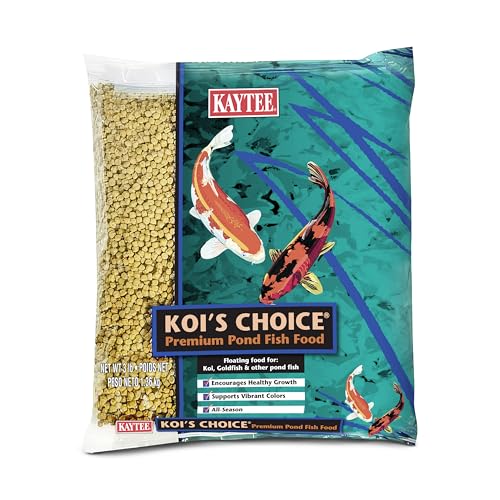
Texas A&M says sunfish readily accept commercial diets. Offer a small floating pellet at the surface, a little at a time, at the same hour every day. A floating feed lets you see what is eaten and pull out the rest, and uneaten feed is the fastest way to foul a recirculating system. SRAC mentions a mix of floating and sinking pelleted feed about 1/8 inch (3 mm) in size.
Because bluegill convert feed poorly, watch the water. An overfed tank pushes ammonia and nitrite up long before the fish show it. Feed what they finish in a few minutes, and scale feeding to the area of your grow beds, not just to the fish.
Harvest and Eating
SRAC says the accepted marketable food size for sunfish is 8 to 12 ounces (227 to 340 g), and that fish over 4 ounces (110 g) may be classed as marketable food fish. For a plate-size fish, 8 ounces is the practical target. Bluegill are a true panfish: Texas A&M calls them an excellent table fare.
Can you fillet a bluegill? Yes, but there is not much to fillet. SRAC reports that about 58 percent of the weight is lost when sunfish are filleted, compared with 32 percent lost when they are cooked in-the-round, and Texas A&M uses a 27 percent dress-out for bluegill. For that reason most cooks scale and gut the fish and cook it whole, or take small fillets from the largest ones.
Grade the fish when you harvest. A stock that grows unevenly will include a few large males and many small ones, and keeping only the biggest lets the rest grow on. Never release the small fish into natural water.
Where to Buy Bluegill Fingerlings and State Rules
Buy from a licensed fish hatchery or a state-permitted pond stocking supplier, not from a lake. Ask what size they sell, whether the fish are trained to pellets, and, if you want hybrids, which cross it is. Texas A&M says 1 to 3 inch fingerlings cost about 25 to 35 cents each, and SRAC recommends stocking fingerlings at 4 inches or larger in ponds.
State rules decide the rest. As the callout above explains, some states regulate sunfish as game fish, restrict their sale, or ban stocking of hybrids in public waters. SRAC advises growers to consult their state authorities about the rules for rearing and selling sunfish. A call to your state agency or county extension office takes five minutes and is worth it before any fish are ordered.
What you need for a bluegill tank
Pellets to feed them, air to keep them alive and a way to read the water. The tank and grow beds come from your own plan.
-
1Floating pellets
Kaytee Koi's Choice Floating Fish Food
Floating, so you see what gets eaten. Check the protein on the label against the 36 to 40 percent SRAC gives for sunfish.
-
2Air pump
Pawfly 254 GPH Aquarium Air Pump
A multi-outlet pump, so you can run two or more air stones as FAO recommends.
-
3Air stones
VIVOSUN 2PCS 4 x 2 in Large Air Stone
Large stones that fit a deep tank and spread fine bubbles to keep dissolved oxygen up.
-
4Water test kit
API Freshwater Master Test Kit
Tests pH, high-range pH, ammonia, nitrite and nitrate, the readings you track every week.


Compare other species in best fish for aquaponics, or read about aquaponics catfish and aquaponics tilapia.
Aquaponics Bluegill FAQ
Grow along with us
New guides and seasonal tips for fish, plants and DIY builds, about once a month.