Hydroponics
Hydroponic Strawberries: What They Are and How to Grow Them at Home
As an Amazon Associate we earn from qualifying purchases. How we choose products.
On this page
- What Are Hydroponic Strawberries?
- Choosing Varieties for Growing Strawberries Hydroponically
- The Best Hydroponic System for Strawberries
- How to Grow Hydroponic Strawberries at Home
- Nutrients, EC and pH for Strawberries
- Light, Temperature and Pollination Indoors
- Timeline: From Bare Root to First Berries
- Common Problems and Fixes
- Growing Strawberries in Aquaponics
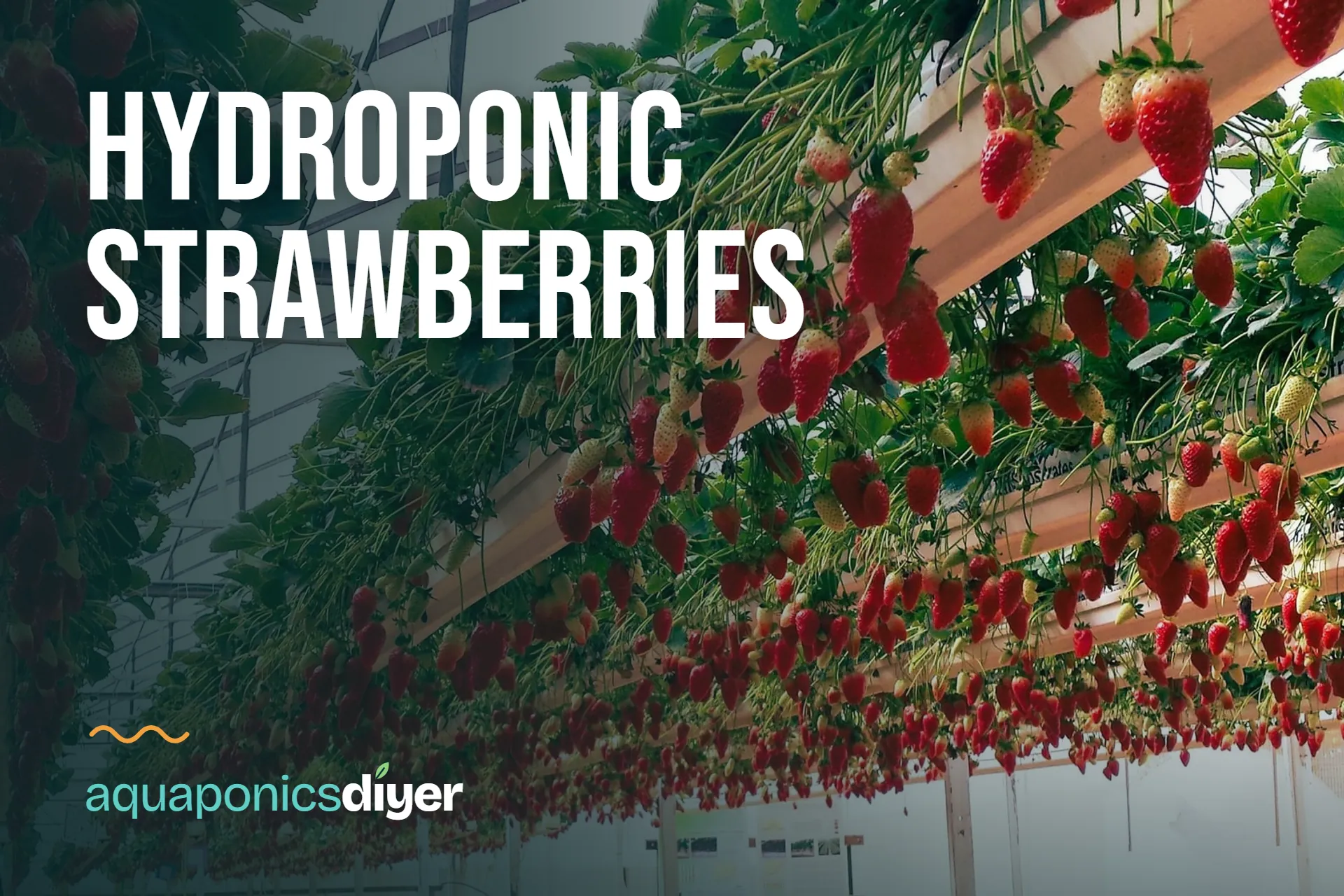
Hydroponic strawberries are strawberries grown without soil: the roots sit in an inert substrate such as coir or perlite, or in channels of flowing water, and every nutrient arrives dissolved in the irrigation water. The berries in the clamshell are the same species as field berries and are safe to eat. Whether they are better depends on the variety, the grower and how ripe they were picked, not on the absence of soil.
They are also a rewarding crop to grow at home, if you pick a day-neutral variety, keep the crown dry and run a gentle nutrient solution. Below we answer the supermarket questions first, then build a home growing guide on university research.
What Are Hydroponic Strawberries?
A pack labeled hydroponically grown means the plants never grew in field soil. Commercial growers usually plant them in troughs or bags of coir, peat, perlite or bark, fed by drip irrigation under a greenhouse or high tunnel. The fruit is no different in kind: same species, often the same day-neutral cultivars that California fields grow.
Are Hydroponic Strawberries Organic?
They can be, in the United States. USDA has long allowed hydroponic operations to be certified, and when the Center for Food Safety challenged that, a federal court in Northern California ruled for USDA in March 2021, with the judge writing that hydroponic systems are "nowhere explicitly prohibited" (Food Safety News, 2021). The Ninth Circuit upheld that decision on September 22, 2022 (National Agricultural Law Center, 2022). So hydroponic versus organic is not an either/or: a hydroponic berry with the seal was grown with organic-approved inputs, and one without it simply was not certified.
Are They Healthier Than Soil-Grown Berries?
There is no settled answer. A two-year University of Nevada, Reno project led by Professor Stan Omaye reported that its hydroponic strawberries yielded more and had higher vitamins C and E and total polyphenols than the soil-grown comparison, using about 30 percent less water (Nevada Today, 2015). That is one comparison of one setup, and nutrient content also swings with variety, ripeness and light. The fair reading: hydroponic berries are not nutritionally worse, and in some trials they come out ahead.
What About Pesticides?
Soilless does not mean pest-free. Greenhouse strawberries still get powdery mildew, spider mites and aphids. In a 2023 University of Delaware indoor trial, the team controlled mildew with a potassium bicarbonate product and mites with predatory mites (SARE project ONE22-417). Protected growers often lean on biological controls, but the hydroponic label alone does not tell you what was sprayed.
Choosing Varieties for Growing Strawberries Hydroponically
Variety decides more about your harvest than the system does. Strawberries fall into three groups by how they respond to day length, and only one suits a year-round indoor setup.
Day-Neutral and Everbearing: The Right Choice
Day-neutral cultivars flower whatever the day length, as long as nights stay cool. Purdue's Wenjing Guan puts the limit at night temperatures not exceeding 65°F, and notes that under ideal conditions harvest is possible two months after planting (Purdue Facts for Fancy Fruit, 2019).
- Albion: the classic hydroponic choice. Illinois Extension notes it gives consistently large, flavorful fruit, although yields tend to be lower than some newer varieties (Illinois Extension, 2023).
- Seascape: an older day-neutral, sold as everbearing, easy to find as bare-root stock.
- Royal Royce, Cabrillo, Monterey: newer day-neutrals that showed the most potential under LEDs in the Delaware trial, where Albion gave the lowest total weight but a large average berry of about 12.3 g.
Why June-Bearing Plants Disappoint Indoors
June-bearing (short-day) varieties set one crop a year after the shortening days of autumn. Under a fixed indoor light schedule they mostly make leaves and runners. They suit an outdoor gutter with a natural season, not a kitchen tower.
Bare Root Plants Versus Seed
Named varieties are propagated from runners, so a bare-root crown is a genetic copy that fruits within a couple of months. Seed-grown strawberries, mostly alpine types, take far longer and give smaller berries. Start from bare roots or runner plugs.
The Best Hydroponic System for Strawberries
Strawberries want a moist, well aerated root zone with the crown sitting dry above it. A 2025 University of Georgia and Purdue study compared drip-fed substrate with NFT, a vertical tower and aeroponics, and found substrate gave a 144 percent higher total yield for the cultivar Florida Brilliance than the water-culture systems (Hutchinson et al., Frontiers in Plant Science, 2025). Among the water systems, the tower beat NFT by 71 percent for that cultivar.
| System | Fit for strawberries | Notes |
|---|---|---|
| Dutch buckets or troughs of coir and perlite | Best | Closest to commercial practice; drip feed |
| Vertical tower | Good | Space-saving, berries hang clean; watch the top pockets |
| Media bed (clay pebbles) | Good | The natural fit in aquaponics |
| NFT channels | Fair | Simple, but lowest yields in the 2025 trial |
| Deep water culture | Poor | Roots always submerged, crown near the water |
Dutch Buckets, Troughs and Media Beds
A bucket or trough of substrate fed by a drip line a few times a day is the home version of commercial practice. The Delaware team settled on one third each of coir, peat and perlite, fed three to four times daily. A clay pebble media bed does a similar job; our grow bed guide covers depth and media.
Vertical Towers
Towers hold many plants in a small footprint, and fruit hanging off the pockets stays clean and away from rot. If you keep fish, the same tower can sit on a tank: see our aquaponics tower guide.
Why Deep Water Culture Is a Poor Fit
DWC is excellent for lettuce, as our DWC system guide shows, but it keeps strawberry roots underwater full time with the crown an inch or two above the solution. Strawberries are prone to crown and root rots in wet, warm conditions. The 2025 study did not test DWC, but every water-culture system it tested underperformed substrate. If you use NFT instead, keep the film shallow and set each crown in a net pot with a little media.
How to Grow Hydroponic Strawberries at Home
These steps assume a small indoor tower or a row of drip-fed buckets with day-neutral bare-root plants. New to soilless growing? Start with our beginner's guide to hydroponic systems.
Planting and Starting Your Strawberries
-
Soak and sort the bare roots
Soak the crowns in water for about an hour. Discard any with a dry, hollow or blackened crown, and trim long roots to fit the pot.
-
Set the crown at the right height
Spread the roots into moist coir and perlite or clay pebbles so the middle of the crown sits level with the surface. Purdue's advice: crowns should contact the medium but never be buried.
-
Start with a weak feed
Water in with pH-adjusted water, then switch to nutrient solution at the low end of the range and raise it as new leaves appear.
-
Set light and temperature
Run lights 14 hours a day, with about 65°F at night and 72°F by day, the settings of the Delaware indoor trial.
-
Pinch the first flowers
Remove flower stalks for the first few weeks so the plant builds roots and leaves first. Cut runners all season unless you want new plants.
-
Pollinate every day
Brush each open flower with a soft paintbrush or touch it with an electric toothbrush daily until the petals fall.
What You Need to Grow Strawberries Hydroponically
Plants, a system, nutrients and the two meters that keep the solution in range.
-
1Plants
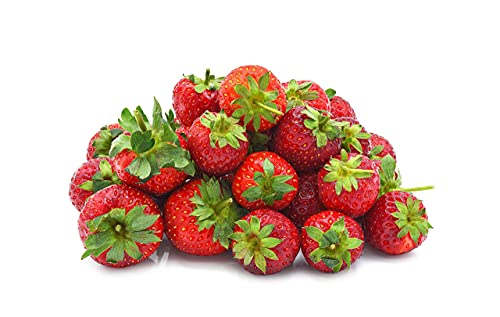
Albion Day-Neutral Bare Root Strawberry Plants (25)
The standard hydroponic cultivar with large, flavorful berries.
-
2Plants, alternative
Seascape Everbearing Bare Root Strawberry Plants (25)
An easy day-neutral for a first attempt.
-
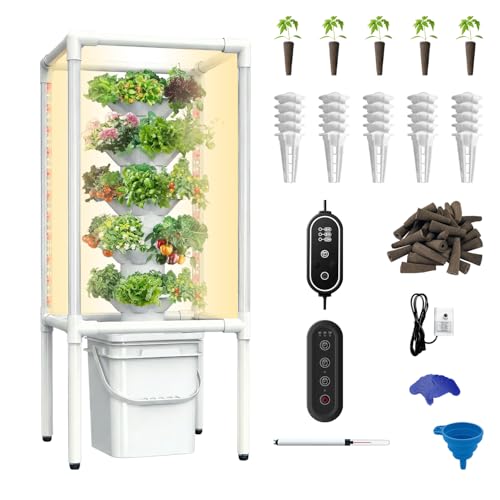
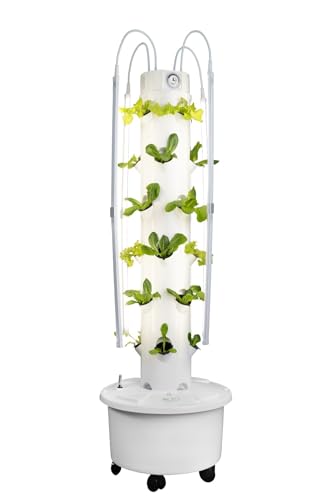
4System, premium
ALTO Garden GX Hydroponic Tower, 24 Net Pots
A larger food-grade tower with LED lights.
-
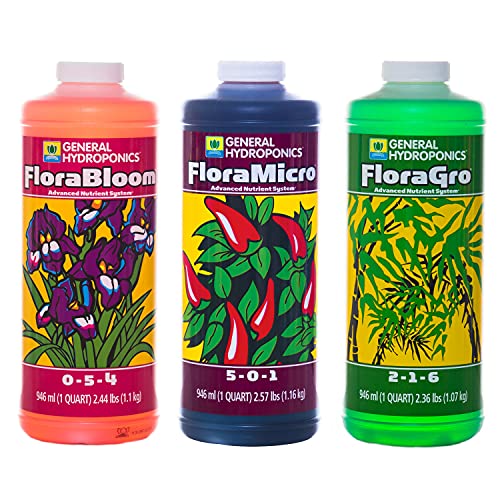
5Nutrients
General Hydroponics Flora Series 3-Part
A 3-part base you can shift toward bloom at fruiting.
-
6Nutrients, trial size
General Hydroponics FloraSeries Trial Pack
The same three parts in a smaller pack.
-
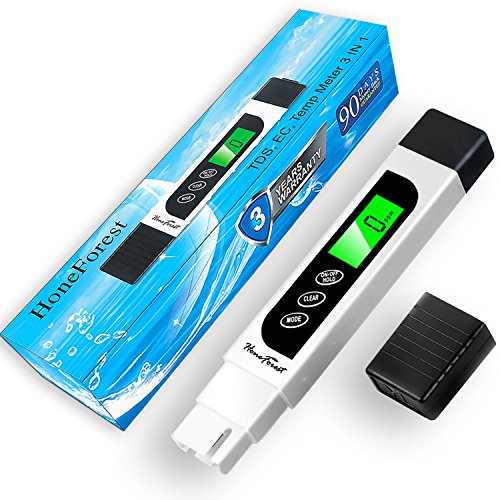
7EC meter
Reads EC and temperature of the solution.
-
9Extra light
GLOWRIUM 48W Full Spectrum Grow Light with Stand
Supplemental light for a few pots by a window.




Nutrients, EC and pH for Strawberries
Strawberries are light feeders next to tomatoes or cucumbers, and too strong a solution scorches leaf edges and cuts yield. Start low and creep up.
EC and pH Targets
The 2025 Georgia and Purdue study targeted EC 0.75 to 1.25 dS/m (the same as mS/cm) and pH 5.5 to 6.5. The Delaware trial fed to keep the media near 1.2 EC. Illinois Extension ran nearer 1.8 mS/cm and pH 6.6, but noted that one solution fed every crop in its tunnel, so it was not ideal for strawberries. At home, aim for EC 0.8 to 1.2 and pH 5.8 to 6.2, checked every few days.
| Stage | EC (mS/cm) | pH |
|---|---|---|
| First two weeks | 0.6 to 0.8 | 5.8 to 6.2 |
| Leafing out | 0.8 to 1.0 | 5.8 to 6.2 |
| Flowering and fruiting | 1.0 to 1.25 | 5.8 to 6.2 |
Mixing a Three-Part Feed
With a 3-part line such as Flora Series, switch to the label's bloom proportions once flowers appear, then mix to your target EC rather than full label strength, which is written for heavier feeders. Add nutrients first and adjust pH last. Replace the reservoir every two to three weeks so salts do not build up.
Light, Temperature and Pollination Indoors
Indoors you replace the sun, the weather and the bees.
Light and Photoperiod
The Delaware trial used LEDs at 650 PPFD (µmol/m²/s) for 14 hours a day, and the Georgia greenhouse study topped up sunlight to a daily light integral of about 17.5 mol/m²/day. Home setups rarely match that, which is one reason indoor berries run smaller. Give day-neutral plants 14 to 16 hours of strong, close light; a window alone is not enough in winter.
Temperature
Purdue gives 59°F to 79°F as the range for maximum growth. Keep nights under 65°F where you can, since warm nights slow flowering. The Delaware team treated 86°F as the critical limit. A small fan also keeps powdery mildew down.
Hand Pollination
Strawberry flowers are self-fertile, but pollen still has to reach every pistil, and unfertilized patches of the berry stay small and lumpy. The 2025 study blamed limited pollination for low marketable yields in all its systems, which relied on hand and blower pollination only. Brush each open flower daily until the petals drop.
Timeline: From Bare Root to First Berries
First Harvest
Under good conditions, day-neutral plants give a first harvest about two months after planting, in line with Purdue's estimate. Pick when the fruit is red to the shoulders; strawberries do not sweeten after picking.
How Long Plants Keep Producing
Day-neutral plants fruit in repeated flushes. The Illinois stack produced from early May to mid-October, and the Delaware team estimated about 4 lb of marketable fruit per plant over a 10-month cycle under strong LEDs. Most home growers replace plants after about a year.
Common Problems and Fixes
Most failures come from water on the crown, stale air or a hot room.
| Problem | What you see | Likely cause | Fix |
|---|---|---|---|
| Crown rot | Young leaves wilt, plant collapses, crown brown inside | Crown buried or kept wet, warm solution | Remove the plant, raise crowns, cool and refresh the reservoir |
| Powdery mildew | White powder, upward-curling leaf edges | Still, humid air | Add a fan, space plants, remove affected leaves |
| Spider mites | Yellow stippling, fine webbing under leaves | Warm, dry indoor air | Rinse leaf undersides, release predatory mites |
| Tipburn | Brown, crisp tips on young leaves | Calcium not reaching new growth in still, humid air or after an EC jump | Improve airflow, keep EC steady, use a complete feed with calcium |
| Misshapen berries | Lumpy, small fruit | Incomplete pollination | Hand pollinate daily |
| Leaf edge burn | Older leaves scorched at the margins | EC too high | Dilute and flush with pH-adjusted water |
Preventing Crown Rot
Crown rot is the problem most likely to kill a plant. Keep crowns above the wet zone, never let the reservoir run warm, and pull any collapsing plant at once so it does not spread through shared water.
Keeping Mildew and Mites Away
Mildew likes still, humid air and mites like hot, dry air. Steady airflow, moderate humidity and a weekly look under the leaves catch both early.
Growing Strawberries in Aquaponics
Strawberries grow in aquaponics, best in a media bed or tower where the crown stays clear of the water. They are a moderate fit, ranking below leafy greens and herbs among the best plants for aquaponics.
What Changes With Fish in the Loop
Aquaponic systems run near pH 7 for the fish and bacteria, above what strawberries prefer, and fish water is often short of potassium and iron, which fruiting plants need most. Growers add fish-safe chelated iron and a potassium buffer. For maximum berries a separate hydroponic system is simpler; see aquaponics vs hydroponics for the trade-offs.
Best Setup for Aquaponic Strawberries
Plant in clay pebbles or a tower pocket, keep the crown above the flood level, and stock fish lightly. Expect smaller harvests than a tuned hydroponic system.
Grow along with us
New guides and seasonal tips for fish, plants and DIY builds, about once a month.