Plants and media
Is Fish Tank Water Good for Plants?
As an Amazon Associate we earn from qualifying purchases. How we choose products.
On this page
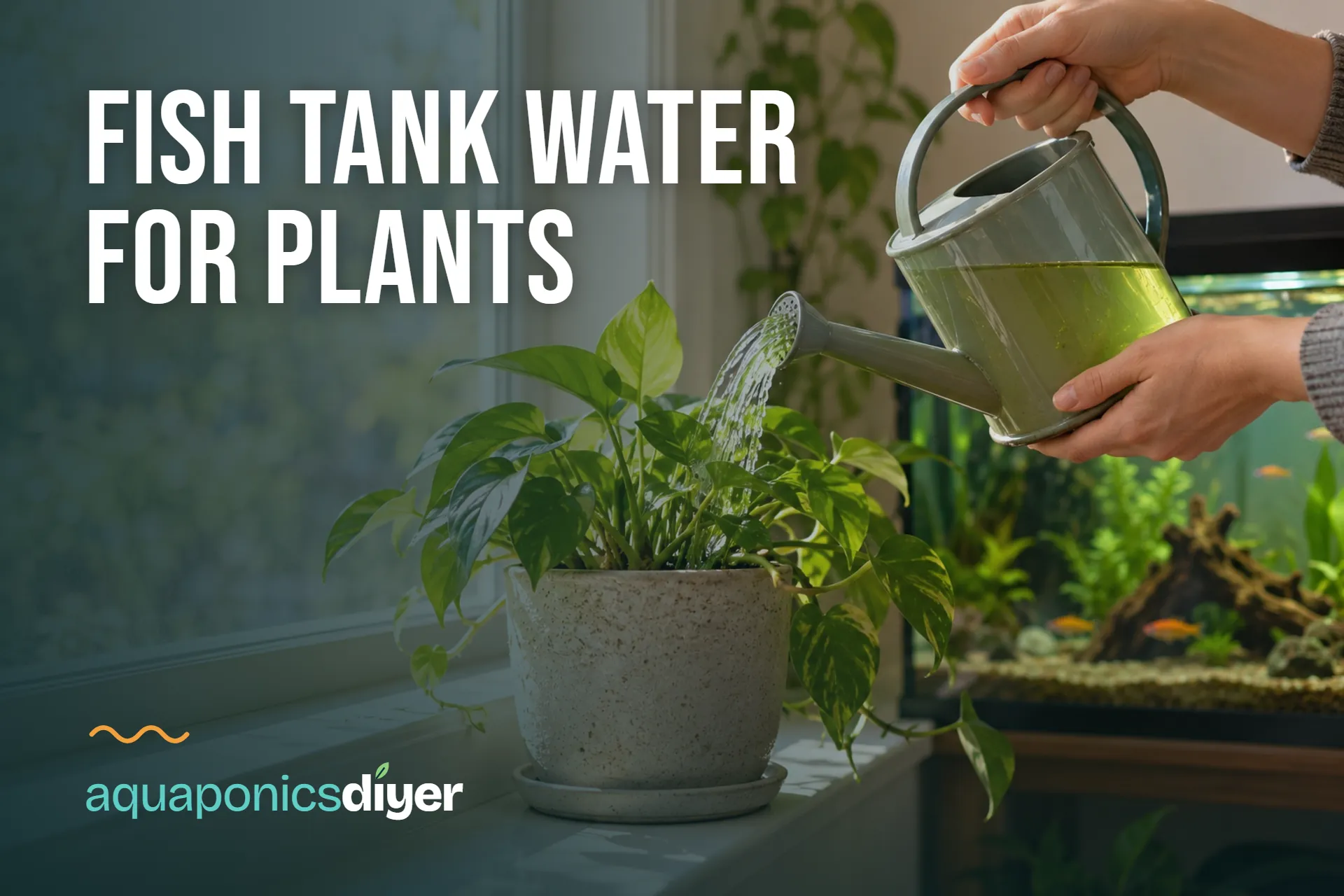
Yes, fish tank water is good for plants, with limits. Water from an established freshwater aquarium carries nitrate and other nutrients that come from fish waste, which is why it is a popular thing to pour on houseplants and garden beds at water change time. The limits are real, though: salt, medication and unfiltered mess are the three things that turn a free fertilizer into a problem.
This guide covers what is actually in aquarium water, how to use it on houseplants and in the vegetable garden, when to leave it in the bucket, and which plants make the most of it. It also covers the point where pouring water on a pot stops being enough and a small aquaponics system starts to make sense.
What Is in Aquarium Water
A fish tank is a small waste system. Fish eat, they excrete, and the leftovers of food and waste break down in the water. Most of what ends up dissolved in that water is exactly what plants take up from fertilizer, just in much smaller amounts.
Nitrogen From Fish Waste
Fish excrete ammonia, and the bacteria in your filter and substrate convert it to nitrite and then to nitrate in a process called nitrification. FAO’s manual Small-scale aquaponic food production calls nitrate the most accessible form of nitrogen for plants and says producing it is the goal of the biofilter. In an aquarium that nitrate builds up between water changes, and a water change is how you remove it. When you pour the old water on a plant, the nitrate goes to work instead of down the drain.
Practical Fishkeeping’s Neale Monks, answering a reader question about using tank water on the garden, says the same thing in plain terms: aquarium water can be good for the garden and for houseplants because it contains nitrate and phosphate, and decaying material adds organic matter to the soil. Horticulture magazine adds potassium and the beneficial microorganisms that process this waste to the list. The full loop is what aquaponics builds on purpose.
What It Lacks
Here is the catch. FAO explains that fish feed is a complete food for the fish, but not necessarily for plants, because fish do not need the same amounts of iron, potassium and calcium that plants do. Even a perfectly balanced aquaponic system, the manual says, tends to run short of those three over time, and growers add them. It also notes that much of the nutrient content of fish waste stays in solid form until bacteria break it down, so the dissolved nutrients you can pour out are only part of the picture.
That is why tank water works best as a light supplement. A houseplant in good potting mix will usually be fine with it, but a hungry fruiting crop will not live on it alone. Horticulture magazine makes a related point: if you change water regularly, the water is dilute enough to apply to your plants every time you water them, which also means it is not strong.
How to Use Aquarium Water for Plants
The method is simple: take the water you remove at a water change, let it reach room temperature and pour it on the soil. A few habits make it safer and more useful.
Houseplants
Houseplants are the easiest use. Use the water in place of a normal watering, pour it on the soil around the base and let the pot drain. Horticulture magazine says water from a regularly changed tank can go on your plants at every watering. Empty the saucer afterward, as you would with any watering.
If the water is cloudy, smells bad or comes from a tank that has not been changed in a long time, leave it out. Horticulture magazine warns that such water may be too much of a good thing. Diluting it with fresh water is a reasonable fix, though that is a rule of thumb, not a sourced ratio.
Vegetable Garden
Garden beds are more forgiving because the soil buffers and spreads the load. Rinse the bucket, pour slowly at the base of the plants and rotate between beds. For anything you eat, add two precautions. First, pour on the soil, not on the leaves or fruit, and wash produce as you normally would. Second, wash your hands after handling the bucket: the CDC states that the water and items in fish tanks can be contaminated with germs, and that healthy-looking fish can carry them. It also says children under 5, adults 65 or older and people with weakened immune systems are at higher risk of getting seriously ill from those germs.
The CDC does not address watering plants specifically, so using the water on edible crops is an inference from its advice, not a tested protocol. If anyone in the household is in a higher-risk group, keep tank water for ornamentals and flower beds.
How Often
None of the sources reviewed here gives a watering schedule, and the honest answer is that it follows your water changes. Horticulture magazine notes that the right interval for changes could be monthly, weekly or several times a week, depending on tank size, stock and filtration. Use what comes out when it comes out. Because it is a light feed, there is little to gain from saving it up or stretching it: fresh water from a recent change is better than a bucket that has been sitting for days.
When Not to Use It
Most problems with tank water on plants come from what was added to the tank, not from the fish.
Saltwater Tanks
Do not use water from a marine tank. Horticulture magazine says the salt may harm plants, especially potted ones, where it has nowhere to wash out. Neale Monks goes further and says brackish water, even with a modest salt level, is still not suitable for plants.
The same applies to a freshwater tank that has been dosed with salt. Monks says tonic salt, at the 1 to 3 grams per liter his reader was using, may be diluted by rain in a garden, but it could harm plants if it does not rain for a while, the soil drains poorly or the plants are sensitive to saline or alkaline conditions. He adds that once the tank has been unsalted through a few weeks of water changes, the water should be safe to use on the garden.
After Medicating the Tank
Horticulture magazine is direct on this: if chemicals were added to adjust pH or ammonia levels, or to treat the fish for disease, do not apply that water to plants grown for food. For ornamentals the sources are less specific, so the cautious move is to discard the water from a treated tank until you have done several clean water changes. Medications are made for fish, not for soil life, and no source reviewed here tests their effect on houseplants.
Water That Has Been Softened or Treated
None of the sources reviewed for this page tests water softened with a household softener or water conditioners added to the tap before it went into the tank, so there is no tested guidance to give. The sensible approach is the one the sources suggest for any additive: if you cannot say what is in the water, keep it away from food plants, and test it first on a single ornamental plant before you use it more widely.
Which Plants Like Fish Water
People search for “which plants like fish water” because not every plant wants the same amount of feeding, and the sources do not rank plants for this specific question. The best guide is FAO’s grouping of plants by how much nutrient they need, which comes from aquaponics but applies to the same fish-waste nutrients.
- Low demand: leafy greens and herbs such as lettuce, chard, basil, mint, parsley, coriander, chives and watercress, plus legumes such as peas and beans, according to FAO. These do well on a light, dilute feed, which is what tank water is.
- High demand: FAO calls tomatoes, eggplants, cucumbers, zucchini, strawberries and peppers nutrient hungry. They will take the water, but need more than a tank provides, especially potassium.
- Houseplants: foliage plants that like moist, rich soil are the usual home for the water from a water change. Plants that sit in water already, such as pothos in an aquarium, take the idea one step further.
To plan beyond the weekly pour, the list of the best plants for aquaponics sorts herbs, greens and fruiting crops by how much nutrient they take, which tells you how much fish waste each one needs behind it.
Turn the Water Change Into a System
Pouring water on a pot is aquaponics at its smallest, done by hand once a week. A real system closes the loop: a pump lifts the tank water to a grow bed, the roots take up the nutrients and the cleaned water returns to the fish, so the plants are fed constantly and the tank needs fewer changes. The plants do the job you were doing with the bucket.
What Changes With a System
You stop carrying water and start managing balance. FAO describes the key ratio as the amount of fish feed to the nutrient demand of the plants, so a bigger bed needs more fish behind it. The aquaponics fish tank guide explains the tank sizes that work and what you can grow on top of a tank you already own.
Which Kit Fits
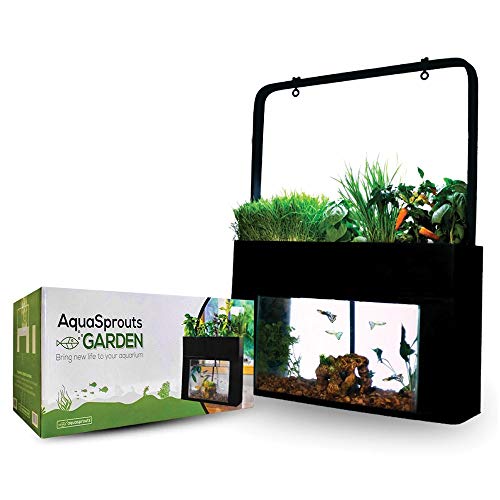
If you already have an aquarium, the AquaSprouts Garden is the option that sits on top of a standard tank and uses the tank water you would otherwise pour away. The Penn-Plax Aqua-Ponic Planter is the smaller, decorative planter for a desk. The full comparison, with the other kits worth considering, is in the guide to aquaponics kits.
Which kit fits
Two ways to put the water from your tank to work every day instead of once a week.
-
1Grow bed for the tank you own
A full-width grow bed with pump and timer that fits a standard 10 gallon tank, so your existing aquarium feeds an herb bed.
-
2Small planter for a desk
Penn-Plax Aqua-Ponic Planter (1.4 Gallon)
A houseplant or herb on a small round tank with no pump. Best treated as a decorative planter, not a fish habitat.

Read what aquaponics is, compare aquaponics kits or learn how to lower pH in aquarium water before your next water change.
Fish Tank Water for Plants FAQ
Grow along with us
New guides and seasonal tips for fish, plants and DIY builds, about once a month.