Hydroponics guide
Hydroponic Blueberries: How Growers Do It and What Works at Home
As an Amazon Associate we earn from qualifying purchases. How we choose products.
On this page
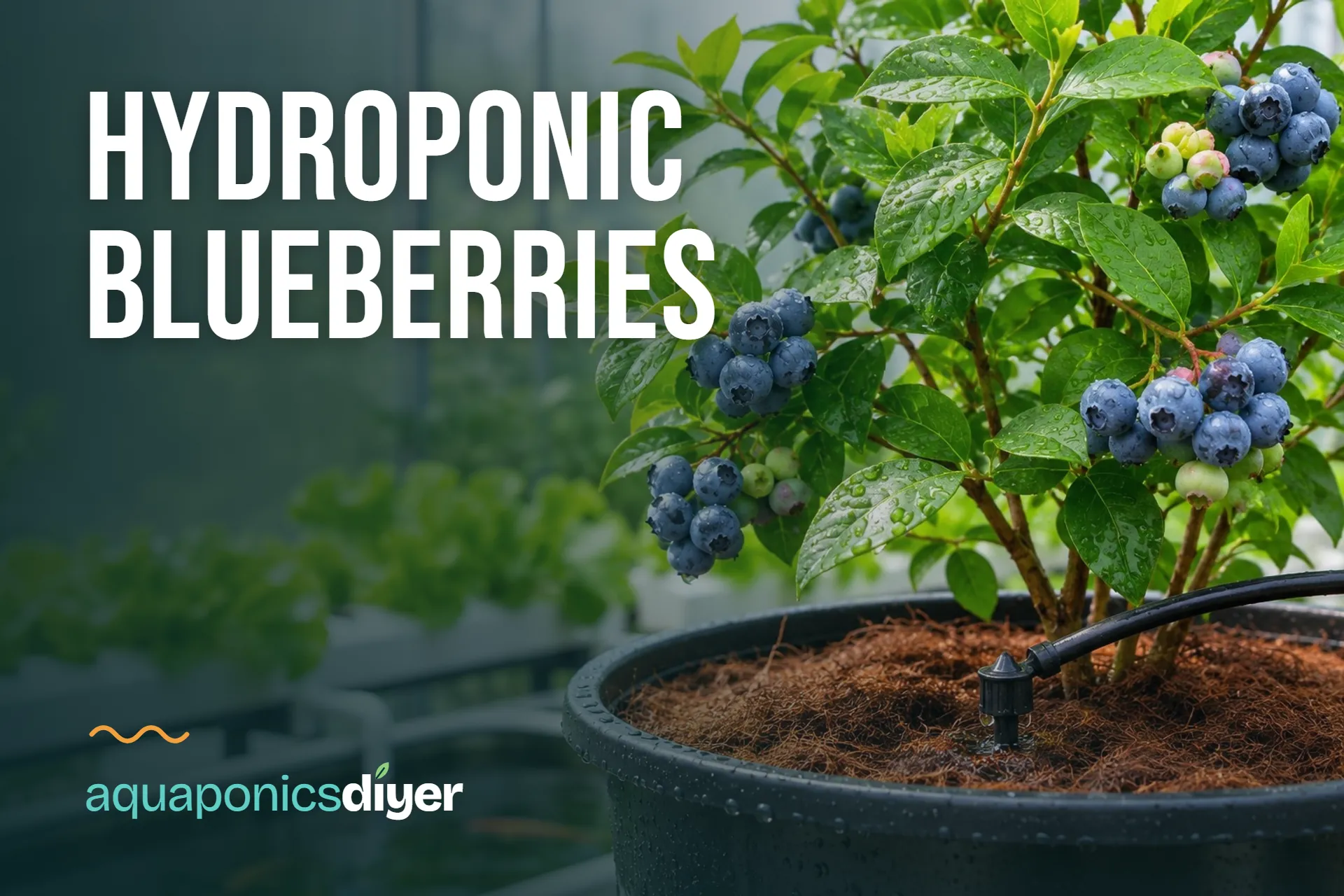
Blueberries are a hydroponic crop in the commercial sense, but not in the leafy green sense. They are shrubs that live for years, they need an acidic medium, and they do not grow in a raft or a jar of water. What people mean by hydroponic blueberries is a large pot of soilless medium, usually coco coir or a peat blend, fed with an acidic nutrient solution through a drip line or by hand.
This guide covers what that looks like at home, what to expect from a plant that takes years to reach a full crop, and where the limits are. The setup advice draws on University of Wisconsin and University of Maryland extension guides to growing blueberries in containers, since the container rules carry over directly to a soilless pot. If you want a fruit that fruits within months rather than years, our hydroponic strawberries guide is the better place to start.
Can You Grow Blueberries Hydroponically?
Yes, in a medium and with the right acidity. Blueberries are one of the few plants that need an acidic root zone, and that is the main design constraint. A system that feeds the roots through a soilless medium can hold the acidity steady, which is why growers use coir and peat for the crop.
What Works
A large pot of coir, peat and perlite, fed by drip or by hand with a solution held at an acidic pH. The University of Wisconsin suggests an acidic soilless mix of two parts coir, two parts sphagnum peat moss and one part perlite, or one part peat to one part shredded pine bark. Our hydroponic growing media guide compares coir and perlite.
What Does Not Work
Deep water culture, NFT and Kratky are wrong for blueberries. The plant is a woody perennial that needs a medium to anchor it, and it is sensitive to dry conditions and to stagnant water at the root. A bucket of water gives it neither.
How Commercial Growers Do It
Commercial blueberry growers who farm without field soil generally use large pots or bags of coir or peat under drip irrigation, often under cover so they can protect the crop and the season. We could not open a primary commercial source to quote figures, so this guide does not give commercial yields or schedules. What the extension sources do establish is the principle: an acidic, free-draining medium, careful watering, and a feed that suits blueberries.
What Carries Over to Home
The things a commercial grower does that you can copy are to keep the medium acidic, never let it dry out, use drip or regular hand feeding, and avoid fertilizers containing nitrates or chlorides, which University of Maryland Extension warns against for blueberries in pots. Plants are also kept in pots large enough for a mature root system.
What Does Not
Commercial plants are bought as established plants or propagated by specialists, and a grower may replace pots on a schedule. A home grower buys one or two plants and keeps them for years, so the care is gentler and the learning curve longer.
Varieties That Suit Containers
University of Wisconsin Extension names half-high cultivars as suitable for cold climates (hardy in zones 3 to 5): Northblue, Northsky, St. Cloud, Polaris, Chippewa, Northland and North Country, plus the low bush cultivar Top Hat, hardy to zone 5. These are compact, which suits a pot. The extension notes that most blueberry cultivars are self-fruitful, but that St. Cloud and Polaris need a cross-pollinator, and that growing more than one cultivar generally improves pollination, yield and berry size.
Warm Climates
The Wisconsin list is aimed at cold-climate growers. In mild climates, ask a local nursery which varieties suit your winters rather than guessing. We have not printed a chill-hour figure because the extension pages we opened do not give one.
Pollination
University of Maryland Extension advises planting another variety in a separate container to encourage cross-pollination, as long as the two bloom at the same time. Two pots take twice the space, but they should improve the crop.
Setup at Home
The Pot
Start with a 5 gallon container, as University of Wisconsin Extension suggests, then move the plant up as it grows to a 16 or 20 inch pot or a barrel. University of Maryland Extension says mature blueberries need a container at least 24 inches deep and 24 to 30 inches wide. Use drainage holes and a saucer or tray to collect the runoff.
The Medium
Use an acidic mix. Wisconsin's two options are one part sphagnum peat moss to one part shredded pine bark, or two parts coir, two parts sphagnum peat and one part perlite. Maryland suggests a 50-50 mix of potting soil and peat moss for a soil-based pot. Wisconsin gives a target pH of 4.5 to 5.0.
Feeding and pH
Blueberries need an acidic fertilizer, and Maryland says to avoid fertilizers containing nitrates or chlorides and to feed in early spring before the leaves expand. In a hydroponic setup, that means an acid-loving blend and a pH meter. Our best hydroponic nutrients guide covers general lines, but read the label for chloride and nitrate content before you use one on blueberries. Our EC meter guide covers how to track salt levels, which matter because blueberries do not tolerate heavy feeding. Check the pH of the runoff, since the medium changes it over time.
Water
Maryland warns that blueberries are very sensitive to dry conditions and should be kept evenly moist. Wisconsin notes that collected rainwater is ideal because it is typically softer and lower in pH than well water. A drip line on a timer solves the watering problem and is the most hydroponic part of the setup.
How to Set Up a Hydroponic Blueberry Pot
-
Pick the pot and the plants
Choose a large container with drainage holes and buy two varieties that bloom at the same time, one for each pot, from a nursery that tells you the chilling needs.
-
Mix the medium
Blend coir, sphagnum peat and perlite in the 2:2:1 ratio the University of Wisconsin gives, wet it thoroughly and fill the pot.
-
Plant and settle
Set the plant at the depth it grew in its nursery pot, firm the medium and water it through until it drains.
-
Test the pH
Pour water through and test the runoff. Aim for pH 4.5 to 5.0, and adjust the water or the feed in small steps until it holds.
-
Add the drip line
Put one drip emitter at the base of each plant and run it on a timer, so the medium stays evenly moist without sitting wet.
-
Feed in spring
Feed with a nitrate-free, chloride-free acidic fertilizer in early spring before the leaves open, as Maryland advises, and flush the pot with plain water now and then to wash out salts.
-
Protect it in winter
Maryland says to keep containers in a sheltered spot, protected from winter winds, from December to March. Wisconsin suggests burying pots in the ground, at a site where snow is likely to accumulate, in a cold climate.
What You Need to Grow Hydroponic Blueberries
A medium, a meter for the acidity, and light if you grow under cover. Plants come from a nursery.
-
1Coco coir
Coco Coir 650gm Bricks, 10 Pack
The base of the Wisconsin-style acidic mix; blend with peat and perlite.
-
2Perlite
Mother Earth Perlite, Size 3 Large and Coarse
Keeps the mix open so water drains and roots get air.
-
3pH and EC meter
VIVOSUN Digital pH Meter TDS EC Meter
Checks runoff pH and salt level, the two things blueberries are fussiest about.
-
4Grow light
Spider Farmer SF1000 LED Grow Light
A full-spectrum LED for a small plant kept under cover or in a spare room.




Light, Chill Hours and Pollination
Light
Blueberries are a full-sun fruit; Wisconsin advises setting pots in full sun in spring. A sunny patio or a greenhouse is where they thrive. A grow light can supplement winter light for a plant kept inside, but a bush that fruits needs far more light than a lettuce plant, so check our grow lights for hydroponics guide for lights strong enough for a woody plant.
Chill Hours
Blueberries need a cold winter rest to flower and fruit, and varieties differ in how much chilling they need. The extension pages we opened do not give a single chill-hour figure, so read the requirement for the variety you buy, and do not keep the plant in a warm room all winter. Both extensions keep container plants outdoors in winter, in a sheltered spot, rather than in a heated room.
Pollination
Two varieties blooming together give better pollination, yield and berry size than one, according to University of Wisconsin Extension. Bees do the work outdoors; under cover, you can move pots outside during bloom.
When Will They Fruit?
Later than most people expect. University of Maryland Extension says not to expect to harvest blueberries the first year, and that it takes about 5 years for plants to produce a full crop. A bought plant that is several years old will fruit sooner than one grown from a cutting, so buy the largest plant you can afford. In the first years, treat the plant as an investment: keep the medium acidic, water evenly, and be patient.
Hydroponic Blueberries FAQ
Related: hydroponic strawberries, hydroponic growing media, best grow lights for hydroponics, EC meters and best hydroponic nutrients.
Grow along with us
New guides and seasonal tips for fish, plants and DIY builds, about once a month.