Review
Gardyn Review: What You Get, What It Costs to Run and Who It Suits
As an Amazon Associate we earn from qualifying purchases. How we choose products.
On this page
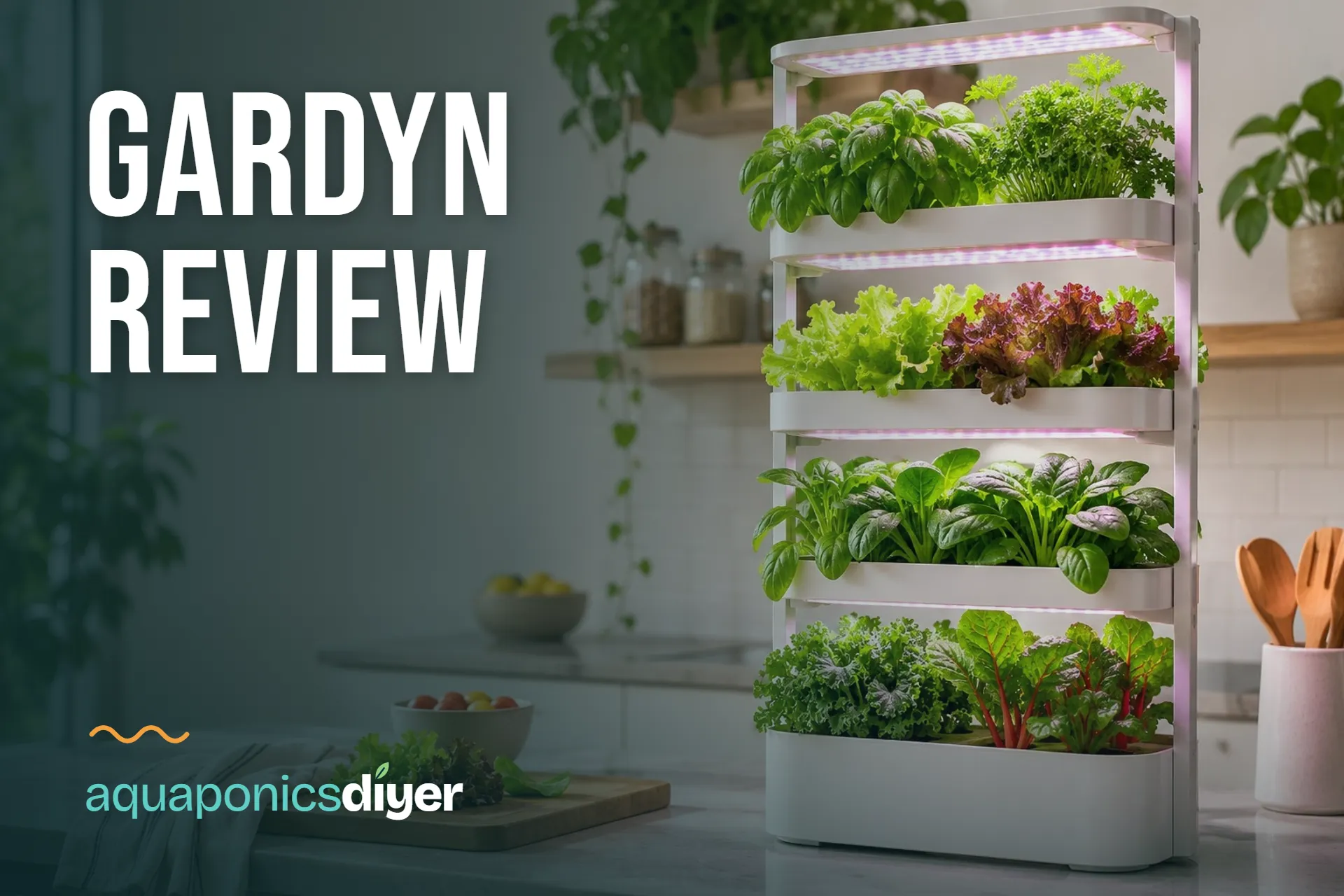
Gardyn is a floor-standing indoor hydroponic tower that grows its plants from pre-seeded cartridges under built-in LED lights, with an app that handles the watering and light schedules. This Gardyn review covers what the Home 4.0 and the smaller Studio 2 include, what they cost to keep running, what you can still do without the membership, and how they compare with Rise Gardens and with a tower you build yourself.
The page is based on the specifications Gardyn publishes on its Home 4 product page and its FAQ, on the Amazon listings for both models, on Rise Gardens' own site and on a published review. Where a figure comes from the brand, the text says so, because those numbers are Gardyn's claims, not independent measurements.
Gardyn at a Glance
Gardyn sells two current models in the Amazon listings linked below. Both are fully automated towers with self-watering, sensors for water level, humidity and temperature, and an app. The Home 4.0 is the larger one.
| Gardyn Home 4.0 | Gardyn Studio 2 | |
|---|---|---|
| Plant sites | 30 | 16 |
| Floor space | 2 sq ft (24 by 12 in, 64 in tall) | Smaller; check the listing |
| Light | Two LED light bars | Built-in LED lights |
| Monitoring | Cameras and sensors | Cameras and sensors |
| Water tank | 4+ gallons, refilled every 1 to 2 weeks | Not stated in the sources used here |
| Warranty | 3 years | 3 years |
| Membership, monthly plan | thirty-nine dollars a month, per Gardyn | twenty-five dollars a month, per Gardyn |
Plant counts, light, tank and warranty come from Gardyn's product pages for the Home 4 and the Studio 2; the membership prices come from Gardyn's FAQ. Gardyn does not publish a monthly harvest weight on those pages, so this review does not quote one.
How Gardyn Works
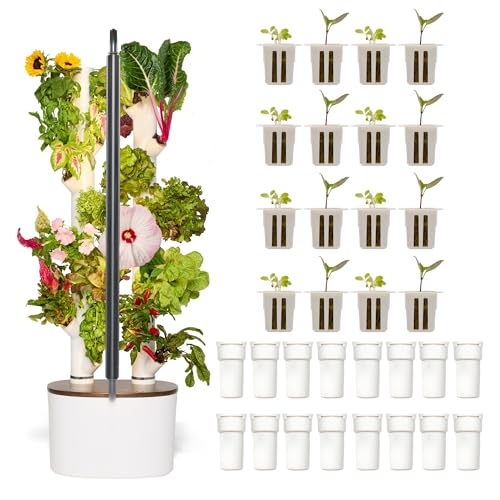
Every plant starts in a yCube. Per Gardyn, each yCube is a casing holding rockwool and 2 to 6 seeds, and the Home 4.0 page says the casings are compostable and made from a tapioca-based plastic. You push the yCubes into the tower's plant sites. The tower recirculates water from its tank to the roots, and the lights run on a schedule you set in the app.
The brand's AI gardener, called Kelby, reads the camera images and sensor data and suggests changes to light and water. Gardyn recommends 14 to 16 hours of light a day on its Boost setting, and rates the lights at 50,000 hours.
It is a standard hydroponic idea in a closed package: roots in rockwool, water and plant food delivered for you. Our guide to hydroponic tower gardens compares it with other vertical systems, and the best indoor hydroponic gardens roundup covers countertop options if 30 plant sites is more than you need.
Gardyn Running Costs
The tower itself is a one-time purchase. After that, three things add up, and the brand publishes numbers for each.
Plants and Pods
The Home 4.0 ships with a starter set of plants you choose when ordering. Replacements are yCubes. Gardyn's FAQ puts the starting price for non-members at four dollars and ninety-nine cents per yCube, plus a flat shipping fee, and members get monthly plant credits. Seedless yCubes are also sold, so the tower is not strictly limited to Gardyn's own varieties, though the casing and rockwool are still the brand's.
Membership
Gardyn lists the Home membership at thirty-nine dollars a month on the monthly plan, and the Home 4 page shows thirty-four dollars a month on a one-year plan and twenty-nine dollars a month on a two-year plan, with a 30-day free trial that starts after setup. Gardyn's FAQ puts the Studio membership at twenty-five dollars a month. Membership adds expanded controls and personalized coaching from Kelby.
Electricity
The lights are the main load. The Home 4 page estimates 47 kWh a month, and the FAQ gives a range of 26 to 68 kWh a month across models when you follow the recommended light schedule. For a rough bill, multiply 47 kWh by your own rate: every 10 cents per kWh adds about four dollars and seventy cents a month. That arithmetic is ours, from Gardyn's estimate.
Can You Use Gardyn Without a Subscription?
Yes, but with fewer features. Gardyn's FAQ answers the question "is membership required?" with a yes to using it without one, and adds that you will have limited controls and functionality. According to the same FAQ, without membership you can still connect to the app, adjust the automatic lighting and watering schedules, and check temperature, humidity and water level.
What you give up is the extras: the coaching, the expanded controls and the monthly plant credits. A non-member buys yCubes in the app at the non-member price plus shipping, where members get credits included. Whether the membership pays for itself depends on how many plants you replace: it makes more sense for someone cycling through a full tower than for someone who plants a few sites and leaves the rest empty.
Some third-party sites argue that the system is far less useful without the membership. Gardyn's own pages do not say that, and no official source seen for this page confirms it, so check the current app terms before you buy.
Gardyn vs Rise Gardens
Rise Gardens is the closest rival people compare, and the question "which is better, Rise or Gardyn?" comes up in searches. Rise sells two models, and its site lists the figures below.
| Gardyn Home 4.0 | Rise Personal Garden | Rise Garden 3 | |
|---|---|---|---|
| Plants | 30 | 8 to 12 | 16 to 108 |
| Layout | Floor tower, 2 sq ft | Countertop, 1 level | 1 to 3 levels, expandable |
| Light | Full-spectrum LED | Full-spectrum LED | Full-spectrum LED above every level |
| App | Gardyn app, with Kelby AI | Free Rise app, WiFi | Free Rise app, WiFi |
| Membership | Optional, paid monthly or yearly | Rise Plus, optional | Rise Plus, optional |
| Seeds | yCubes, seedless ones sold | Seed pods, 100+ varieties | Seed pods, 100+ varieties |
Rise figures are from risegardens.com. Its membership, Rise Plus, saves up to 15% and gives free shipping on larger supply orders, which makes it a discount club more than a feature unlock, and its site does not describe a garden subscription.
Which Is Better, Rise or Gardyn?
It depends on space and scale. Gardyn is one tower at a fixed size, with the most plants for its footprint and an AI coach built in. Rise starts smaller, on a countertop, and the Garden 3 grows by adding levels, so you can start modestly and expand. If you want a set size and the most automation, Gardyn fits. If you want to start small and grow the system, Rise fits.
Gardyn vs a DIY Tower
A Gardyn is, in essence, a pump, a tank, lights and a timer in a good-looking cabinet, with the plants sold as cartridges. A DIY tower uses the same parts, and you choose the seed and the nutrients. Our guides to building an aeroponic tower and to a DIY hydroponic system show how.
The trade is plain. Gardyn gives you automation, sensors and a warranty, in exchange for a higher purchase cost and ongoing spend on yCubes and, if you want it, the membership. A DIY tower costs less to run and lets you grow anything that fits, but you set the timer, mix the nutrients and watch pH yourself. For comparison with other branded gardens, see AeroGarden vs Click and Grow.
Gardyn models on Amazon
Both listings were live when checked. The Home 4 is the larger tower; the Studio 2 suits one or two people.
-
1Larger tower
30 plants in 2 sq ft, two LED light bars and a 3-year warranty, per Gardyn.
-
2Smaller tower
16 plants with cameras, sensors and the same app, per Gardyn, in a smaller footprint.

Who Gardyn Suits, and Who Should Skip It
Who It Suits
Gardyn suits households that want fresh salad greens and herbs indoors with the least possible fuss. The automation covers watering and light, the sensors flag a low tank, and the vacation mode in the listings helps if you travel. One published review, Bob Vila's, tested the previous generation and called it "impressively low-maintenance", while noting that the Home 4.0 itself had not been tested. That is the only first-hand report used here, and it is about the older model.
Who Should Skip It
Skip Gardyn if you want to pick any seed on the market, if your budget is tight, or if you enjoy tuning a system. Anyone who would rather build can follow our tower garden comparison or the DIY routes above and spend far less per plant. Anyone who only wants a few herbs is better served by a countertop garden.
Related: best indoor hydroponic gardens, hydroponic tower gardens, AeroGarden vs Click and Grow and aeroponic towers.
Grow along with us
New guides and seasonal tips for fish, plants and DIY builds, about once a month.