Hydroponics guide
Net Pots for Hydroponics and Aquaponics: Sizes, Uses and Which to Buy
As an Amazon Associate we earn from qualifying purchases. How we choose products.
On this page
Net pots are small slotted plastic cups that hold a plant and its growing medium in a hydroponic or aquaponic system. The stem stays upright in the cup while the roots grow out through the slots into water, mist or a nutrient film. To buy the right ones, match the cup to the hole in your lid, raft or channel: 2 inch cups for Kratky lids, NFT channels and most towers, 3 inch cups for DWC bucket lids and wide-mouth jars, and a wide rim so the cup does not fall through.
The sizes and fills below come from published sources, which we name as we go: the FAO manual Small-scale aquaponic food production (Somerville and colleagues, FAO Fisheries and Aquaculture Technical Paper 589, 2014), the University of Hawaii CTAHR publication A Suspended Net-Pot, Non-Circulating Hydroponic Method for Commercial Production of Leafy, Romaine, and Semi-Head Lettuce (VC-1, B. A. Kratky, 2010), Tower Garden's own growing guide (an older edition), and the product listings themselves.
What Are Net Pots For?
A net pot does two jobs. It holds the plant in the right place, and it lets the roots reach whatever feeds them. A solid pot keeps water and roots inside; a slotted cup lets roots grow out into the reservoir, and lets air in.
Support Without Soil
Hydroponic plants have no soil to hold them, so the cup does it. FAO describes the standard setup in its aquaponics manual: each seedling goes into a plastic net cup, which sits in the grow pipe or raft, and the cup is filled with a general purpose medium (volcanic gravel, rockwool or LECA) around the seedling to give physical support.
Roots That Can Breathe
The slots matter as much as the cup. In Kratky's non-circulating method, the net pot sits in a hole in the tank cover with only its lower half inch or so in the nutrient solution. As the solution drops, the roots between the pot and the surface become "oxygen roots" and take up air from the humid layer below the cover, while the roots in the solution keep drinking. A slotted cup is what makes that two-part root system possible.
Net Pot Sizes
Net pots are sold by diameter, and the two sizes that cover almost every home system are 2 inch and 3 inch. The table pairs each size with where it fits, using the sizes on the product listings below and the sizes in our growing media guide.
| Size | Where it fits | Typical plants | Listing example |
|---|---|---|---|
| 2 inch | NFT channels, Kratky lids, tower sockets | Lettuce, baby leaf, herbs | Tmtamye 100 pack, xGarden 50 pack |
| 3 inch | DWC bucket lids, wide-mouth jars, wider raft holes | Full lettuce heads, larger herbs | Cz Garden 25 pack, ORIMERC 12 pack |
| 6 inch | 5 gallon bucket lids | Tomatoes, peppers | Per our growing media guide; no listing linked |
We leave out in-between sizes because we could not confirm them from a listing we link.
Rim, Slots and Lip
The hole in your lid has to match the rim of the cup, not its body. A wide rim keeps the pot from slipping through and makes it easy to lift out without tearing roots; the Tmtamye listing describes a wide lip that sits in a 2 inch hole, and Cz Garden lists a wide rim on its 3 inch cup. The xGarden cups use a thin lip and slotted sides, which saves weight and money but gives you less to grip. Slots also matter: more slots mean easier root exit and faster drainage.
Which Size for Which System
Kratky and Passive Jars
The Kratky publication describes cutting the tank cover with a 2-inch hole saw and placing each net pot, with its plug and seedling, into the opening. Our Kratky guide uses 2 inch cups on lids and 3 inch cups for bigger plants. The Cz Garden and ORIMERC listings both describe their 3 inch cups for Kratky, mason jars and DWC inserts.
DWC Buckets and Rafts
In a DWC system, three 3 inch cups per bucket lid suit lettuce and herbs, and one larger pot suits a tomato or pepper. On a floating raft, FAO gives planting hole sizes from 16 mm for seedlings placed without cups up to 30 mm, depending on the size of the net cups you have, so drill to match your cup rim.
NFT Channels
FAO's NFT pipes have holes 7 to 9 cm across, matched to the cups, with at least 21 cm between plant centers for leafy greens and larger vegetables. Home channels are usually drilled for 2 inch cups, as in our NFT guide. Either way, the rule is the same: cut the hole to the cup, never the other way round.
Towers
Tower sockets are sized by the maker, so use the cups the tower was designed for. Tower Garden's guide has a warning worth repeating for any tower: place the seedling cube so it touches the base of the net pot, because if it does not, the seedling will not get watered.
What to Put in a Net Pot
An empty cup holds nothing, so every net pot needs a medium. FAO lists volcanic gravel, rockwool or LECA, and Kratky's lettuce method uses growing medium or grow plugs. Our hydroponic growing media guide compares them in full.
Rockwool Cubes and Plugs
Start seedlings in a rockwool cube or plug, then set the whole cube in the cup. It stays moist, the roots grow straight through it, and it keeps the stem upright. Soak new cubes before seeding; Tower Garden's guide wets its rockwool starter cubes for 30 minutes. See our guide to rockwool cubes.
Clay Pebbles
Pebbles are the usual top layer around the plug. They add weight, hold the cube upright, and drain freely. Our clay pebbles guide covers pebble sizes and rinsing.
Perlite
Perlite is the cheapest filler and works in still water, such as Kratky and DWC cups. In a flowing system it can wash out through the slots, so pebbles are the safer choice there.
Plastic vs Fabric vs DIY Net Cups
Plastic Net Pots
Slotted plastic is the standard in every source we opened: FAO, the Kratky publication and Tower Garden all use it. It does not rot, it can be scrubbed and reused, and it is cheap by the pack.
Fabric Cups
Fabric and felt cups exist, but we do not recommend one because we have no live, checked listing to link and none of the sources above use them. If you want to try one, check that it has open sides for roots, as a slotted plastic cup does.
DIY Net Cups
FAO says that if plastic net cups are not available or too costly, regular plastic drinking cups with many holes added work, so the roots can reach the pipe. Its photos show net cups made from recycled plastic bottles with holes in the bottom. It also describes a plant cup made from a net cup plus a 5 to 10 cm length of 5 cm PVC pipe for balance and support inside the cup in an NFT pipe. For a first build, DIY cups are fine; for ten or more plants, a bulk pack is quicker.
Cleaning and Reusing Net Pots
Net pots are reusable. Tower Garden's guide tells growers to clean and save net pots for future use when a crop ends, and to wash tower parts in warm soapy water, soaking them for 30 minutes before cleaning with a sponge. After a crop, pull out the plug and any root bits, scrub the slots, rinse well and dry the cups before you store them.
If your system has fish, rinse cups thoroughly and skip strong sanitizers, because whatever stays on the plastic ends up in the water. Throw away any cup that is cracked, since a broken slot lets medium fall into the reservoir. Start each crop with a fresh rockwool cube or plug and reuse the cup.
The Net Pots We Recommend
These are all plain slotted plastic cups, so the choice comes down to size, pack count and rim. Everything below is described as the sellers list it.
Net pots by size and pack
Pick the diameter for your system first, then the pack size.
-
12 inch, best all-rounder
Tmtamye 100 Pack 2 Inch Net Pots
A wide lip and raised bottoms so the cups stand on their own, with 20 plant labels in the box. The seller says they sit in a 2 inch hole.
-
22 inch, bulk
Reeooue 500 Pack 2 Inch Net Pots
A 500 pack of slotted mesh cups for a full NFT build, a tower or lots of seedlings, sold as durable flexible plastic.
-
32 inch, lightweight
xGarden 2 Inch Economy Net Pots, 50 Pack
A thin lip and slotted sides in UV resistant, BPA free plastic, listed for indoor or outdoor use.
-
43 inch, DWC and Kratky
Cz Garden 3 Inch Net Pots, 25 Pack
Heavy duty cups with a wide rim, sold for DWC, Kratky and wide-mouth mason jars.
-
53 inch, jars with a wick
ORIMERC 12 Pack 3 Inch Net Cups
Comes with 12 feet of self-watering wick and 12 plant labels, for mason jar and bucket inserts.
| Product | Tmtamye 2 inch Best Overall | Reeooue 2 inch Bulk | xGarden 2 inch Lightweight | Cz Garden 3 inch DWC and Kratky | ORIMERC 3 inch Includes wick |
|---|---|---|---|---|---|
| Product | 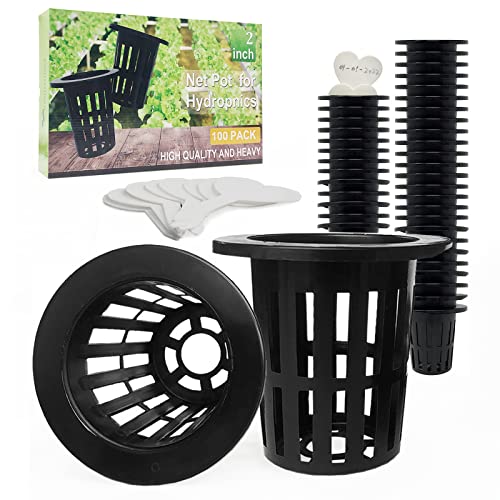 |  | 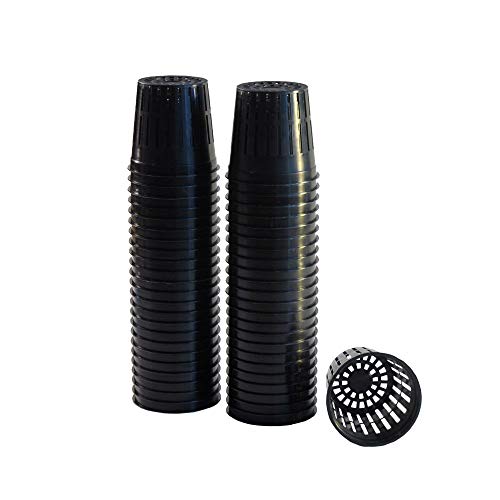 |  |  |
| Size | 2 inch | 2 inch | 2 inch | 3 inch | 3 inch |
| Pack | 100 | 500 | 50 | 25 | 12 |
| Rim | Wide lip | Not stated | Thin lip | Wide rim | Not stated |
| Best for | NFT, towers, Kratky lids | Large builds | Low-cost 2 inch builds | DWC lids and jars | Jar and bucket inserts |
| Price tier | $ | $ | $ | $ | $ |
| Buy | Check price on Amazon | Check price on Amazon | Check price on Amazon | Check price on Amazon | Check price on Amazon |
Best Overall
Tmtamye 2 inch
- Size
- 2 inch
- Pack
- 100
- Rim
- Wide lip
Show specifications
- Best for
- NFT, towers, Kratky lids
- Price tier
- $
Bulk
Reeooue 2 inch
- Size
- 2 inch
- Pack
- 500
- Rim
- Not stated
Show specifications
- Best for
- Large builds
- Price tier
- $
Lightweight
xGarden 2 inch
- Size
- 2 inch
- Pack
- 50
- Rim
- Thin lip
Show specifications
- Best for
- Low-cost 2 inch builds
- Price tier
- $
DWC and Kratky
Cz Garden 3 inch
- Size
- 3 inch
- Pack
- 25
- Rim
- Wide rim
Show specifications
- Best for
- DWC lids and jars
- Price tier
- $
Includes wick
ORIMERC 3 inch
- Size
- 3 inch
- Pack
- 12
- Rim
- Not stated
Show specifications
- Best for
- Jar and bucket inserts
- Price tier
- $
Related: hydroponic growing media, clay pebbles, the Kratky method, DWC systems and rockwool cubes.
Grow along with us
New guides and seasonal tips for fish, plants and DIY builds, about once a month.