Grow media
Perlite vs Vermiculite: Which One for Seedlings, Hydroponics and Grow Beds
As an Amazon Associate we earn from qualifying purchases. How we choose products.
On this page
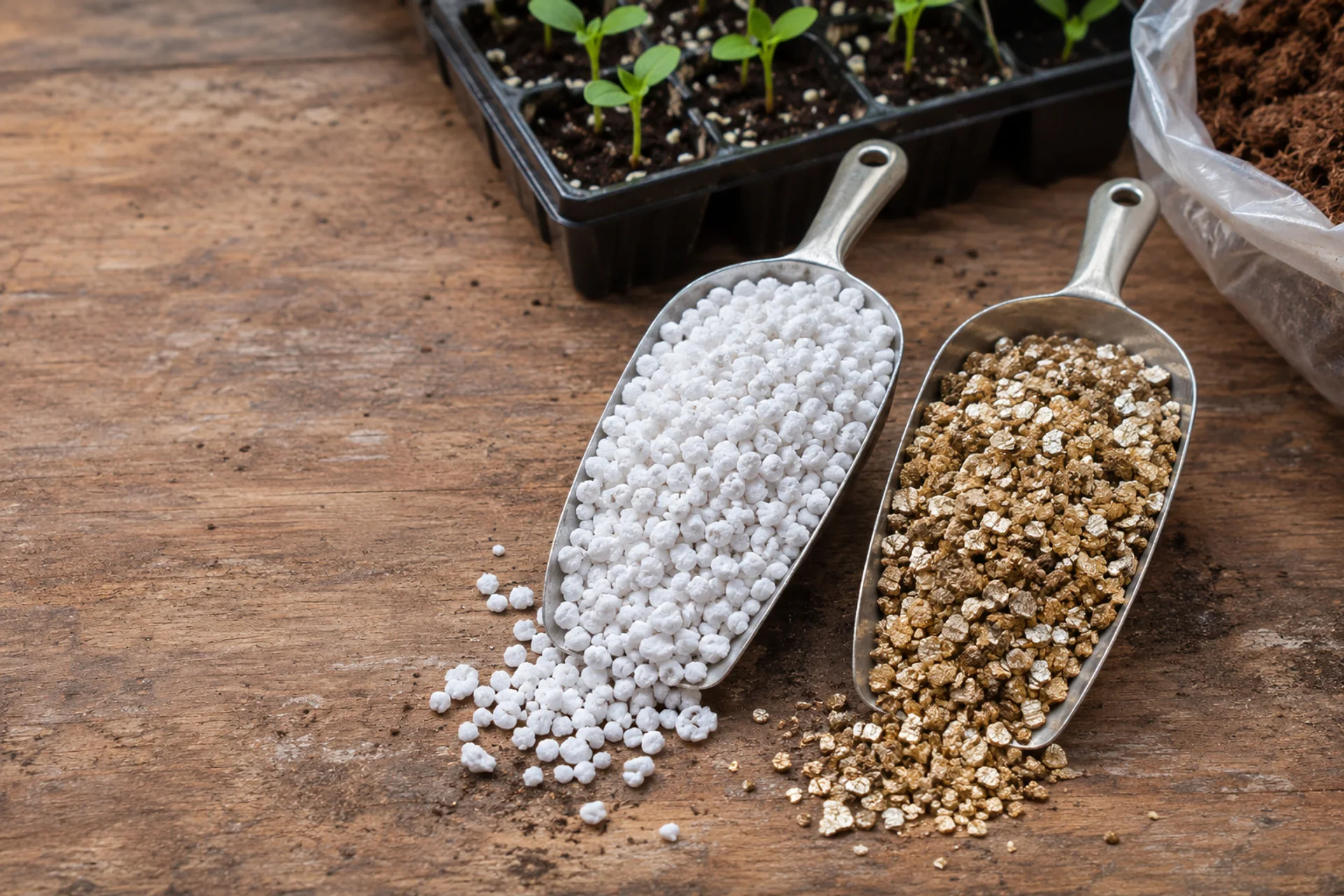
Perlite vs vermiculite comes down to one difference: perlite lets water drain past it, and vermiculite soaks water up and holds it. Both are expanded minerals sold in the same garden aisle, both lighten a mix, and both are used to start seeds. Choose perlite when roots need air and fast drainage, and vermiculite when a mix needs to stay moist.
This guide explains what each one is, compares them side by side, and then answers the question most comparisons skip: which one belongs in a hydroponic system or an aquaponics grow bed. The short answer to that last one surprises people. For a flooding media bed, the better choice is usually neither.
What Is Perlite?
The Perlite Institute describes perlite as an amorphous volcanic glass formed when viscous lava cools quickly, typically from hydrated obsidian. The raw rock holds a few percent of water. Heated to roughly 871 to 1,093 °C (1,600 to 2,000 °F), past its softening point, that trapped water turns to steam and puffs the grains up to about 20 times their original volume, leaving the light, white, porous granules sold in bags.
What Perlite Does in a Mix
In horticulture, the Institute says, perlite is used as a soil amendment or hydroponic medium because it improves aeration and drainage while retaining some moisture. It describes the material as sterile, inert and pH neutral. In a potting mix that means perlite adds structure and air spaces without feeding the plant or changing the pH.
Perlite Grades
Bags are sold by particle size. Fine and medium grades go into seed and potting mixes. Coarse grades, such as Mother Earth's size 3, leave bigger air gaps and are the ones growers use on their own in hydroponic pots and trays.
What Is Vermiculite?
A July/August 2016 newsletter from Oregon State University Extension in Baker County describes vermiculite as a spongy material made from mica, sold as angular chunks. It is heated to expand, like perlite, but the result behaves very differently: the layers open into pockets that fill with water.
What Vermiculite Does in a Mix
OSU says vermiculite literally acts as a sponge that retains water to the point of saturation. Retailers also describe it as holding nutrients. PVP Industries, for example, says its horticultural vermiculite holds ammonium, potassium, calcium and magnesium, and soaks up to three times its volume in water. That is why vermiculite is popular in seed-starting mixes, where a dry surface kills seedlings.
Vermiculite and Asbestos
Many gardeners have heard of a vermiculite asbestos problem. The US EPA explains that a mine near Libby, Montana, was the source of over 70 percent of all vermiculite sold in the United States from 1919 to 1990, and that its vermiculite was contaminated with asbestos and often sold as Zonolite insulation. The EPA's guidance is about that old insulation in attics and walls, and it does not cover today's garden products. If you are concerned, buy bagged horticultural vermiculite from a current brand, keep it damp when you handle it, and avoid breathing the dust, a sensible habit with any fine mineral product.
Perlite vs Vermiculite: Side by Side
| Perlite | Vermiculite | |
|---|---|---|
| Made from | Volcanic glass | Mica |
| Looks like | Small, round, white granules | Spongy, angular, golden chunks |
| Water | Held around the granules; excess drains away | Held inside the granules, to saturation |
| Strength | Aeration and drainage | Water retention |
| Risk | Can dry out fast on its own | Easier to overwater |
| pH | Neutral, per the Perlite Institute | Neutral, per PVP Industries' listing |
| Renewable | No | No |
| Best for | Cacti, succulents, aroids, hydroponic pots, rooting cuttings | Seed starting, thirsty plants, wick systems |
The first six rows follow the OSU Baker County comparison table, the Perlite Institute and the makers' listings. The last row is our summary of the uses each source describes.
Water: Around the Grain or Inside It
OSU puts the difference neatly: perlite retains water around the granules rather than in them, while vermiculite retains water in its air spaces. There is less chance of overwatering with perlite because of the way water runs around it, and vermiculite may hold too much water for some plants. OSU's rule is simple: thirsty plants that want extra water suit vermiculite; cacti and plants that need water to drain away so roots will not rot suit perlite.
Air and Drainage
Roots need oxygen as much as water. Perlite keeps a mix open because its grains are rigid and do not hold water inside, so air fills the gaps as soon as the water drains. That is the reason it shows up in mixes for houseplants that rot easily.
Can You Use Them Together?
Yes, and many recipes do. Blending lets you set the balance between moisture and air instead of choosing one extreme. The Cornell mix in the next section is the classic example.
Perlite and vermiculite worth buying
Pick the grade for the job: fine and medium for mixes, coarse for hydroponic pots.
-
1Perlite for potting mixes
Hoffman Horticultural Perlite, 18 Quarts
A horticultural grade the maker sells for blending with peat into a custom soilless mix.
-
2Coarse perlite for hydroponics
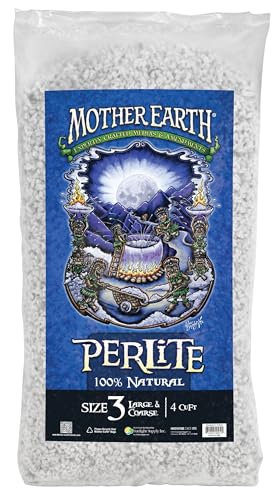
Mother Earth Perlite, Size 3 Large and Coarse, 4 cu ft
A large, coarse grade in a 4 cubic foot bag, the size for filling hydroponic pots and trays.
-
3Vermiculite for seed starting
Perfect Plants Organic Vermiculite, 8 qt
A medium grade sold for containers, propagation and cuttings.
-
4Coarse vermiculite in bulk
PVP Industries Horticultural Coarse Vermiculite, 4 cu ft
A coarse grade the maker describes as pH neutral and suited to passive hydroponics.



Perlite vs Vermiculite for Seed Starting and Potting Mix
Seed Starting
Seeds need steady moisture and air at the same time, so both minerals work, alone or mixed with peat or coco coir. In its aquaponics manual, FAO fills seedling propagation trays with soil or inert media such as rockwool, peat, coco fibre, vermiculite, perlite or a combination, and it prefers starting seeds in inert media so seedlings can move into the system without carrying soil and pathogens. If your trays dry out between checks, lean toward vermiculite. If seedlings damp off in a wet mix, lean toward perlite.
A Tested Potting Mix Recipe
The Clemson Cooperative Extension fact sheet Indoor Plants: Soil Mixes (HGIC 1456, updated October 2024) reproduces two mixes developed at Cornell for commercial growers, each making one bushel. The Cornell Foliage Plant Mix uses half a bushel of sphagnum peat moss, a quarter bushel of No. 2 vermiculite and a quarter bushel of medium-fine perlite, plus lime and fertilizer. The Cornell Epiphytic Mix, for plants that want more air, drops the vermiculite and uses a third each of fine fir bark, peat and perlite.
Which Plants Want Which
Use the Cornell ratios as the pattern. More vermiculite suits ferns, seedlings and plants that wilt the moment they dry. More perlite, or perlite alone with bark, suits cacti, succulents, orchids and aroids that rot in wet soil.
Perlite vs Vermiculite in Hydroponics
Hydroponics changes the question, because the water supply is constant. The medium only has to anchor roots and stay airy.
Perlite in Hydroponic Systems
Perlite has a long record here. SRAC Publication 454 describes perlite trays used in aquaponics research systems: shallow trays fed with a small trickle of water, best suited to small plants such as lettuce and herbs. It also warns that solids must be removed before the water reaches the perlite, because full solids loading clogs it, forms channels, creates anaerobic zones and leads to uneven growth. In drip and Dutch bucket systems, growers use coarse perlite on its own or mixed with expanded clay.
Vermiculite in Hydroponic Systems
Vermiculite's water holding is an advantage in passive systems, where a wick pulls water up to the roots. In systems that flood or drip constantly, the same property can keep roots too wet. If you use it, mix it with perlite rather than using it alone.
Net Cups and Starter Plugs
In deep water culture and the Kratky method, a net cup only needs something to hold the seedling upright. Expanded clay or rockwool is more common there, because loose perlite can fall through the slots.
Perlite vs Vermiculite in an Aquaponics Grow Bed
An aquaponics media bed is not a pot. It is the system's main biofilter and solids trap, it floods and drains many times a day, and it stays in service for years.
What FAO Recommends Instead
FAO's manual for small-scale aquaponics names volcanic gravel and light expanded clay aggregate as the media for these beds, because both are inert, offer enough surface area for bacteria and keep their shape. It says organic substrates risk becoming anoxic and clogging, and it does not list perlite or vermiculite among its bed media. SRAC 454 notes that granular media, perlite included, can serve as the biofilter in some aquaponic systems, but that these media tend to clog.
Why Perlite Struggles in a Flooding Bed
Expanded perlite is extremely light, so in a bed that floods and drains it can rise, shift and wash toward the siphon. Its fine particles also make the clogging problem SRAC describes more likely in a system that carries fish waste. For a desk-sized aquarium planter with a gentle trickle it can work; for a bell siphon bed, use something heavier.
Why Vermiculite Struggles Even More
A bed full of a material that holds water to saturation never drains properly between floods. That is the opposite of what the drain cycle is for: pulling fresh air down to the roots and bacteria.
Where They Do Belong in Aquaponics
In the seedling tray. Start seeds in vermiculite, perlite or a mix, then move the young plants into the clay pebbles or gravel bed once they have roots. Our clay pebbles guide covers bed media in detail, and the grow bed guide covers depth and sizing.
For the grow bed itself
If you are filling an aquaponics media bed, buy expanded clay rather than perlite or vermiculite.
-
1Grow bed media
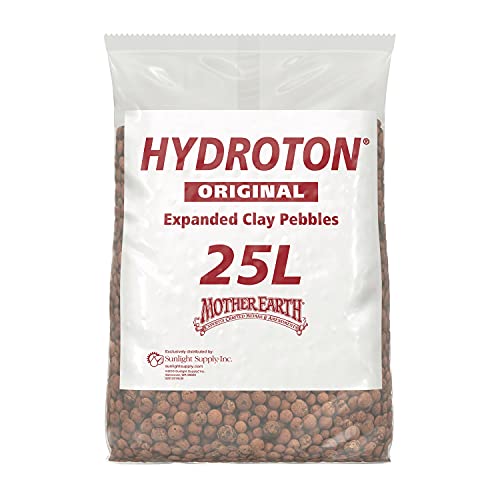
Mother Earth Hydroton Original Expanded Clay Pebbles, 25 Liter
Kiln-fired clay pellets that the maker says expand into tough, lightweight balls, the media FAO describes as comfortable to work with.
Perlite vs Vermiculite FAQ
More on grow media: clay pebbles, grow beds, DIY hydroponics and the best plants for aquaponics.
Grow along with us
New guides and seasonal tips for fish, plants and DIY builds, about once a month.