Hydroponics guide
Hydroponic Basil: How to Grow It Indoors, From Seed or From a Supermarket Plant
As an Amazon Associate we earn from qualifying purchases. How we choose products.
On this page
Hydroponic basil is one of the easiest and most rewarding crops you can grow without soil. It roots fast, grows well in plain water with nutrients, and keeps producing for months if you cut it the right way. Most of the basil sold in supermarkets as a living plant was grown hydroponically, which tells you how well it suits the method. What it needs is warmth, plenty of light, a mild nutrient solution and regular cutting.
This guide gives the numbers to aim for, drawn from Johnny's Selected Seeds' hydroponic basil guide for growers and from Iowa State University research published in Greenhouse Grower, then walks through systems, sowing, spacing, harvest and the problems to expect. If you want to grow basil on fish water instead, see our guide to basil in aquaponics.
Hydroponic Basil Growing Conditions
Basil forgives a lot, but four numbers decide whether it grows bushy or stalls.
| Factor | Target | Source |
|---|---|---|
| pH | 5.8 to 6.2 | Johnny's Selected Seeds |
| EC | 1.0 to 1.4 mS/cm (higher in winter) | Johnny's Selected Seeds |
| Temperature | 65 to 70°F (18 to 21°C) | Johnny's Selected Seeds |
| Light | 14+ hours a day, DLI 12+ mol/m²/day | Johnny's Selected Seeds |
| Research conditions | EC 1.6, pH 6, water 72°F, 16 hour days | Iowa State University |
pH
Johnny's recommends a pH of 5.8 to 6.2 for hydroponic basil, slightly higher in aquaponic and organic systems. In that range the plant can take up iron and other micronutrients; above it, new leaves tend to pale. Check pH every few days in a small reservoir and adjust with pH Up or pH Down a little at a time.
EC and Nutrients
Basil is a light feeder compared with tomatoes. Johnny's gives an EC of 1.0 to 1.4 mS/cm, with the higher end in winter and the lower end in summer, when the plant drinks more water. Iowa State's Kellie Walters ran her basil trials at 1.6 mS/cm. A general purpose leafy green or herb nutrient is what Johnny's recommends; a three-part liquid set at its grow ratio does the job, as does a two-part powder such as MasterBlend. Our best hydroponic nutrients guide compares them. If your meter reads in ppm rather than EC, remember that ppm depends on the meter's conversion scale.
Temperature
Basil is a warm-season herb and stops growing in cold water or a cold room. Johnny's gives 65 to 70°F (18 to 21°C). Hotter air is fine if the roots stay cool and well oxygenated, because warm water holds less dissolved oxygen, so in summer an air stone in a deep water tub matters more.
Light
Light is what most indoor basil is short of. Johnny's asks for at least 14 hours of light a day and a daily light integral of at least 12 mol per square meter per day, with more generally better. In Iowa State's trial, plants under about 15 mol per square meter per day were heavier than those under about 6, at every spacing. A sunny greenhouse reaches that easily in summer; a windowsill in winter does not, which is when an LED grow light on a timer earns its place.
Best Hydroponic Systems for Basil
| System | Fit for basil | Why |
|---|---|---|
| Deep water culture (raft or tub) | Excellent | Roots hang in aerated solution; the method Iowa State used |
| Kratky jar or tub | Good for a few plants | No pump; top up as the plant drinks |
| NFT channels | Excellent at scale | Commercial basil standard; needs a pump and a reservoir |
| Ebb and flow or media bed | Good | Flood and drain trays, as pictured in Johnny's guide |
| Countertop smart garden | Good for a kitchen supply | Light and timer built in; limited plant sites |
Deep Water Culture
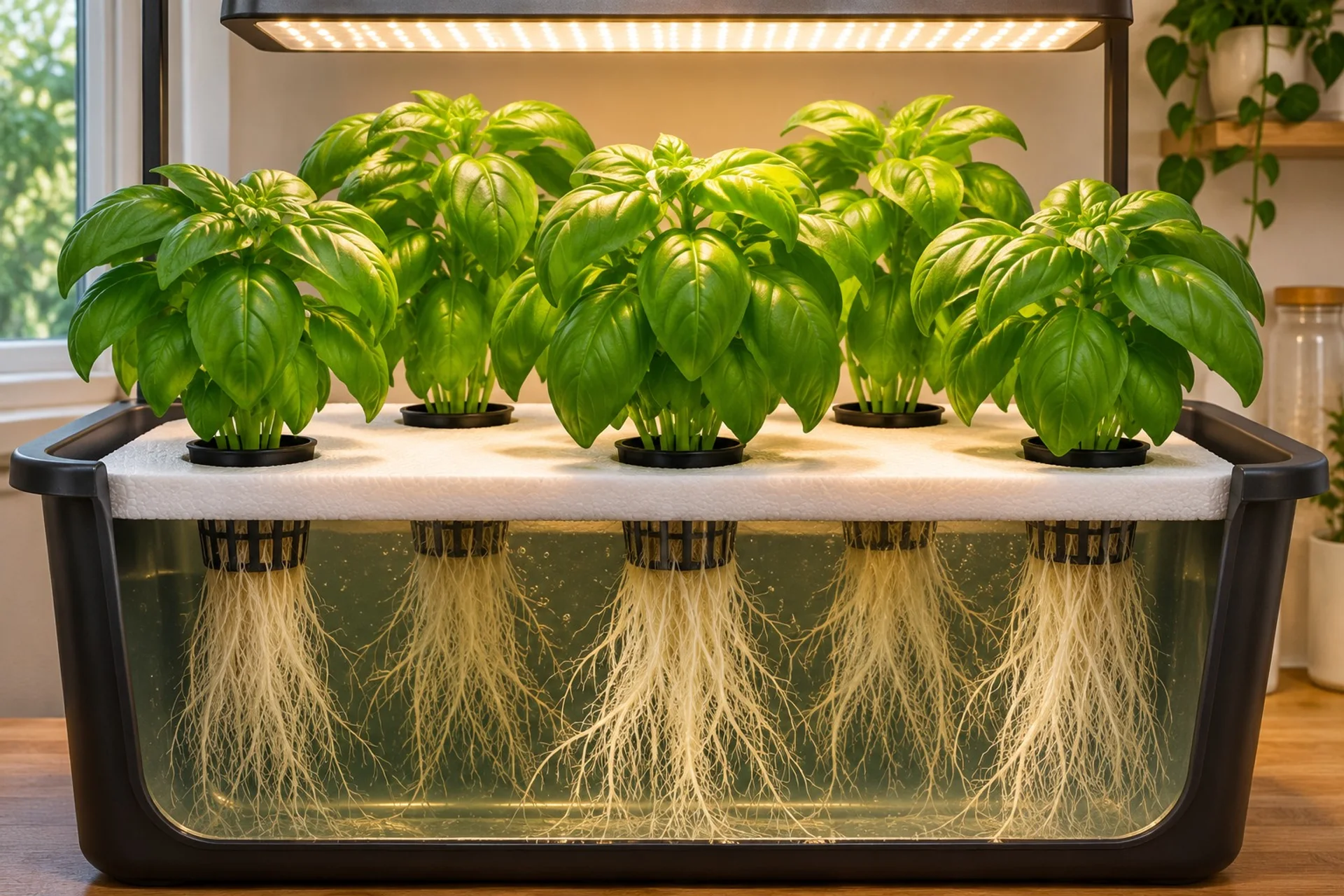
A DWC system is the easiest way to grow a lot of basil at home: a lidded tub, net cups, an air pump and an air stone. Basil's roots grow quickly into the oxygenated water, and the large volume of solution keeps pH and EC stable between checks.
Kratky
Basil does well in the Kratky method as long as the container is large enough for a plant that will live for months. A quart jar works for one plant for a few weeks; a 5 gallon bucket with a lid holds several. Top up with nutrient solution as the level drops, keeping an air gap between the water and the base of the net cup.
Countertop Gardens
An AeroGarden or Click & Grow will keep a kitchen in basil with almost no setup, and basil is the crop both brands ship as a starter. If you are choosing between them, our AeroGarden vs Click and Grow comparison covers the differences.
Growing Hydroponic Basil From Seed, Step by Step
-
Sow in plugs
Sow two or three seeds per starter plug or rockwool cube, press them in lightly and keep the plugs warm and moist. Basil seed needs warmth to germinate well.
-
Give light from the first sprout
As soon as seedlings appear, put them under strong light so they do not stretch. Thin to the strongest seedling per plug, or keep two for a fuller pot.
-
Transplant into net cups
When roots show through the plug, usually after two to three weeks, set it in a net cup in your system. Start at the low end of the EC range and raise it as the plants grow.
-
Space the plants
For one big harvest, plant close: about 4 inches apart. For plants you will cut for months, give each 6 to 8 inches so air moves between them.
-
Make the first cut
When a plant has three or four pairs of leaves, cut the main stem just above the second pair from the bottom. Two new shoots grow from that point.
-
Keep cutting and check the water
Harvest a few stems every week, pinch flower buds as they form, and check pH and EC every few days. Change the solution every two to three weeks.
What You Need to Grow Hydroponic Basil
Seeds, plugs, cups, a nutrient, a way to control pH, and light if you grow indoors.
-
1Seeds
Sweet Yards Organic Basil Seed Variety Pack
Eight packets, including Genovese, Thai, lemon, Greek, Italian large leaf and purple Dark Opal basil.
-
2Starter plugs
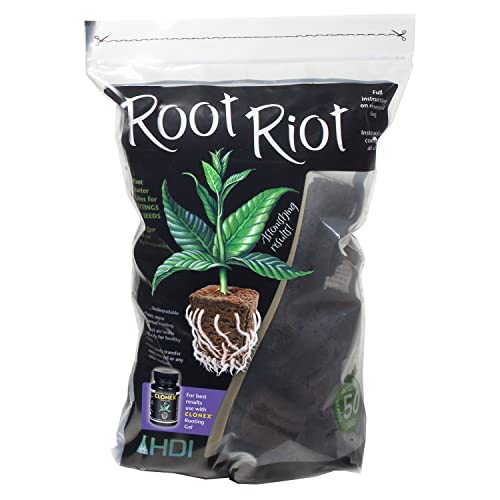
Root Riot Starter Cubes, 50 Pack
Pre-moistened organic cubes ready for seed straight out of the bag, which then sit in a net cup.
-
3Net cups
Cz Garden 3 Inch Net Pots, 25 Pack
Heavy duty net cups sized for one basil plant each in a DWC lid or raft.
-
4Nutrient
General Hydroponics Flora Series Trio
Three-part liquid you can mix at a grow ratio for leafy herbs.
-
5pH control
General Hydroponics pH Control Kit
pH Up, pH Down and an indicator to hold the 5.8 to 6.2 range.
-
6Grow light
GLOWRIUM Full Spectrum Grow Light
A clip-style LED for a few plants on a counter or shelf, run on a timer for 14+ hours.



Spacing and Yield
Kellie Walters at Iowa State University grew sweet basil in a deep-flow hydroponic system at spacings from 4 to 12 inches, under a low and a high daily light integral, and reported the results in Greenhouse Grower in 2015. The 4 inch spacing gave the highest fresh and dry weight per square foot under both light levels. Density did not change the weight of an individual plant, and neither density nor light changed height or branching. With purple basil, raising density from 4.1 to 9.3 plants per square foot added about 2 ounces of yield per square foot under high light.
The article notes a limit that matters at home: the results apply to a single harvest. Commercial growers cut the whole crop once. If you plan to cut the same plants for months, wider spacing keeps air moving around the leaves, which is your best defense against mildew.
Harvesting Hydroponic Basil for Regrowth
Cut Above a Node
Every pair of leaves on a basil stem has a small bud in each leaf joint. Cut just above a pair and both buds grow into new stems, so each cut doubles the number of tips. Never strip a stem bare: leave at least one or two pairs of leaves below the cut so the plant can regrow.
Harvest Often, a Little at a Time
Taking a few stems every week keeps the plant compact and productive. Johnny's notes that basil in raft systems is often harvested at 4 to 6 inches tall as baby leaf, which shows how early you can start cutting.
Stop It Flowering
Once basil flowers, leaf production slows and the leaves turn more bitter. Pinch out flower buds as soon as they appear at the tips. Long days and stress both push basil to flower, so a steady routine helps.
Keeping Supermarket Hydroponic Basil Alive
The living basil sold with roots in a sleeve is usually a pot of many seedlings grown together hydroponically. It wilts at home because a dozen plants are competing for one small root ball, and because a kitchen counter has much less light than the greenhouse it came from.
Divide the Clump
Soak the root ball, then gently tease it into three or four smaller clumps. Each one can go into its own net cup in a hydroponic system, or into a pot of potting mix if you prefer soil.
Give It Light and Water
Put the clumps in the brightest spot you have, or under a grow light for 14 or more hours. In a jar or Kratky setup, keep the roots in a mild nutrient solution rather than plain water, which has nothing for the plant to feed on.
Cut It Back
After a week, once it has settled, cut each stem above a pair of leaves. Store basil is often tall and soft; a first cut turns it into a bushy plant you can harvest for weeks.
Best Basil Varieties for Hydroponics
Genovese and Large Leaf Sweet Basil
Genovese and Italian large leaf are the classic choices for pesto and the varieties Johnny's lists among its hydroponic options. They grow fast and branch well after cutting.
Downy Mildew Resistant Varieties
Downy mildew is the most serious basil disease. Johnny's sells a series of downy mildew resistant (DMR) varieties under the Prospera name, and advises trialing several, because the pathogen evolves quickly and different strains have been found in different regions. If you have lost basil to mildew before, start with a DMR variety.
Thai, Lemon and Purple Basil
Thai basil holds up better to heat and flowers later; lemon basil is smaller and quick; purple basils such as Dark Opal and Red Rubin are slower but decorative. Iowa State's density trial included the purple variety Red Rubin.
Common Problems With Hydroponic Basil
Leggy, Stretched Plants
Long gaps between leaf pairs mean too little light. Move the light closer, run it longer, or move the plants to a brighter spot, and cut back the stretched stems.
Pale or Yellow New Leaves
Check pH first. Above about 6.5, iron becomes harder for the plant to take up and the youngest leaves pale. If pH is right, the solution may be too weak or too old; refresh it.
Brown, Slimy Roots
Healthy basil roots are white. Brown, smelly roots mean root rot, usually from warm water low in oxygen. Add or clean the air stone, keep light out of the reservoir and keep the water cooler.
Grey Fuzz Under the Leaves
Yellow patches on top of the leaves with grey or purple fuzz underneath are the sign of downy mildew. Remove affected plants, increase air movement and spacing, avoid wetting the leaves, and replant with a DMR variety.
Hydroponic Basil FAQ
Related: basil in aquaponics, hydroponic lettuce, hydroponic strawberries and the Kratky method.
Grow along with us
New guides and seasonal tips for fish, plants and DIY builds, about once a month.