Guide
Hydroponic Herbs: The 12 Easiest Herbs to Grow and How to Set Them Up
As an Amazon Associate we earn from qualifying purchases. How we choose products.
On this page
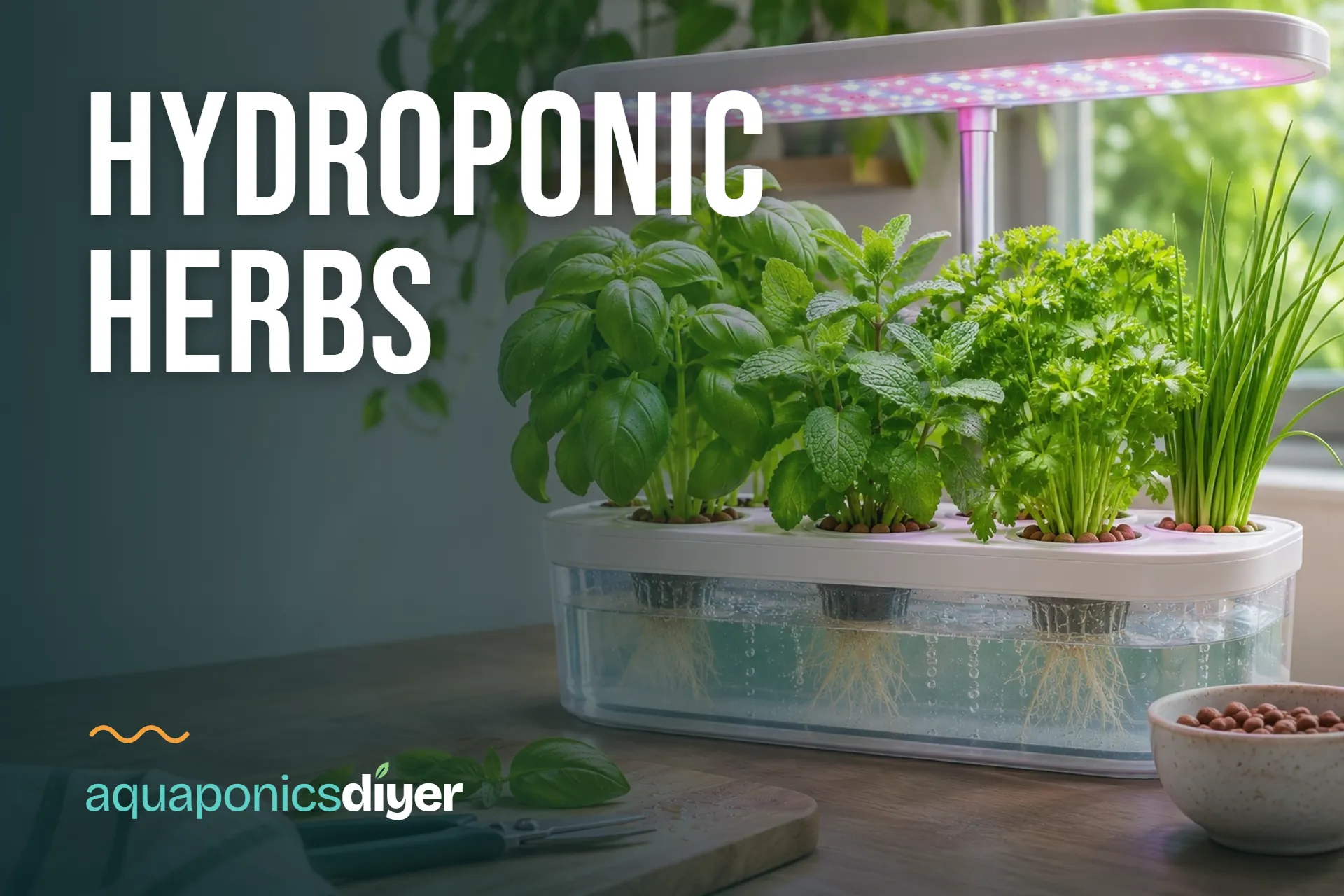
Hydroponic herbs are some of the easiest crops to grow without soil: they are small, they are harvested a little at a time, and most of them take well to a jar, a bucket or a countertop garden. Basil, parsley, chives, mint, oregano, thyme, cilantro, dill, sage, rosemary, lemon balm and chervil all suit the method, though they do not all want the same conditions, so the best starting point depends on what you cook with.
This hub shows which herbs to start with, which system fits them, and how to handle light, nutrients and harvesting. The figures come from two university extension publications, Oklahoma State Extension's EC and pH guide (HLA-6722, 2016) and Virginia Tech Extension's hydroponic crop comparison (SPES-466). For the herbs where neither publishes a number, the table says so rather than guessing.
Which Herbs Grow Best Hydroponically?
Most culinary herbs grow well in water because they are small, shallow rooted and happy with a light feed. The soft-leaved herbs, basil, parsley, mint, cilantro, dill and chives, are the usual first choices. Woody herbs such as rosemary, thyme and sage can be grown too, but they grow more slowly, so many beginners start with the soft ones.
| Herb | Our rating | Figures from extension sources |
|---|---|---|
| Basil | Easy | EC 1.0 to 1.6 mS/cm, pH 5.5 to 6.0 (Oklahoma State). Full guide: hydroponic basil |
| Mint | Easy | No extension figure found for this page |
| Parsley | Moderate | pH 6.0, EC 1.6 to 1.8 mS/cm, 14 days to germinate, 49 to 84 days to harvest (Virginia Tech) |
| Chives | Easy | No extension figure found for this page |
| Oregano | Easy | No extension figure found for this page |
| Thyme | Moderate | No extension figure found for this page |
| Cilantro | Moderate | See hydroponic cilantro |
| Dill | Easy | No extension figure found for this page |
| Sage | Moderate | EC 1.0 to 1.6 mS/cm, pH 6.0 to 7.0 (Oklahoma State) |
| Rosemary | Moderate | No extension figure found for this page |
| Lemon balm | Easy | No extension figure found for this page |
| Chervil | Moderate | No extension figure found for this page |
The rating is editorial, not a measurement. The two extension sources disagree on parsley: Virginia Tech used pH 6.0, while Oklahoma State's table lists pH 7.0 with a higher EC of 1.8 to 2.2 mS/cm. Start near pH 6.0 and watch the leaves.
The Easiest Herbs to Start With
Basil
Basil is the herb most countertop gardens ship with. It is warm-loving and light-hungry, and it branches well when cut. The conditions, spacing and mildew advice have their own page: hydroponic basil. Aquaponic growers will want basil in aquaponics instead.
Mint
Mint is forgiving, and giving it a container to itself keeps it from crowding slower herbs in a shared reservoir. Many growers start it from a cutting rooted in water and then move it into a net cup.
Parsley
Parsley is slow to get going. Virginia Tech recorded 14 days to germination, 28 days to true leaves and 49 to 84 days to harvest, and harvested by cutting the older leaves weekly over six weeks. Buy a start or be patient with seed.
Chives
Chives are narrow, upright and fit a small net cup. Cut them above the base, not at it, and the same plant keeps producing.
Oregano and Thyme
Both are small and compact. They do not want to be crowded, and they suit a sunny window with a grow light behind it more than a dim shelf.
Cilantro
Cilantro has a page of its own, with conditions and fixes: hydroponic cilantro. Sow it again every few weeks for a steady supply.
Dill
Dill grows tall and feathery, so it needs headroom and is a better fit for a bucket than a low countertop unit.
Best Hydroponic Systems for Herbs
Herbs are light feeders with shallow roots, so most hydroponic methods work. The choice comes down to how many plants you want and how much you want to maintain.
Kratky Jars and Buckets
The Kratky method uses a covered container of nutrient solution and no pump. It suits one or two basil, mint or chive plants on a windowsill, and it is the cheapest way to test whether you enjoy growing herbs this way.
Deep Water Culture
In deep water culture, roots hang in an aerated pool of solution. Virginia Tech Extension's hydroponic crop comparison (SPES-466) describes it as roots growing into a pool of nutrient solution, usually aerated. In its parsley trials, the floating raft DWC beds averaged 3.02 oz without supplemental light and 4.63 oz with it. Our DWC hydroponic system guide covers a build.
Countertop Gardens
A countertop garden has a small reservoir, a pump and a built-in light, and it is the simplest route for a kitchen supply of herbs. Our best indoor hydroponic gardens guide compares the models.
Towers
Vertical towers grow many herbs in a small footprint. In the Virginia Tech parsley trial, the vertical media stack averaged 2.05 oz without supplemental light and 1.51 oz with it, against 3.57 and 3.78 oz in NFT. That is one crop in trials run at different times, which Virginia Tech says are not meant for pairwise comparison, but it is worth knowing before you buy. See hydroponic tower gardens for the options.
A hydroponic herb starter list
Seed and a ready-made countertop garden, for the two ways most people start.
-
1Seeds
HOME GROWN 15 Herb Seed Variety Kit
Per the listing, 15 culinary herbs including basil, cilantro and mint, sold for indoor, outdoor and hydroponic use.
-
2Easiest start
A countertop herb garden with a built-in grow light and three basil pods included.
-
3True hydroponics
A hydroponic indoor garden that holds up to six pods under an LED grow light, sold with a seed pod kit.


Light, Nutrients and pH for Herbs
Light
Indoor herbs usually fail for lack of light. Virginia Tech Extension's hydroponic crop comparison (SPES-466) says a daily light integral of at least 17 mol per day creates ideal conditions for leafy green and herb yields, and that supplemental light helps on cloudy days and in winter. A south window is rarely enough in winter, so pair it with an LED from our best grow lights for hydroponics guide.
Nutrients and Strength
Use a complete hydroponic fertilizer with calcium and micronutrients, mixed to the label for leafy plants; the best hydroponic nutrients guide compares them. Oklahoma State advises replacing the whole solution every two weeks, because salts and ratios drift as plants drink water and you top up. For strength, aim for the EC ranges in the table above and treat the rest as a starting point.
pH
Oklahoma State says solutions for soilless culture should sit between pH 5 and 6, usually 5.5, and that pH and EC should be checked daily at the same time of day. It also gives 72 to 75°F as the optimal water temperature. Check pH after you set EC, because adding fertilizer moves it.
Harvesting So Herbs Keep Growing
The rule for soft herbs is to cut often and cut above a leaf pair or a node, so two shoots replace the one you took. Never strip a stem bare: leave leaves below the cut so the plant can recover. Parsley is harvested differently: Virginia Tech cut the older leaves weekly, taking the outer ones and leaving the heart.
Pinch off flower buds as soon as they appear. Once a herb flowers, the leaves turn bitter and growth slows. Sowing a fresh batch every few weeks keeps the supply going while older plants wind down.
Herbs in Aquaponics
Herbs are among the best plants for aquaponics too, because they are light feeders that live happily on fish-derived nutrients. Basil, mint, parsley and chives are the usual picks, and they grow in raft beds and media beds alike. Our guide to the best plants for aquaponics ranks them against the other crops.
The main change from hydroponics is pH. Aquaponic water sits near neutral for the fish and bacteria, not at 5.5 to 6.0 for the plants, so keep an eye on iron and choose forgiving herbs. The leaves tell you early if iron runs short.
Hydroponic Herbs FAQ
Related: hydroponic basil, hydroponic cilantro, best indoor hydroponic gardens and the Kratky method.
Grow along with us
New guides and seasonal tips for fish, plants and DIY builds, about once a month.