Fish guide
Freshwater Prawn Farming: How to Raise Giant River Prawns
As an Amazon Associate we earn from qualifying purchases. How we choose products.
On this page
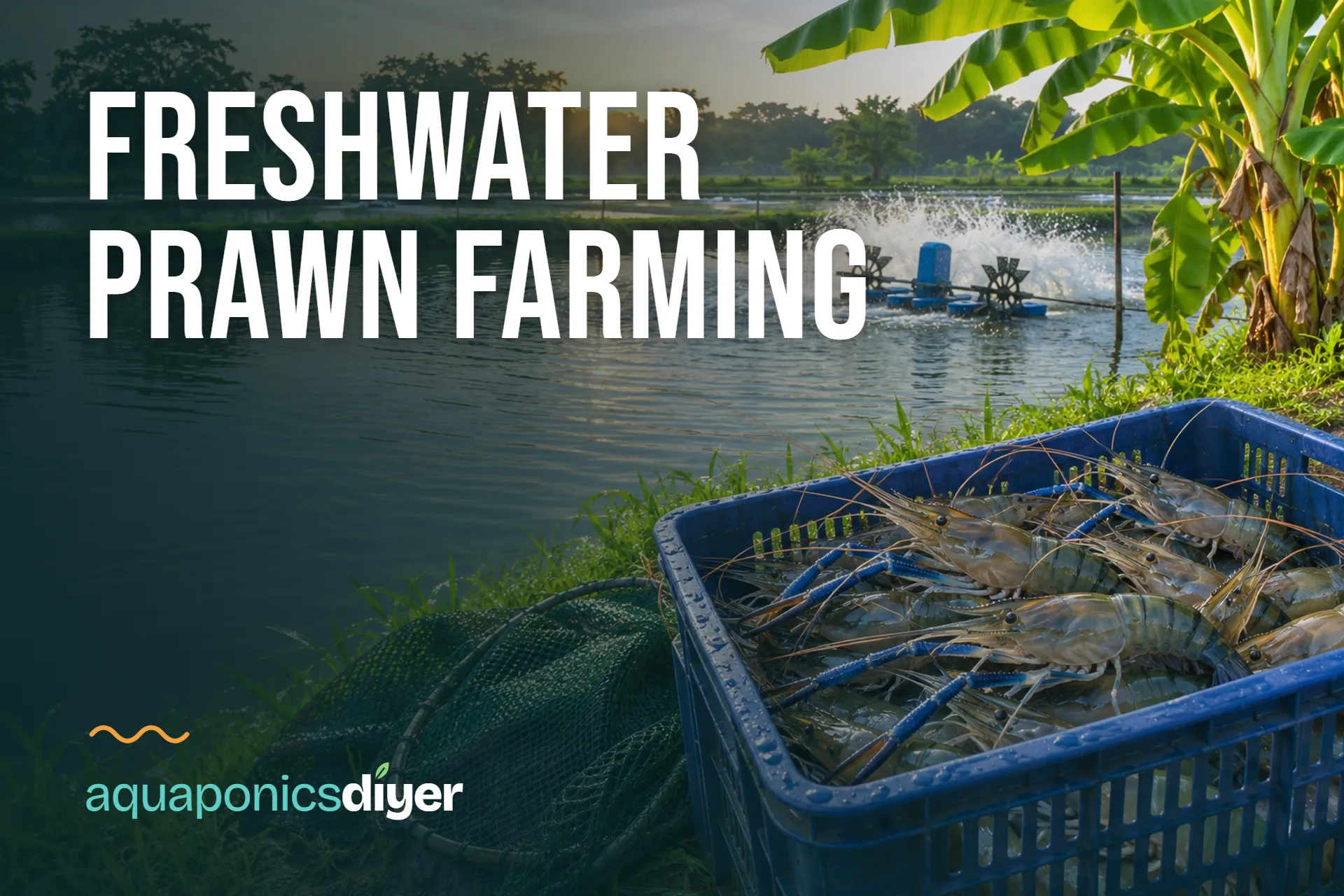
Freshwater prawn farming means raising the giant river prawn, Macrobrachium rosenbergii, in ponds or tanks for food, with no plants or fish loop required. It is a warm-season crop: you buy small juveniles in spring, grow them for roughly four to six months, and harvest in the fall. SRAC 484 puts pond grow-out at 3½ to 6 months, and FAO Technical Paper 428 is the standard manual behind most of what follows.
This guide covers the production cycle, ponds, what changes in tanks, feed, harvest and what extension budgets say about profit. Every number comes from FAO Technical Paper 428, SRAC 483, SRAC 484, SRAC 4830 or Mississippi State Extension. If you would rather pair prawns with fish and vegetables, read our aquaponics shrimp guide instead.
What Freshwater Prawn Farming Is
Prawn farming is closer to raising catfish than growing vegetables: you manage water, feed and a growing season, then harvest and sell an animal.
The Giant River Prawn
FAO Technical Paper 428 describes M. rosenbergii as native to South and Southeast Asia, with adult males reaching up to 33 cm (13 inches). SRAC 483 says other Macrobrachium species native to the southern US never reach food-market size, and calls this one the Malaysian prawn. Blue-claw males defend territory, which is why crowded bottoms cause trouble.
Prawn vs Shrimp
FAO Technical Paper 428 says a prawn tail has a smooth, rounded back, while marine penaeid shrimp have a ridge along the top of the abdomen. Adult prawns live in fresh water, but their larvae need brackish water, and that is the main practical difference for a grower.
The Production Cycle
SRAC 4830 lays out three stages: hatchery, nursery and grow-out. US growers usually buy animals that have already finished the first two.
Hatchery
SRAC 483 says larvae cannot survive in fresh water beyond about 48 hours and do best at 9 to 19 parts per thousand salinity, taking 15 to 40 days to become postlarvae. Mississippi State Extension tells beginners to skip the hatchery and nursery, at least at first, and buy juveniles from a supplier.
Nursery
FAO Technical Paper 428 keeps indoor nursery water at 27 to 31°C (81 to 88°F), reaching about 0.3 to 0.4 g after 60 days. SRAC 484 says 0.25 to 0.40 g is the best stocking weight for the price paid. SRAC 4830 (2005) reported juveniles at 7 to 12 cents each in Kentucky, so check current prices.
Grow-Out
SRAC 4830 puts temperate growth from juvenile to market size at about four months, June to September, in a single annual batch. FAO Technical Paper 428 gives four to five months for temperate ponds and six to eight in a tropical example.
Pond Farming
Ponds are the proven method: they grow natural food, hold heat and allow drain harvest. SRAC 4830 notes prawn ponds are usually under 2 acres, because feed spreads more evenly in a small pond.
Stocking Density
SRAC 484 gives 8,000 to 28,000 juveniles per acre for a four to five month season, with average harvest weight falling as density rises. FAO Technical Paper 428 lists about 4 juveniles per square meter (0.37 per square foot) for temperate monoculture without substrates and 6.5 with them. SRAC 484 puts commercial yields at 600 to 1,800 pounds per acre.
Aeration and Water Quality
SRAC 484 calls oxygen the variable you can manage most effectively. Prawns survive below 2 ppm but need at least 3 ppm to grow well, and levels are lowest before sunrise. Its targets are pH 7.0 to 8.5, alkalinity 50 to 150 mg/L and hardness 50 to 200 mg/L. Remove fish before stocking, and stock only when early-morning water stays above 68°F. Our aquaponics pump guide helps size air and water pumps.
Shelter and Substrate
SRAC 484 found that mesh equal to 25 percent of the bottom area raised yield by 15 to 20 percent, hung vertically about 6 inches off the bottom. It describes tilapia polyculture in floating cages so they cannot eat prawns; see the best fish for aquaponics.
Freshwater Prawn Farming in Tanks
The sources are thin here. FAO Technical Paper 428 says indoor, temperature-controlled tank grow-out has been abandoned because of excessive costs, especially heating, and keeps indoor systems for broodstock and nurseries. The extension publications cited on this page cover ponds. Below, pond and nursery numbers are applied to tanks, and arithmetic is labeled.
Tank Size and Netting Layers
Count square feet of floor, not gallons. SRAC 484 explains that as prawns grow, bottom area per ounce of prawn shrinks and growth slows. FAO Technical Paper 428 says prawns favor the edges of netting, so layers add usable area; its nursery netting hangs on frames about 4 inches (10 cm) above the floor. As arithmetic, FAO’s 4 per square meter works out to about 37 prawns on a 10 by 10 foot floor. A tank has no natural food, so treat that as a ceiling.
Filtration and Heating
SRAC 4830 says prawns need water warmer than 65°F to grow, and SRAC 484 lists 55°F as lethal, so most US tanks need a heater outside midsummer. None of these sources gives a prawn ammonia limit for tanks, so do not borrow a fish number: keep oxygen above 3 ppm and test regularly, for example with the API Freshwater Master Test Kit.
IBC and Backyard Tanks
An IBC tote has a small footprint for its volume, the wrong shape for a bottom dweller, so plan layered netting or a wide, cut-down container. Our IBC aquaponics guide shows how totes are cut and plumbed.
Feeding Prawns
Prawns are omnivores that eat insects, algae, mollusks, worms and fish feces, per SRAC 483. Farmed ones get a sinking pellet plus the natural food a fertilized pond grows.
What to Feed
FAO Technical Paper 428 suggests 35 percent protein for two months after postlarval stocking, then 30 percent, with a feed conversion ratio of about 2:1 to 3:1 for dry diets. SRAC 4830 describes a 32 percent protein sinking feed.
How Much and When
| Stage | Feed | Source |
|---|---|---|
| Nursery tanks | Once or twice daily, about 10 to 20 percent of prawn weight | FAO TP 428, Ch. 5 |
| Grow-out, months 1 and 2 | 35 percent protein sinking feed | FAO TP 428, Ch. 6 |
| Grow-out, month 3 to harvest | 30 percent protein sinking feed | FAO TP 428, Ch. 6 |
| Daily ration | 20 to 10 percent of body weight for juveniles, falling to about 2 percent | FAO TP 428, Ch. 6 |
| Timing | All in the late afternoon, or 30 percent morning and 70 percent afternoon | FAO TP 428, Ch. 6 |
Overfeeding wastes money and hurts water quality, as SRAC 484 warns.
How Long Until Harvest
SRAC 484 gives 110 to 170 days depending on latitude. Average harvest sizes in SRAC 4830 put commercial harvests at about 12 prawns per pound.
When to Harvest
SRAC 484 advises harvesting when daily water temperatures sit at 62 to 68°F for four to five days, or before a cold front brings 55°F water, which is lethal. In seasons over 160 days it suggests seining the largest prawns 25 to 40 days early.
Harvesting and Handling
SRAC 484 advises against seining and favors drain harvest into an aerated basin, where about 75 percent of prawns leave in the last 20 percent of the water. For prawns not sold live, FAO Technical Paper 428 says to kill them in ice water at 32°F (0°C) right after harvest, keep them chilled no more than 3 days (5 at the absolute maximum), and freeze the rest. Prawns sold live go into clean, aerated holding tanks at about 68 to 72°F (20 to 22°C).
Is It Profitable?
Prawns can pay, but the budgets are more cautious than farm-blog headlines. The best numbers come from SRAC 4830, a Kentucky State University budget at 2003 prices.
What the Extension Budget Says
For one 1-acre Kentucky pond, SRAC 4830 puts total annual cost at 5,040 dollars for extensive stocking, 6,152 dollars for semi-intensive and 8,435 dollars for intensive, with about 10,500 dollars of fixed investment before substrates. At 60 percent survival, break-even over total cost was 12.60 dollars per pound for extensive and 8.79 dollars for semi-intensive stocking. Kentucky’s commercial survival averaged 45 percent in 2002.
Selling Direct
SRAC 4830 (2005) reported wholesale prices of 4 to 7 dollars per pound and Kentucky retail and direct prices of 6 to 8 dollars. Mississippi State Extension lists live wholesale at about 4 to 8 dollars and retail at about 10 to 22 dollars, and names consistent marketing as the main obstacle. SRAC 4830 concludes most producers profit only selling to retail, restaurants or consumers. A drain harvest brings in the whole crop in one day, so line up buyers before you drain.
What you need for a small prawn tank
A tank needs warmth, oxygen, bottom feed and regular testing.
-
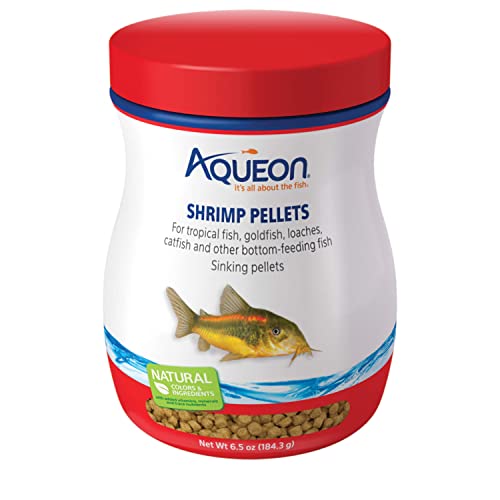
1Sinking food
Sinking pellets for bottom feeders, so the food reaches the prawns.
-
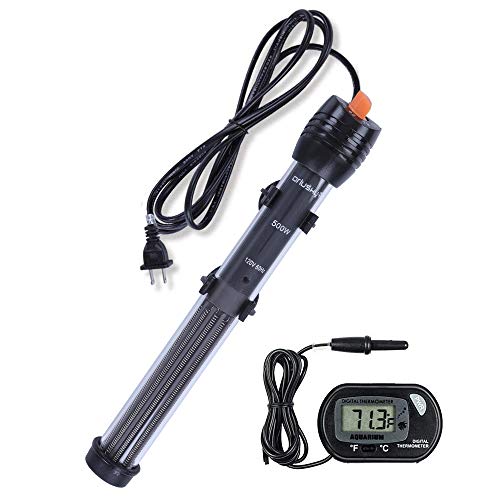
2Heater
Orlushy 500W Submersible Aquarium Heater
Adjustable from 68 to 89°F per the listing; the maker rates one unit for 40 to 75 gallons.
-
4Air pump
Pawfly 254 GPH Aquarium Air Pump
A multi-outlet pump the maker rates for up to 300 gallons, to keep oxygen above 3 ppm.


Want prawns and plants in one system? See aquaponics shrimp and aquaponic farming, then pick a pump.
Freshwater Prawn Farming FAQ
Grow along with us
New guides and seasonal tips for fish, plants and DIY builds, about once a month.