Hydroponics guide
Aeroponics: How It Works, Fogponics, and Whether It Beats Hydroponics
As an Amazon Associate we earn from qualifying purchases. How we choose products.
On this page
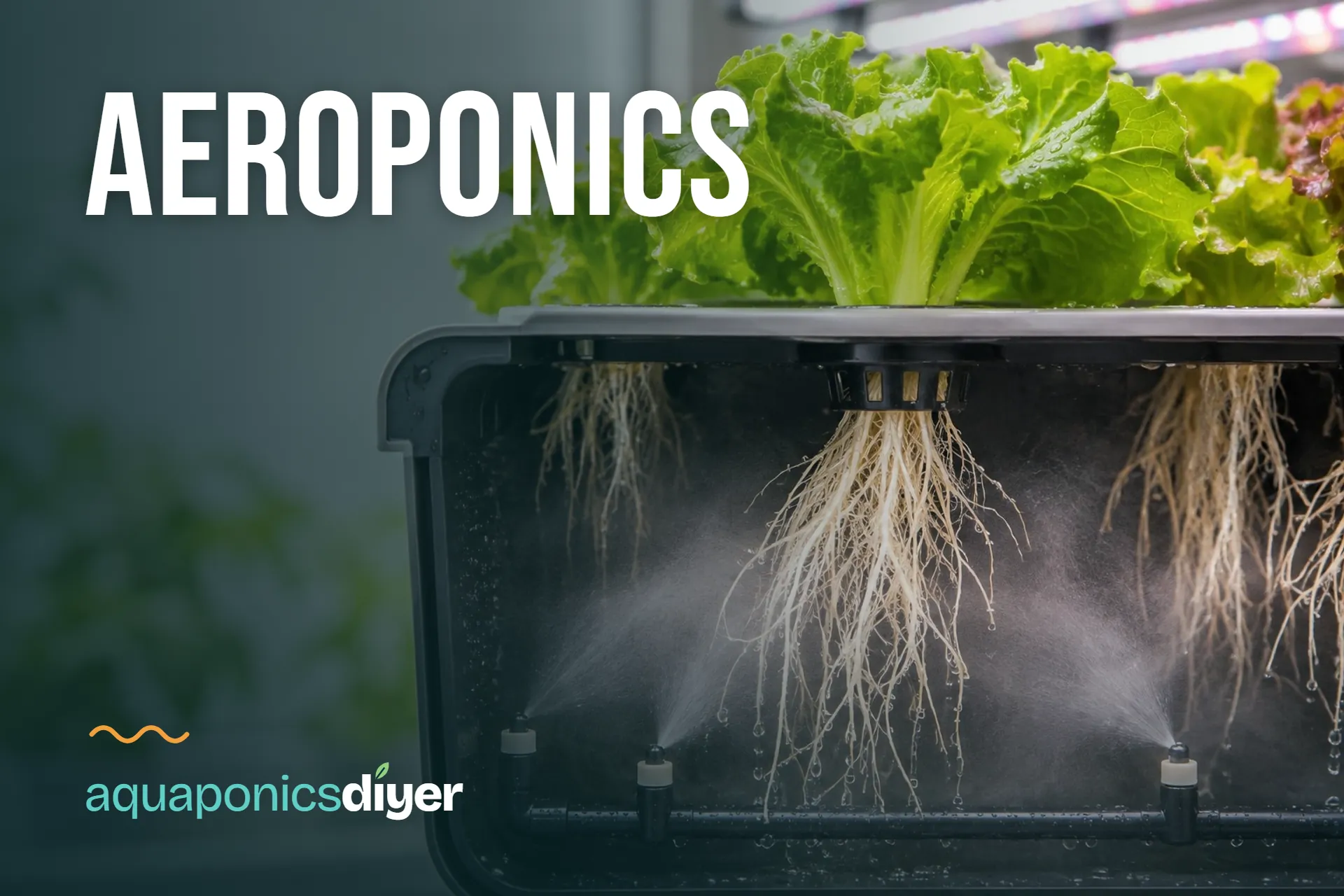
Aeroponics is a way of growing plants with their roots hanging in the air instead of sitting in soil or water. The roots are kept moist by a fine spray or mist of nutrient solution, released in short, timed bursts, so they get water, nutrients and plenty of oxygen. It is a form of hydroponics, because the nutrients still arrive in water, but nothing holds the roots: no soil, no gravel, no pool.
This guide explains how aeroponics works, the difference between low-pressure and high-pressure systems, how it compares with hydroponics and aquaponics, what fogponics is and why it is hard at home, what NASA actually did with it, and which plants do well. Facts come from sources we name as we go: the NASA Spinoff 2006 article on AgriHouse, Tower Garden's own growing guide (an older edition, hosted by a reseller), a Cultivation Ag article on ultrasonic aeroponics, and the product listings.
What Is Aeroponics?
The NASA Spinoff 2006 article on AgriHouse describes aeroponics as a process that enables plants to grow in an air and mist environment that is free from soil or an aggregate media. The roots are made moist by a hydro-atomized, nutrient-rich spray that is released in timed intervals by a microcomputer, inside an enclosed chamber. Water is applied as a mist, not a flow, so roots are mostly exposed to air.
Why Roots in Air Matter
Roots need oxygen as well as water. A system that leaves most of the root surface in the air gives them plenty of it, which is the case made for the method. The same fact is the risk. If the mist stops, there is no reservoir of water around the roots to carry them through, so a failed pump or timer is serious.
What Is an Aeroponics Method?
In practice an aeroponics method is a setup with five parts: a reservoir of nutrient solution, a pump, a timer, nozzles or a fogger, and a dark chamber that holds the roots and keeps light out. The plant crown sits above the chamber in a net cup or collar. Our net pots guide explains the cups.
Low-Pressure vs High-Pressure Aeroponics
Aeroponic systems are sorted by how fine the mist is, and that depends on the pump. Published figures for droplet size and pressure vary from source to source, so read the numbers below as ranges, not specifications.
High-Pressure Aeroponics
High-pressure systems use a pump that forces the nutrient solution through very fine nozzles. Cultivation Ag puts the droplets at 20 to 50 micrometers. That fine a mist takes a pressure-rated pump, fittings and filters, and fine nozzles can clog, so it is mostly a commercial or research design. The system in the NASA article is of this type: a microcomputer controlling timed sprays in an enclosed chamber.
Low-Pressure Aeroponics
Low-pressure systems use an ordinary submersible pump, and the droplets are bigger. Cultivation Ag lists low-pressure aeroponics at 100 micrometers or larger, which is coarser than a mist but still enough to keep roots moist. This is what a home grower can build. Many towers sold as aeroponic are an even simpler variant, where the pump feeds a distributor at the top and the solution runs down past the roots, as in the Tower Garden guide, which describes a shower cap and a timer. See the aeroponic tower guide for that design.
Aeroponics vs Hydroponics vs Aquaponics
Aeroponics is a type of hydroponics, and aquaponics is hydroponics fed by fish. The real difference between the three is what the roots touch and where the nutrients come from. For a deep dive, read our aquaponics vs hydroponics comparison.
| Aeroponics | Hydroponics (DWC, NFT) | Aquaponics | |
|---|---|---|---|
| Root environment | Air, misted in timed bursts | In nutrient solution (DWC) or in a thin film (NFT) | In water or grow media, fed by fish water |
| Nutrient source | Mixed nutrients | Mixed nutrients | Fish waste, plus fish feed |
| Equipment | Pump, timer, nozzles or fogger | Pump or air pump, reservoir | Fish tank, grow bed, pump, biofilter |
| Main risk | Mist stops and roots dry | Pump or air failure, root rot | Water quality, fish health |
| Easiest start | A tower | A DWC bucket or Kratky jar | A small media bed kit |
Does Aeroponics Beat Hydroponics?
The honest answer is that nobody has shown it does for home growers. The NASA article says growers using aeroponics can reduce water usage by 98 percent, fertilizer by 60 percent and pesticide by 100 percent, with crop yields rising by 45 to 75 percent. It attributes these figures to AgriHouse, the company whose story the article tells, and they are not a head-to-head test against a good DWC or NFT system. Cultivation Ag, which sells ultrasonic equipment, says one indoor farming developer reports up to twice the growth of comparable hydroponic systems for some crops. Treat both as seller or company claims. For a home grower, the better question is which system you can keep running, and our NFT guide and DWC guide cover the simpler options.
Fogponics
Fogponics is aeroponics with a different way of making the mist. Instead of pushing solution through nozzles, an ultrasonic fogger turns it into a fog that fills the root chamber. It is the version you see in DIY builds, and it is the one people search by name.
How Fogponics Works
Cultivation Ag describes a small piezoelectric disk sitting in the reservoir and vibrating at roughly 1 to 3 MHz, which shatters the liquid into microscopic droplets about 1 to 10 microns across, with consumer foggers often averaging 3 to 5 microns. The fog rises into the root chamber and settles on the roots. The disks use little power and run quietly.
Why Fogponics Is Hard at Home
The same article lists the catches. The transducer warms the reservoir, which cuts fog output. Calcium and magnesium scale can block the disk, so it recommends cleaning every 1 to 2 weeks in hard water. Disks often last around 6 to 12 months of continuous use. Nutrients must be fully water-soluble, because particles clog the disk. And if the power fails, the roots have no backup water supply. It also says fogponics is poorly suited to large, heavy crops such as big tomatoes or corn.
Foggers and What to Check
We do not link a fogger here, because we have no checked, live listing for one that is built for plant use. If you buy one, look for a reservoir with a float switch, a design that keeps the fogger cool, and a housing you can open to clean the disk. Treat any fogger sold with a promise of double the growth as a claim, not a test result. Is fog good for plants? At the roots, in a closed chamber, yes: that is the whole idea. The evidence for faster growth is mostly from vendors rather than controlled studies.
Does NASA Use Aeroponics?
NASA has funded and tested it, and the record is clear from the Spinoff 2006 article. In 1997, AgriHouse, NASA and BioServe Space Technologies designed a soil-less plant growth experiment to be performed in microgravity aboard the Mir space station, using adzuki bean seeds and seedlings, with ground tests for comparison. NASA's interest was practical: aeroponics could reduce the amount of water carried during flight, which reduces the weight of the payload, and NASA also had strict rules on pesticides in closed habitats.
The article goes on to say that later NASA Small Business Innovation Research contracts from Kennedy Space Center funded an enclosed aeroponic food production system and a lightweight inflatable system for future Moon and Mars use. The article describes research and development; it does not say that any crew grows its everyday food this way today. So the accurate answer to "Does NASA use hydroponics?" is that NASA has used and funded aeroponic and related soil-less research, and the article is about a company's spinoff, not a current operations report.
What Grows Well in Aeroponics
Tower Garden's growing guide gives a useful picture of what a low-pressure tower handles. It sets out how to start gourmet lettuce, herbs, and larger-seeded vegetables such as tomatoes, cucumbers, peppers and beans, and says large plants should be kept compact or trained up strings or trellises.
Leafy Greens
Lettuce and other greens are the standard crop: they are compact, quick and tolerant, and they fit the narrow sites of a tower or a net cup in a chamber. See our hydroponic lettuce guide for the crop itself.
Herbs
Basil, mint, parsley and other herbs do well for the same reasons. Our hydroponic basil guide has the details, and the principles carry across herbs.
Seed Potatoes and Larger Crops
Potatoes, tomatoes and peppers are possible but demanding. Tubers and fruiting plants need more support and more nutrient, and the larger the plant, the less forgiving a mist system is. If you want to try, start with our hydroponic potatoes guide and treat it as an experiment.
Aeroponic Towers at Home
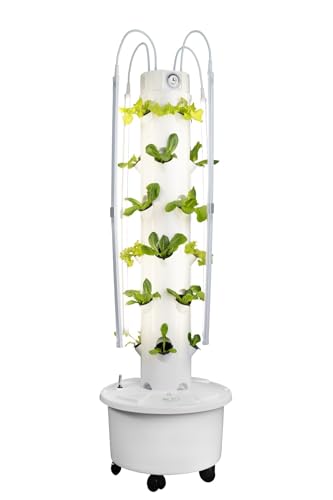
The easiest way to try aeroponics at home is a tower. A pump lifts nutrient solution from a reservoir to the top, and it runs down past roots hanging in the air inside. You can build one from 4 inch PVC pipe or buy one with the pump, tank and sometimes lights included.
The aeroponic tower guide explains how towers work, includes a DIY build with measurements, and says how to plant and run one. If you are shopping, see best hydroponic tower gardens.
Ready-made towers described as aeroponic
Both of these are sold with the pump and tank included. The listings call them aeroponic or hydroponic towers.
-
1Mid-range tower
TIRUSS 9 Layer Vertical Aeroponic Grow Tower, 36 Pots
Listed as an aeroponic tower with a water tank and pump and 36 pots over 9 layers.
-
2With lights
ALTO Garden GX Hydroponic Tower, 24 Net Pots
The listing describes a self-watering, self-lighting tower with LED grow lights, a pump with timer, 24 net pots, 30 rockwool cubes, nutrients and a pH test pen in the box.

Related: aeroponic towers, best hydroponic tower gardens, aquaponics vs hydroponics, NFT hydroponics and DWC systems.
Grow along with us
New guides and seasonal tips for fish, plants and DIY builds, about once a month.