Hydroponics guide
Hydroponic Potatoes: Can You Grow Them, and the Setups That Work
As an Amazon Associate we earn from qualifying purchases. How we choose products.
On this page
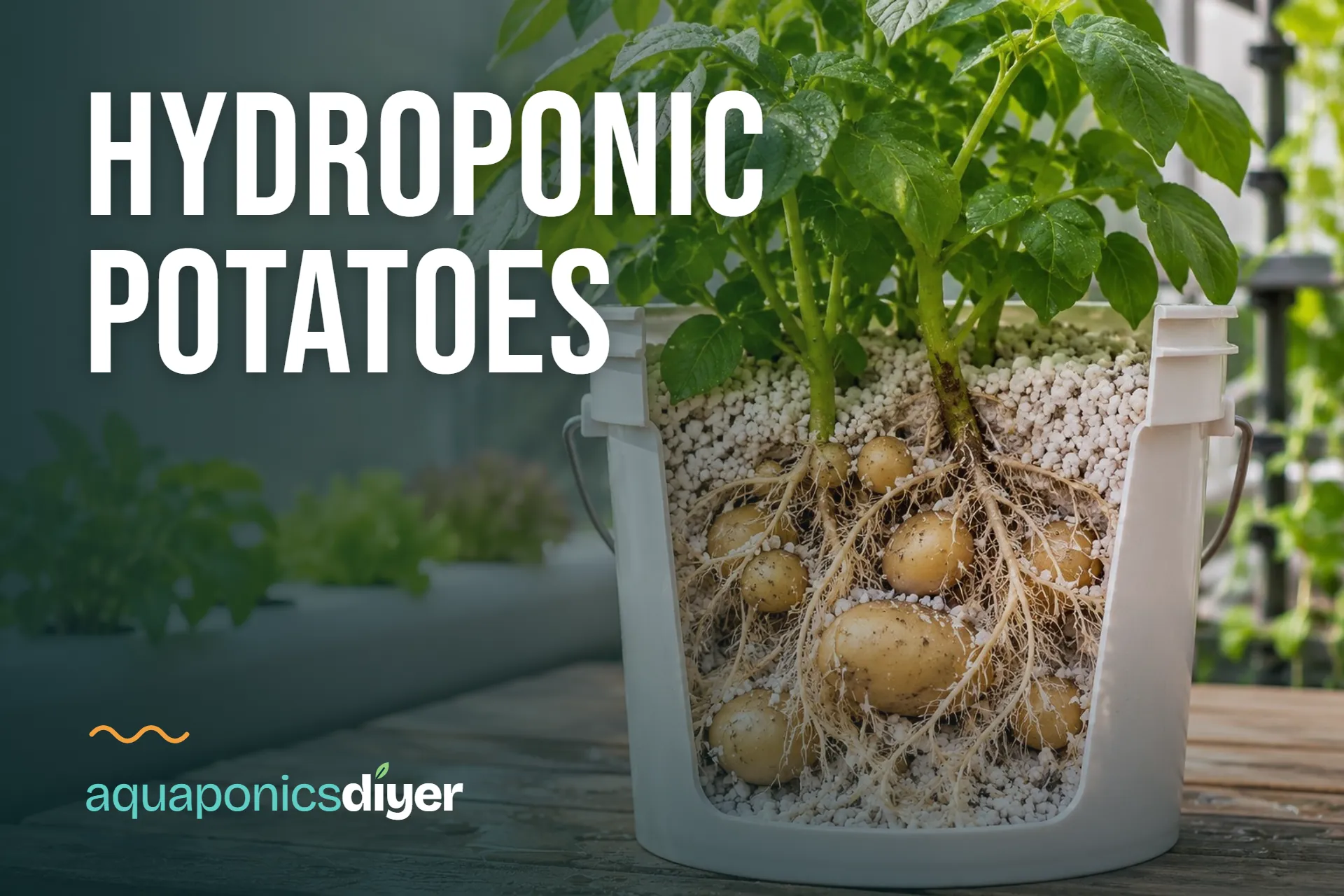
You can grow potatoes hydroponically, but not the way you grow lettuce. A potato is a swollen underground stem, and it needs somewhere to swell. A raft of plants hanging in a tub of water gives it nothing to push against, so the plants grow leaves and little else. What works is a deep container of inert medium that is fed with nutrient solution, or an aeroponic box where the roots hang in the dark and are misted.
This guide covers what works and what does not, how the International Potato Center uses aeroponics to produce seed potatoes, three systems you can build at home, a step-by-step bucket setup, and the light, nutrient and harvest questions that come up. Be realistic about the goal. Potatoes are cheap in a store and bulky to grow, so a hydroponic potato plant is a project for the satisfaction and the clean harvest rather than for saving money. If you want a first hydroponic crop that is quick and forgiving, start with hydroponic lettuce or hydroponic tomatoes.
Can You Grow Potatoes Hydroponically?
Yes. Potatoes grow well without soil as long as the roots and tubers have a medium that stays moist but airy, and as long as light cannot reach the tubers. The nutrients come from a solution instead of the ground, which is the only part of the method that changes.
What Works
An inert medium in a deep, opaque container works. Perlite, coco coir, or a blend of the two holds moisture, drains freely and lets tubers expand without resistance. Our hydroponic growing media guide compares them, and perlite vs vermiculite explains how the two minerals differ. Aeroponics also works, and it is how seed potatoes are produced commercially.
What Does Not Work
Plain deep water culture and floating rafts are the wrong tools. The potato plant needs its stem base buried in something so it can form tubers along it, and tubers that sit in standing, warm water rot. The same goes for NFT channels, whose shallow gutters have no room for tubers. If you only own a DWC tub, grow lettuce or herbs in it and build a separate bucket for potatoes.
Is It Worth It?
Honestly, it depends on why you are doing it. Potatoes occupy a lot of volume for a crop that is cheap to buy, so the case for growing them is the project, the clean, grit-free tubers, and the chance to grow early or out-of-season new potatoes under lights. If your priority is food from a small space, leafy greens and herbs repay the effort faster.
How Commercial Growers Do It: Aeroponic Seed Potatoes
The best-documented hydroponic potato work is not about eating potatoes at all. It is about producing clean seed. The International Potato Center (CIP), based in Lima, Peru, describes a system in which seed potato plants grow with their roots hanging in the air inside closed containers, in dark plastic bags, and a spray system provides every nutrient the plants receive. CIP's account says the method yields up to five times more seed than conventional techniques, and that in Peru's highlands it gave five to ten times more seed than traditional potted systems, using the varieties Perricholi, Canchan and Yungay. The harvested seed tubers range from 5 to 30 grams, and a crop can run for up to 180 days. The page does not state its publication date; read CIP's article on aeroponic seed production for the details.
A second CIP page, The sustainability of aeroponics, reports on a thesis by Magali Garcia at the University of La Molina in which aeroponic systems reached up to 324 tubers per square meter, against lows of 54 tubers per square meter in the conventional system.
Why Seed Growers Like It
Seed potatoes must be free of soil-borne disease. Growing in a spray of clean nutrient solution, away from soil, keeps the crop out of contact with soil-borne disease, and CIP says aeroponic systems require much less water and fewer fertilizers than conventional ones.
What It Costs
CIP lists the drawbacks as well: higher setup costs, a need for careful nutrient balance, and strict hygiene to prevent bacterial or fungal contamination. A home grower can copy the idea, but the risk of losing the whole crop to a clogged nozzle or a power cut is real. If you want to try it, our guide to aeroponics explains how a mist system works and what can go wrong.
Best Systems for Hydroponic Potatoes
| System | Fit for potatoes | Why |
|---|---|---|
| Bucket of perlite and coco, fed by hand or drip | Best for beginners | Cheap, deep, opaque, easy to dig |
| Dutch bucket | Good | Drip feed with a drain; suits a few plants |
| Ebb and flow bin | Good | Flood and drain through a deep bed of medium |
| Aeroponic box | Advanced | How seed potatoes are grown; needs misting hardware |
| Deep water culture, NFT | Poor | No place for tubers to form |
Bucket With Perlite and Coco
A lidded 5 gallon bucket with drainage holes, filled with a perlite and coco blend, is the simplest system. You top-feed it with nutrient solution and let the excess drain into a tray. The depth is what makes it suit potatoes, and the opaque wall keeps light off the tubers. It is also the setup that most closely matches how potatoes are grown in grow bags, which is why container advice from university extensions carries over.
Dutch Bucket
A Dutch bucket is a bucket of medium that is drip fed from a shared line and drains to a return. It is the standard way to grow large crops such as tomatoes and peppers, and it works for potatoes if the bucket is deep enough. It costs more to set up than a single hand-fed bucket but takes less daily attention once running.
Ebb and Flow
A deep bin of medium that floods from a reservoir and drains back on a timer also suits potatoes. Set the flood level so it never sits against the stem base, since stems and tubers that stay wet for long periods rot. See our DIY hydroponic system guide for a build that can be adapted with a deep tray.
How to Grow Hydroponic Potatoes in a Bucket
-
Choose the seed potatoes
Buy certified seed potatoes. University of Maryland Extension advises cutting large seed potatoes into pieces of 1.5 to 2 ounces, about 1.5 inch cubes, each with one to three eyes, and letting the cut pieces dry for a few days before planting. Small whole seed potatoes need no cutting.
-
Prepare the bucket
Drill drainage holes in the bottom of an opaque bucket and set it in a tray. Rinse the medium, mix perlite and coco coir, and moisten it so it is damp but not dripping.
-
Plant and cover
Fill the bucket part way, set the seed pieces with the eyes up, and cover them with more medium. University of New Hampshire Extension, writing about container potatoes, suggests filling a container with 6 to 8 inches of mix, placing the seed potatoes and covering them with about six more inches.
-
Feed with a mild solution
Water with a mild nutrient solution until shoots emerge. Raise the strength as the plant grows, and flush the bucket with plain water now and then so salts do not build up in the medium.
-
Hill the stems
As the plant grows, add medium around the stems so that tubers forming higher up are covered. UNH advises leaving about six inches of foliage exposed at any time.
-
Switch the feed when tubers start
Potatoes are heavy feeders. University of Maryland Extension says to fertilize before planting and side-dress six weeks later, when tubers begin to form. In hydroponics the equivalent is a feed that is richer in potassium than the early leafy feed.
-
Harvest
Dig new potatoes early if you like them small. For full-size tubers, wait until the tops yellow and die back, then tip the bucket out and sort the tubers.
What You Need to Grow Hydroponic Potatoes
An opaque bucket, a loose medium and a nutrient feed. Seed potatoes come from a garden center or seed supplier.
-
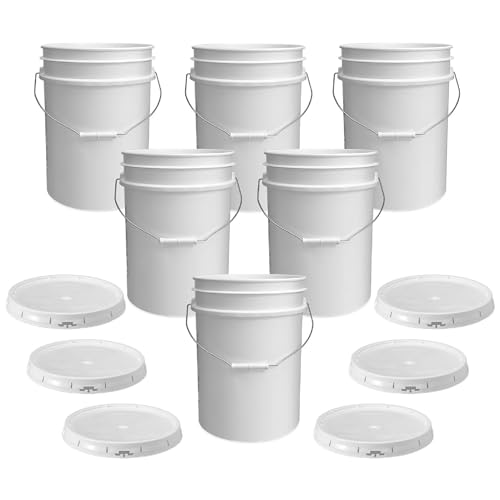
1Bucket
ePackageSupply 5 Gallon Bucket with Lid, 6 Pack
A deep, food-grade bucket that takes drainage holes. Choose a dark color or wrap it so light stays off the tubers.
-
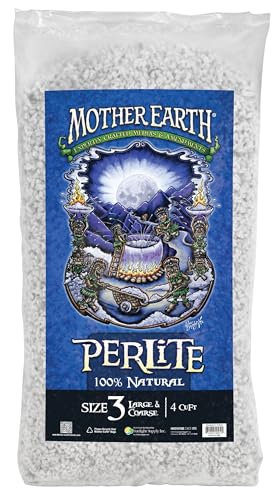
2Perlite
Mother Earth Perlite, Size 3 Large and Coarse
Coarse perlite keeps the medium open so tubers can swell and water drains freely.
-
3Coco coir
Coco Coir 650gm Bricks, 10 Pack
Holds moisture between feeds and blends with perlite for a medium that stays damp but airy.
-
4Vermiculite
Perfect Plants Organic Vermiculite, 8 qt
A water-holding additive if you prefer a wetter blend. See our perlite vs vermiculite guide for the trade-off.
-
5Nutrient
General Hydroponics Flora Series Trio
Three-part liquid that lets you shift from a leafy early feed to a heavier feed once tubers begin to form.


Light, Nutrients and pH
Light
Above ground the plant needs strong light like any fruiting crop. University of Maryland Extension says potatoes in a garden need at least 6 hours of direct light a day and prefer 8 to 10 hours. Indoors, that means a full-spectrum LED set to cover the foliage, with the light on for many hours a day; see our grow light guide for choices. Below ground the rule is the opposite: no light on the tubers, which turn green and bitter when exposed.
Nutrients
University of Maryland Extension describes potatoes as having high nutrient needs. A balanced feed suits the leafy first weeks and a feed higher in potassium and lower in nitrogen suits tuber bulking. Our best hydroponic nutrients guide compares the main lines. Start mild and watch the leaves rather than chasing a number.
pH
The Maryland guide gives a soil pH of 6.0 to 6.5 for potatoes, and 4.8 to 5.8 where scab is a persistent problem. For a hydroponic medium, a pH in the low to mid 6s is a sensible target, and the scab guidance is a reminder that a slightly acid medium can help. Check the runoff, not just the solution you pour in, because the medium shifts the pH.
Temperature
The same Maryland source says soil above 80°F inhibits tuber development. If your grow space is warm, keep the medium cool by shading the bucket and by using a larger volume of medium, which changes temperature more slowly.
Harvest and Yield
Be careful with yield numbers here. The sources that give them are about aeroponic seed production or garden rows, not home hydroponic buckets, and nothing we found measures a bucket of perlite and coco. What the sources do say is useful. University of Maryland Extension gives 90 to 120 days to maturity and a garden yield of 6 to 15 pounds per 10 foot row. CIP's aeroponic work shows how many tubers a plant can set when its roots are fed directly and no soil limits it, though the tubers there are small seed-size ones of 5 to 30 grams.
When to Harvest
University of New Hampshire Extension says mature potatoes can be harvested once the tops have yellowed and started to die back. If you want new potatoes, dig around the edge of the bucket carefully after the plant has flowered and take a few small tubers, then leave the plant to continue.
Curing and Storage
Brush the medium off rather than washing the tubers, and keep them somewhere cool and dark. Maryland Extension gives 40°F to 50°F with high humidity for storage.
Hydroponic Potatoes FAQ
Related: hydroponic growing media, perlite vs vermiculite, DIY hydroponic system, aeroponics and hydroponic tomatoes.
Grow along with us
New guides and seasonal tips for fish, plants and DIY builds, about once a month.