Guide
Hydroponic Microgreens: How to Grow Them Without Soil, Tray by Tray
As an Amazon Associate we earn from qualifying purchases. How we choose products.
On this page
Yes, microgreens can be grown hydroponically: instead of a tray of potting mix, you sow the seed on a damp mat or in a thin layer of rockwool, water the tray from below and harvest the seedlings a week or two later. The method needs no nutrient solution for most crops, no deep reservoir and very little equipment, which is why it is one of the cheapest ways to grow fresh food indoors.
This guide takes it tray by tray: which seeds to pick, what to buy, the steps, whether the plants need feeding, how to tell mold from harmless root hairs, and how soil and hydroponic trays compare. The figures come from University of Kentucky's Microgreens crop profile (CCD-CP-104), Penn State Extension, University of Maryland Extension and Mississippi State Extension, and each one is named where it appears.
Are Microgreens Grown Hydroponically?
They can be. University of Kentucky's Microgreens crop profile (CCD-CP-104) says microgreens may be grown in conventional bench-top production or hydroponically, and that hydroponic producers may use rockwool as the inert growing medium. University of Maryland Extension describes single-use mats made of natural materials such as hemp, wood fiber, coconut coir, bamboo or jute, where the seeds germinate on top and the roots grow into the mat.
What changes against soil is the medium and how it is watered. A mat holds water but no nutrients, there is no soil to mix, and the harvest is cleaner because there is nothing to splash on the stems. The plant is the same: Kentucky stresses that microgreens are grown to the first true-leaf stage and are not sprouts, which are germinated seeds without true leaves.
If you are new to growing in water, our hydroponic system for beginners guide covers the wider picture, and hydroponic lettuce is the next crop to try when you want full-size plants.
Best Microgreens for Hydroponics
Mississippi State Extension groups microgreen varieties by how long they take from sowing. Growing a single variety per tray, or varieties from the same group, lets the whole tray be cut at once; Kentucky makes the same point about similar germination rates.
| Speed group | Days (Mississippi State) | Crops | Notes |
|---|---|---|---|
| Fast | 7 to 10 | Pea shoots, radish | Pea shoots can be recut once, and the page says to prime the seed for even germination |
| Medium | 10 to 15 | Arugula, broccoli, cress, cabbage, kale, mustard, pac choi, kohlrabi, greens mix | The easiest group for a first tray |
| Slow | 16 to 25 | Basil, beets, carrot, cilantro, parsley, scallions, Swiss chard, amaranth | Beet and cilantro seed is primed first; beet hulls are hard and are removed before eating |
Kentucky adds that lettuces may be too delicate to be good candidates. Choose seed sold for sprouts and microgreens, and avoid treated seed: Kentucky notes that treated seed may carry chemical residue into the small seedlings.
What You Need
The list is short, and most of it is reusable.
Tray
A shallow, flat-bottomed tray with drainage holes, plus a second tray or tub under it to hold water. Penn State uses a standard 12 by 20 inch, 10-row seeding tray; a smaller kitchen tray works the same way, just with less seed.
Grow Mat or Medium
Hemp, coir, jute or bamboo mats, or a thin layer of rockwool. New medium for every crop keeps disease down, per Penn State, so single-use mats suit the job.
Seed
Untreated seed sold for microgreens. Penn State puts its tray rate at 10 to 15 grams of seed per 12 by 20 inch tray, and Maryland gives the same 10 to 15 grams for a 10 by 20 inch flat. Check the rate for each crop, since pea seed is much bulkier than arugula.
Light and Mister
Penn State calls microgreens a low-light crop, with a daily light integral below 20 mol/m²/day. Maryland suggests about 16 hours of light, with LED or fluorescent fixtures 6 to 12 inches above the foliage, on a timer. A spray bottle handles the first few days of misting. Our best grow lights for hydroponics guide covers the lights.
A microgreens starter list
A self-watering kit to start, trays to scale up and seeds to refill them.
-
1Starter kit
Self-Watering Microgreens Growing Kit
Per the listing: a self-watering tray with grow mats, a bamboo frame and seeds for broccoli and salad mix.
-
2Gardyn nursery
Gardyn Complete Microgreens Growing Kit
A seed starter nursery tray with 20 seed pads, bamboo wicks and 10 grow plates, per the listing.
-
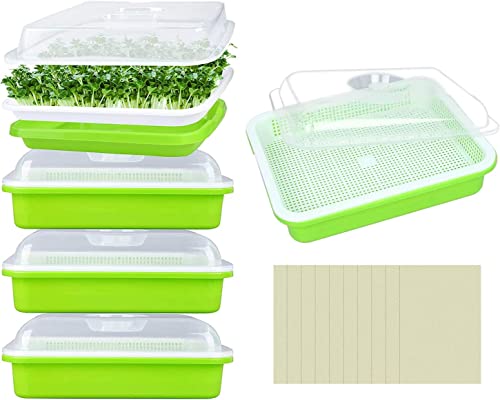
3Extra trays
Legigo 5 Pack Seed Sprouter Trays
Five lidded, soil-free trays with germination paper, to run several crops on a staggered schedule.
-
4Seeds
Microgreen Seeds Variety Pack, 10 Types
Ten heirloom types including broccoli, pea, sunflower, radish, kale and arugula; seeds only, so you add the tray and mat.



How to Grow Hydroponic Microgreens
The steps below combine the Maryland and Penn State guidance. Timing depends on the crop and the room.
Tray by tray
-
Soak the large seeds
University of Maryland suggests soaking pea, sunflower, corn, chickpea, beet, Swiss chard, cilantro, mung bean and buckwheat seeds for 6 to 12 hours to speed germination. Small seeds such as arugula go on dry.
-
Wet the mat and sow thickly
Lay the mat in the tray and wet it until moist, not pooled. Spread the seed evenly and thickly: Penn State advises sowing thickly, with lower rates in summer and for larger seed, and gives 10 to 12 small seeds or 6 to 8 large seeds per square inch as one grower's guide.
-
Cover and mist
Keep the tray warm, 70 to 75°F per Maryland, and mist for the first few days. Vent any humidity cover regularly so the surface does not stay wet.
-
Blackout, then light
After germination, exclude light for a few days, which Maryland says lengthens the stems and makes them easier to cut. Then give about 16 hours of light, 6 to 12 inches above the leaves.
-
Water from below
Set the tray in a shallow pan of water so the mat takes it up through the drain holes, then lift it out. Penn State says to remove trays from the tub once the medium has been wetted.
-
Harvest at the first true leaves
Cut the stems just above the mat with clean scissors when the seedlings reach the first true-leaf stage, 7 to 21 days after sowing, leaving the roots behind. Use them right away or refrigerate them; Maryland says up to 10 days.
Do Microgreens Need Nutrients?
Mostly no. University of Maryland Extension says no fertilizer is needed, because the seed holds the nutrients for early growth and the plants are cut before those run out. University of Kentucky's Microgreens crop profile (CCD-CP-104) agrees that fast brassicas need no fertilizer, and adds that it may help slower crops such as carrot, lemongrass and onion.
Penn State is more cautious. It says little or no fertilizer is needed and that 50 to 100 ppm nitrogen is generally sufficient if you do feed. It adds that crops grown with clear water have sometimes shown iron deficiency symptoms. So plain water is the default, and a very weak solution is a fix for pale, slow trays, not a routine. Our best hydroponic nutrients guide covers what to mix.
Mold and Other Problems
Mold or Root Hairs?
The disease to watch for is damping-off. Penn State describes it as white fuzzy growth, possibly Rhizoctonia or Botrytis, favored by warm, humid conditions, and Kentucky lists Pythium, Phytophthora, Botrytis and Sclerotinia among the seedling diseases. Fine white fibres along the roots themselves are normally root hairs, which are part of a healthy seedling; fuzz spreading across the stems and leaves is mold.
If you are unsure, check where it is. Root hairs sit on the roots at the mat. Mold climbs the stems, can spread in patches, and usually comes with a damp, musty smell. Discard a mold-affected tray rather than eating it.
Watering and Airflow
Bottom watering keeps leaves and stems dry. Kentucky stresses sanitation, proper density for air circulation and clean media, and Maryland adds venting covers, keeping the medium moist but not saturated, and a gentle fan. Wash and reuse trays between crops.
Food Safety
Microgreens are not sprouts, but the seed matters either way. FDA reports 52 outbreaks of foodborne illness linked to sprouts between 1996 and 2020 and says seed has historically been identified as the likely source of contamination (FDA). Use untreated seed sold for the purpose, cut above the medium, rinse and refrigerate.
Soil vs Hydroponic Microgreens
| Soil or potting mix | Hydroponic mat | |
|---|---|---|
| Medium | Soilless potting media or peat-based mix | Hemp, coir, jute or bamboo mat, or rockwool |
| Cleanliness | Stems can be splashed with medium | Penn State says fiber mats give cleaner harvests than potting soil |
| Feeding | Mix may hold some nutrients | Seed reserves only; little or no fertilizer |
| Mess | Most | Least |
| Disease risk | Damping-off in warm, humid, crowded trays | The same; new medium and airflow matter either way |
| Best for | Larger seeds and slow crops | Small seeds and quick, clean trays |
Hydroponic growing in a mat is the easy route for brassicas and radish. For a deeper dive into growing in water, try the Kratky method, and see hydroponic seeds for starting full-size plants.
Hydroponic Microgreens FAQ
Related: hydroponic lettuce, grow lights for hydroponics, hydroponics for beginners and the Kratky method.
Grow along with us
New guides and seasonal tips for fish, plants and DIY builds, about once a month.